
Join us on a literary world trip!
Add this book to bookshelf
Grey
Write a new comment Default profile 50px
Grey
Subscribe to read the full book or read the first pages for free!
All characters reduced
Matchstick Discovery - cover

Matchstick Discovery

Amelia Khatri

Translator A AI

Publisher: Publifye

  • 0
  • 0
  • 0

Summary

"Matchstick Discovery" explores the surprisingly transformative history of matchsticks, illuminating their journey from a luxury to an everyday necessity. Beyond mere convenience, matchsticks revolutionized society by democratizing access to fire, a pivotal element for cooking, heating, and industry. The book delves into the chemical innovations that led to safer, more reliable matches, highlighting figures like Johan Lundström, whose contributions were instrumental in the matchstick's evolution.

 
The book progresses chronologically, first examining early, dangerous attempts at creating fire. Then, it investigates the rise of mass production and the global match industry, shedding light on the socio-economic impacts, including the harsh conditions faced by match factory laborers. For example, the use of white phosphorus in early matches led to severe health problems for workers, a dark chapter in the matchstick's history.

 
Finally, the book reflects on the matchstick's legacy in the modern world, looking at its gradual displacement by other technologies and also the environmental concerns associated with its production. By drawing upon diverse sources, including patent records, historical accounts, and economic data, "Matchstick Discovery" offers a balanced perspective. This approach makes it an engaging read for anyone interested in the history of technology, social change, and the untold stories behind the objects we often take for granted.
Available since: 02/12/2025.
Print length: 60 pages.

Other books that might interest you

  • Gaslighting - How to Spot & Survive from Narcissistic Ex Emotional Abuse Gaslight Effect Manipulation Outsmart Narcissists with Stoicism Mental Toughness Social Intelligence NLP & Empath Skills - cover

    Gaslighting - How to Spot &...

    Debbie Walker

    • 0
    • 0
    • 0
    Are you struggling with the tactics of a narcissist?Have you been emotionally affected, manipulated, or abused by one? Ready to learn the secrets of fighting back? 
    Gaslighting is a psychological manipulation tactic commonly used by narcissists. It leaves victims questioning their memory, judgment, and even their sanity. This form of abuse can be incredibly damaging and take years to understand and overcome. Fortunately, there is now help available. Inside this audiobook, you will discover a range of tools and techniques designed to help you beat a narcissistic abuser at their own game.The chapters cover: 
     • How to spot when someone is gaslighting you 
     • Different types of gaslighters  
     • How to avoid being manipulated 
     • Dealing with a narcissistic ex and codependency 
     • The warning signs of hidden emotional manipulation, gaslight-effect and NPD 
     • Improving your mental toughness and resilience 
     • Outsmarting narcissists and their dark psychology 
     • Learn to control your emotions with emotional intelligence (EI) 
     • Narcissistic abuse recovery and overcome PTSD 
     • How to analyze toxic people with NLP, CBT, and DBT 
    If you believe you are in a narcissistic, codependent, and toxic relationship or have been in one and are seeking to recover, this audiobook will arm you with the knowledge and strategies needed to overcome the tactics of a narcissistic abuser. 
    Even if you think there is no solution, through detailed examples and step-by-step guidance, you will move from understanding to prevention and healing.Ready to emerge stronger than ever?Get your copy now to take on and beat your narcissistic abuser!
    Show book
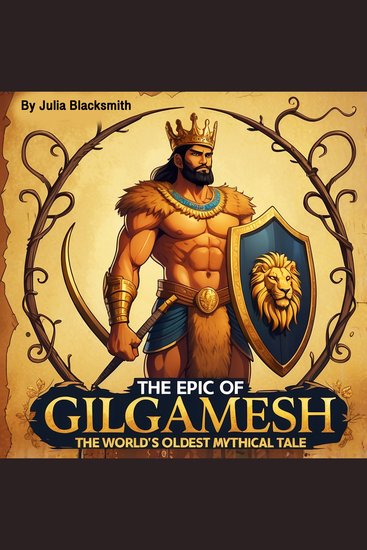
  • The Epic of Gilgamesh - The World's Oldest Mythical Tale - cover

    The Epic of Gilgamesh - The...

    Julia Blacksmith

    • 0
    • 0
    • 0
    The Epic of Gilgamesh stands as one of the greatest literary works of the ancient world and the oldest surviving epic poem in human history. Originating from ancient Mesopotamia over 4,000 years ago, it was inscribed on clay tablets in cuneiform script and preserved through centuries of oral tradition. This epic tells the story of Gilgamesh, the mighty king of Uruk, whose adventures, friendships, and struggles with mortality continue to captivate readers to this day. As both a historical and mythical figure, Gilgamesh represents the universal human desire for glory, wisdom, and eternal life.  
      
    The epic was rediscovered in the 19th century among the ruins of the great Assyrian library of King Ashurbanipal in Nineveh. Scholars painstakingly translated its fragmented tablets, revealing a narrative that predates even the Homeric epics of Greece. Its influence can be seen in later mythologies, including biblical and classical traditions, with themes and motifs that echo throughout world literature. The story’s philosophical depth, particularly its exploration of human limitations and the acceptance of mortality, remains profoundly relevant.  
      
    Central to the Epic of Gilgamesh are its rich mythological elements, which reflect the beliefs and values of ancient Mesopotamian civilization. The gods play an active role in shaping the fate of mortals, highlighting the intricate relationship between divine forces and human ambition. From the creation of Enkidu as Gilgamesh’s equal to the wrath of the gods following their defiance, the narrative explores the balance between power and responsibility. The story also delves into themes of friendship, grief, and self-discovery, making it a timeless reflection of the human condition. 
    Show book
  • Barbary Wars The: A Captivating Guide to the First Overseas Wars Conducted by the United States - cover

    Barbary Wars The: A Captivating...

    Captivating History

    • 0
    • 0
    • 0
    Discover the captivating history of the first American wars in Africa! 
    In this audiobook, you’ll learn about the Barbary Wars of 1801 to 1805 and 1815, the first American wars outside of North America. The enemies were the Muslim Barbary pirates of the North African coast. 
    Discover how American sailors were captured and turned into slaves in Morocco, Algiers, Tunis, and Tripoli. Why did this happen? And why didn’t the US Navy do more to stop it? Discover the answers to these in this comprehensive guide! 
    You’ll also learn about the origin of the Barbary corsairs who made slave raids on Europe for 250 years and traveled as far as Ireland and Iceland. You’ll find out the embarrassing history of how the US Congress authorized paying protection money to these pirates and how American taxes subsidized pirate ships. 
    Discover how the pirates captured a big American frigate and its crew and threatened to burn them alive if they weren’t paid a ransom. Learn how one of the most courageous special operations in Navy history stopped a ship from becoming a pirate ship. 
    There is so much to discover in this audiobook. Some of the things you will be captivated to learn about include the following:How an American warship carried a harem, a zoo, a hundred slaves, and treasure to IstanbulWhy the United States decided to build a navyWhy a big pirate ship was built in New Hampshire and delivered to AlgiersWhere that phrase in the “Marines Hymn” “to the shores of Tripoli” comes fromWhy the US Navy borrowed ships from SicilyAnd so much more! 
    Click the “add to cart” button to start learning about the first American wars on another continent!
    Show book
  • Violins of Hope - Violins of the Holocaust-Instruments of Hope and Liberation in Mankind's Darkest Hour - cover

    Violins of Hope - Violins of the...

    James A. Grymes

    • 0
    • 0
    • 0
    The violin has formed an important aspect of Jewish culture for centuries, both as a popular instrument with classical Jewish musicians—Jascha Heifetz, Yehudi Menuhin, Itzhak Perlman—and also a central factor of social life as part of the enduring Klezmer tradition. But during the Holocaust, the violin assumed extraordinary new roles within the Jewish community. For some musicians, the instrument was a liberator; for others, it was a savior that spared their lives. For many, the violin provided comfort in mankind's darkest hour, and, in at least one case, helped avenge murdered family members. Above all, the violins of the Holocaust represented strength and optimism for the future. 


    In Violins of Hope, music historian James A. Grymes tells the amazing, horrifying, and inspiring story of the violins of the Holocaust, and of Amnon Weinstein, the renowned Israeli violinmaker who has devoted the past twenty years to restoring these instruments in tribute to those who were lost, including 400 members of his own family. Juxtaposing tales of individual violins with one man's harrowing struggle to reconcile his own family's history and the history of his people, it is a poignant, affecting, and ultimately uplifting look at the Holocaust and its enduring impact.
    Show book
  • Awkwardness - A Theory - cover

    Awkwardness - A Theory

    Alexandra Plakias

    • 0
    • 0
    • 0
    Awkwardness offers an account of the psychology and philosophical significance of a ubiquitous social phenomenon. Our aversion to awkwardness mirrors our desire for inclusion. This explains its power to influence and silence us: as social creatures, we don't want to mark ourselves as outsiders. As a result, our fear of awkwardness inhibits critique and conversation, acting as an impediment to moral and social progress. Even the act of describing people as "awkward" exacerbates existing inequities, by consigning them to a social status that gives them less access to the social goods (knowledge, confidence, social esteem) needed to navigate potentially awkward situations. 


    Awkwardness discusses how we ostracize and punish those who fail to fit into existing social categories; how we all depend on—and are limited by—social scripts and norms for guidance; and how these norms frequently let us down when we need them. But awkwardness has a positive side: it can highlight opportunities for moral and social improvement, by revealing areas where our social norms and scripts fail to meet our needs or have yet to catch up with changing social and moral realities. Awkwardness ultimately underscores the conflict between our moral motivations and our desire for social approval and conformity.
    Show book
  • 24 Hours in Ancient Egypt - A Day in the Life of the People Who Lived There - cover

    24 Hours in Ancient Egypt - A...

    Donald P. Ryan

    • 0
    • 0
    • 0
    Spend twenty-four hours with the ancient Egyptians. 


    Ancient Egypt wasn't all pyramids, sphinxes and gold sarcophagi. For your average Egyptian, life was tough, and work was hard, conducted under the burning gaze of the sun god Ra. 


    During the course of a day in the ancient city of Thebes (modern-day Luxor), Egypt's religious capital, we meet twenty-four Egyptians from all strata of society—from the king to the bread-maker, the priestess to the fisherman, the soldier to the midwife—and get to know what the real Egypt was like by spending an hour in their company. We encounter a different one of these characters every hour and in every chapter, and through their eyes see what an average day in ancient Egypt was really like.
    Show book