Join us on a literary world trip!
Add this book to bookshelf
Grey
Write a new comment Default profile 50px
Grey
Subscribe to read the full book or read the first pages for free!
All characters reduced
Magic Of Candle - cover

Magic Of Candle

Amelia Khatri

Publisher: Publifye

  • 0
  • 0
  • 0

Summary

"Magic of Candle" presents a fascinating exploration of how this simple illumination tool has profoundly shaped human civilization throughout history. The book weaves together three compelling narratives: the technological evolution of candlemaking, its significance in cultural and religious practices, and its crucial role in advancing scientific understanding.

 
Through meticulous research drawing from archaeological findings, historical documents, and scientific papers, the text illuminates how this basic combination of wick and wax became a catalyst for human progress. From ancient civilizations' use of animal fats and primitive wicks to the sophisticated manufacturing processes of the Industrial Revolution, the book chronicles the candle's transformation across millennia.

 
Particularly intriguing is the examination of how Roman innovations in wax candle production and medieval European guild systems standardized candlemaking, fundamentally changing how humans experienced nighttime activities. The text also delves into how the study of candle combustion led to breakthrough discoveries in chemistry and physics, most notably through Faraday's groundbreaking work.

 
Structured in four comprehensive sections, the book bridges multiple disciplines, from anthropology to chemistry, while maintaining accessibility for general readers interested in science and history. Its unique approach combines technical explanations with engaging historical narratives, making complex concepts digestible without sacrificing academic rigor. The global perspective, encompassing both Eastern and Western traditions, provides readers with a comprehensive understanding of how this simple technology has influenced everything from religious ceremonies to scientific advancement, demonstrating the profound impact of artificial light on human development.
Available since: 01/08/2025.
Print length: 98 pages.

Other books that might interest you

  • Heart of the Anarchist - cover

    Heart of the Anarchist

    Jaron Dagan

    • 0
    • 0
    • 0
    A series of essays, laid out to detail the ethos of postmodern anarchism. 
    Jaron Dagan assembles a unique and unusual array of historical stories, philosophical ideas, and geopolitical catalogues, with the aim of explaining the utility of anarchism in the modern world.
    Show book
  • Calm Your Mind: The Neuroscience Behind Ending Anxiety and Fear - End anxiety now! Access expert-backed audio lessons to naturally calm your mind and conquer fear - cover

    Calm Your Mind: The Neuroscience...

    Callum Mercer

    • 0
    • 0
    • 0
    Calm Your Mind: The Neuroscience Behind Ending Anxiety and Fear 
    ⭐⭐ Simplified Guide & Explanations Included ⭐⭐ 
    Are you striving for a sense of inner peace and a deeper understanding of how your brain functions to mitigate anxiety and fear? 
    Looking for a thorough and insightful resource to help you grasp the principles behind a calm mind? 
    Your search ends here! 
    This audiobook is your ultimate guide to mastering your understanding of your brain's role in anxiety and fear, providing hands-on knowledge and exercises to help you succeed. 
    Key features of this enriching guide: 
    - Profound insights on the neuroscience of anxiety and fear 
    - Detailed explanation of how your brain processes stress and anxiety 
    - Effective strategies for managing fear and fostering a calm mind 
    Our guide distinguishes itself through comprehensive coverage essential for your mental well-being. Concepts aren't merely skimmed; they are delved into with precision. 
    Please note that this audiobook is an independent resource aimed at enhancing your understanding. 
    Designed with a clear structure and easy-to-understand language, "Calm Your Mind" ensures smooth transitions between topics. Say goodbye to dense jargon and welcome clear, precise, and technically accurate content. 
    So, why wait? Click the BUY NOW button, secure your guide to peace, and begin your journey to understanding your brain's behavior!
    Show book
  • Franklin D Roosevelt: A short biography - 5 Minutes: Short on time – long on info! - cover

    Franklin D Roosevelt: A short...

    5 Minutes, 5 Minute Biographies,...

    • 0
    • 0
    • 0
    Franklin D. Roosevelt, American presidential legend: Life and work in a short biography! Everything you need to know, brief and concise. Infotainment, education and entertainment at its best!
    Show book
  • Technocracy Explained - The Role of Technological Expertise in Government and Policy-Making - cover

    Technocracy Explained - The Role...

    Arlo Holders

    • 0
    • 0
    • 0
    Technocracy is a concept that has evolved over time, yet its core principles remain focused on the idea that governance should be driven by scientific knowledge and technical expertise rather than political ideologies or populist sentiments. The term "technocracy" was first introduced in the early 20th century by engineers and economists who believed that the efficient management of resources and societal development could only be achieved through the application of scientific principles. Technocrats argued that political leaders, often with little to no understanding of complex systems, were ill-equipped to make decisions that could optimize society’s functioning, particularly in times of rapid industrialization and technological advancement. 
    The origins of technocracy can be traced back to the industrial revolution, when technological innovations began reshaping economies and societies. However, the movement gained significant traction in the early 1930s during the Great Depression, a period of economic turmoil that called into question traditional governance models. During this time, scholars like Howard Scott and engineers from the Technocratic Movement in the United States called for the establishment of a technocratic society where engineers, scientists, and other experts would manage the economy based on data-driven decision-making rather than political influence. They believed that such a system would eliminate inefficiencies, social inequalities, and the corruption they associated with political governance.
    Show book
  • Ancient Rome’s Provinces: The History of the Foreign Lands Ruled by the Roman Empire in Antiquity - cover

    Ancient Rome’s Provinces: The...

    Editors Charles River

    • 0
    • 0
    • 0
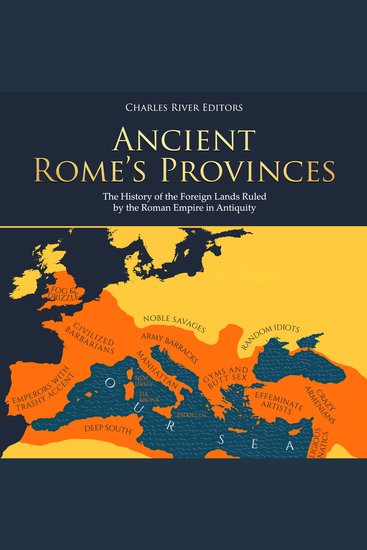
    It can be argued that Roman culture was, indeed, Graeco-Roman rather than Roman. It was the Greek language that served as the lingua franca in the Eastern Empire and much of the west including Italy. Many Greek intellectuals, including Galen, were based in Rome and the Roman aristocracy more and more came to embrace Greek literature and philosophy. Homer’s epics inspired Virgil’s Aeneid and Seneca wrote in Greek. Earlier, Scipio Africanus (236 – 183 B.C.), the epitome of the Roman martial hero, studied Greek philosophy and regarded Greek culture as the benchmark against which all others had to be judged. The Roman poet and philosopher Horace studied in Athens during the Principate and, in common with many of his class, saw that city as the intellectual centre of the world. 
    In the minds of most people today, Gaul equates to modern France. However, the vast geographical area that Caesar named Gaul, in fact, was made up of a number of very distinct regions and covered, in addition to modern-day France, Belgium, Luxembourg, parts of the Netherlands, Germany, Switzerland and Northern Italy. The Romans called the northern area of the Italian peninsula, which is now part of modern Italy, Cisalpine Gaul, or Gaul on this side of the Alps. Early Romans did not even consider this region as part of Italy and repeated incursions southwards, and the sacking of Rome itself in 390 B.C., resulted in Rome taking full control of the area in 221 B.C. and thoroughly Romanizing it to the extent that even the Celtic language totally disappeared and was replaced by Latin. The region was initially a province but by the beginning of the 1st century B.C., it had become fully integrated into the Roman heartland and became an administrative region of Italy rather than a province. 
    Show book
  • The Prophet - cover

    The Prophet

    Kahlil Gibran

    • 0
    • 0
    • 0
    Discover the timeless wisdom of The Prophet by Kahlil Gibran in this inspiring audiobook. This beloved classic, originally published in 1923, presents a series of poetic essays delivered by the wise and enigmatic prophet, Almitra. Through his profound reflections on love, work, freedom, and spirituality, Gibran offers listeners timeless insights and philosophical musings that resonate deeply with the human experience. 
    In The Prophet, Gibran explores essential aspects of life and existence, inviting listeners to ponder profound questions and embrace the beauty of simple truths. Each chapter of the audiobook delves into different themes, such as the nature of joy and sorrow, the essence of giving, and the pursuit of self-fulfillment. Gibran’s lyrical prose and thoughtful observations provide a deeply reflective and meditative experience. 
    Narrated with grace and clarity, this audiobook captures the essence of Gibran’s poetic style and philosophical depth. Ideal for moments of contemplation, personal growth, or simply seeking inspiration, The Prophet continues to touch hearts and minds across generations. 
    Start Listening to The Prophet today and immerse yourself in the enduring wisdom and beauty of Kahlil Gibran’s profound and uplifting work.
    Show book