Join us on a literary world trip!
Add this book to bookshelf
Grey
Write a new comment Default profile 50px
Grey
Subscribe to read the full book or read the first pages for free!
All characters reduced
Life in Nigeria - cover

Life in Nigeria

Amelia Khatri

Publisher: Publifye

  • 0
  • 0
  • 0

Summary

"Life in Nigeria" presents a comprehensive exploration of Africa's most populous nation, examining how over 250 ethnic groups coexist and adapt in a rapidly changing society. The book masterfully weaves together three fundamental aspects of Nigerian life: the intricate relationships between diverse ethnic communities, the country's transformation from an agricultural society to an oil-based economy, and the profound impact of urbanization on traditional social structures.

 
Through a blend of field research, demographic data, and historical records, the book illuminates fascinating aspects of Nigerian society, such as how the major ethnic groups—Hausa, Yoruba, and Igbo—maintain their distinct cultural identities while participating in a shared national narrative. The work particularly excels in demonstrating how Nigeria's economic evolution from farming to oil production has reshaped both urban landscapes and traditional community structures, with special attention given to environmental and social implications in regions like the Niger Delta.

 
The book's multidisciplinary approach combines anthropological insights with economic analysis, making complex societal transformations accessible to readers interested in African studies, development economics, and cultural anthropology. By examining the interplay between traditional customs and modern realities, from family structures to governance systems, the work provides valuable frameworks for understanding how developing nations navigate the delicate balance between preserving cultural heritage and embracing change.
Available since: 01/08/2025.
Print length: 101 pages.
Other books that might interest you

  • Why Children Should Read - 7 Secrets To Raising Intelligent Children In A Challenging World - cover

    Why Children Should Read - 7...

    Anonymous

    • 0
    • 0
    • 0
    Would you like to see your kids read more—and actually enjoy it? 
    In a world full of screens and constant distractions, many children struggle to build a real reading habit. But reading isn’t just a school skill—it’s one of the simplest ways to strengthen attention, vocabulary, empathy, and confidence. 
    In Why Children Should Read, parenting author Frank Dixon shares practical, parent-friendly strategies to help you raise a child who reads willingly and benefits from it for life. 
    In this audiobook, you’ll learn how to: 
     • Build a daily reading habit with simple routines that fit busy families 
     • Help reluctant readers start reading without nagging, arguing, or power struggles 
     • Choose the right books based on your child’s age, interests, and reading level 
     • Use read-aloud time the right way to boost comprehension and connection 
     • Reduce screen-time friction and create a home environment that supports reading 
     • Strengthen focus, vocabulary, and thinking skills through consistent reading practices 
     • Support kids who struggle with motivation, attention, or learning differences 
    If you want your child to read more, learn faster, and grow into a stronger thinker, this audiobook will help you get there—one simple strategy at a time.
    Show book
  • Somatic Rx - Unlock Trauma Release Emotional Balance and Nervous System Harmony with Somatic Exercises - cover

    Somatic Rx - Unlock Trauma...

    Jamie Somatic

    • 0
    • 0
    • 0
    Are you tired of talk therapy and treatments that just don't seem to heal the root of your trauma or stress? 
    In Somatic Rx, Jamie Somatic, your compassionate guide, unveils a revolutionary path to healing: somatic exercises. Discover how to unlock trauma release, emotional balance, and nervous system harmony through simple, yet powerful body-centered techniques. 
    This practical guide empowers you to move beyond intellectualizing trauma and start feeling your way to profound and lasting relief. Learn to tap into your body's innate wisdom to regulate emotions, release chronic tension, and cultivate an inner sanctuary of safety and calm. 
    Perfect for anyone seeking a holistic and empowering approach to well-being, Somatic Rx offers a clear roadmap to reclaim your body and mind. 
    Ready to experience true healing? Purchase your copy of Somatic Rx today and begin your journey to nervous system harmony! 
     
    Show book
  • Green Horizon - Transforming the World in the Face of Climate Change - cover

    Green Horizon - Transforming the...

    Ahmed Elidrisy

    • 0
    • 0
    • 0
    "Green Horizon" presents a compelling vision for transforming society in response to the urgent challenge of climate change. Written by leading experts in sustainability and environmental policy, this book explores innovative strategies and practical solutions for achieving a sustainable, low-carbon future. Through a combination of research insights, case studies, and policy recommendations, "Green Horizon" outlines a roadmap for transitioning to a more resilient and environmentally friendly society. From renewable energy and sustainable agriculture to green technology and urban planning, this book covers a wide range of topics, providing inspiration and guidance for individuals, businesses, and governments committed to addressing climate change. 
    With a focus on collaboration and collective action, "Green Horizon" offers hope and optimism for building a brighter, greener future for generations to come.
    Show book
  • The Kushan Empire - Rulers and the Spread of Buddhism - cover

    The Kushan Empire - Rulers and...

    Rolf Hedger

    • 0
    • 0
    • 0
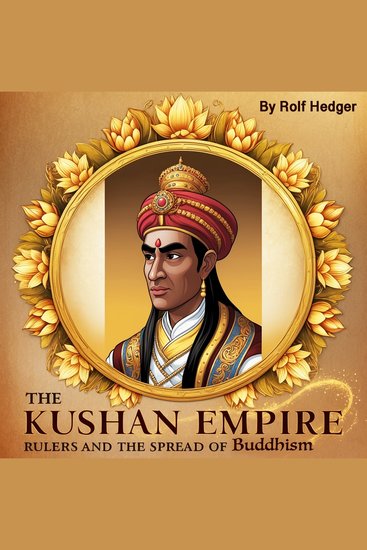
    The Kushan Empire, one of the most influential powers in Central and South Asia, originated from the nomadic Yuezhi people. The Yuezhi were an Indo-European group that initially resided in the western regions of China, near the Tarim Basin. However, in the 2nd century BCE, they were forced to migrate westward due to conflicts with the Xiongnu, a dominant steppe confederation. This migration led them into Central Asia, where they eventually settled in the Bactrian region, which had previously been under Greek influence following the campaigns of Alexander the Great. 
    Over time, the Yuezhi tribes consolidated their power, and by the 1st century CE, one of their clans, the Kushans, emerged as the dominant force. Kujula Kadphises, the first major ruler of the Kushan Dynasty, is credited with unifying the fragmented Yuezhi groups and establishing the foundation of the empire. Under his leadership, the Kushans expanded their influence, incorporating regions of modern-day Afghanistan, Pakistan, and northern India. His military campaigns against the remnants of the Indo-Greek and Indo-Scythian kingdoms allowed the Kushans to gain control over crucial trade routes, solidifying their position as a major power in the region. 
    The early political structure of the Kushan Empire reflected its nomadic roots while incorporating elements from the civilizations it encountered. The rulers maintained a centralized authority but allowed local governance to continue in many areas, a practice that helped integrate diverse cultural and ethnic groups into the empire. This pragmatic approach to governance enabled the Kushans to sustain their rule over a vast and multicultural domain.
    Show book
  • Liberal White Supremacy - How Progressives Silence Racial and Class Oppression - cover

    Liberal White Supremacy - How...

    Angie Beeman

    • 0
    • 0
    • 0
    In Liberal White Supremacy, Angie Beeman argues that white supremacy is maintained not only by right-wing conservatives or stereotypically uneducated working-class racial bigots but also by progressives who operate from a liberal ideology of color-blindness, racism-evasiveness, and class elitism. This distinction provides insight on divisions among progressives at the local level, in community organizations, and at the national level, in the Democratic Party. By distinguishing between liberal and radical approaches to racism, class oppression, capitalism, and social movement tactics, Beeman shows how progressives continue to be limited by liberal ideology and perpetuate rather than dismantle white supremacy, all while claiming to be antiracist. 


    She conceptualizes this self-serving process as "liberal white supremacy," the tendency for liberal European Americans to constantly place themselves in the superior moral position in a way that reinforces inequality. Beeman advances what she calls action-oriented and racism-centered intersectional approaches as alternatives to progressive organizational strategies that either downplay racism in favor of a class-centered approach or take a talk-centered approach to racism without developing explicit actions to challenge it.
    Show book
  • Eleanor of Aquitaine and Richard the Lionheart: The History of the Mother and Son Who Shaped Medieval Europe - cover

    Eleanor of Aquitaine and Richard...

    Charles River Editors

    • 0
    • 0
    • 0
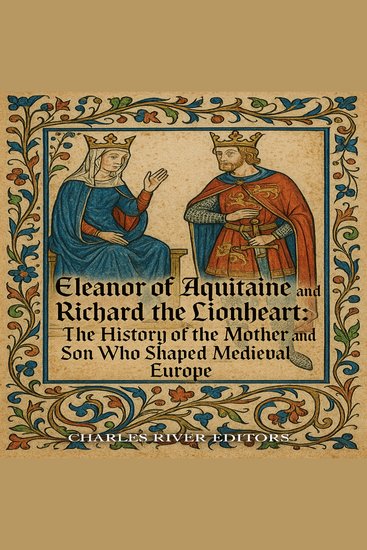
    Laying next to the tomb effigy of King Henry II of England in France's Fontevraud Abbey is a curious coffin chiseled in the shape of a young woman in repose. The once vibrant paint on the effigy is flaking, and several areas of the centuries-old tombs are chipped, but her general features are still somewhat recognizable. The beautiful, crowned queen, depicted with a soft smile on her face, was dressed in a simple, but elegant gown in white and blue, and an open book in her arms. The effigy is for none other than Duchess Eleanor of Aquitaine. 
    	Over the years, this mysterious 12th century figure has been portrayed in countless ways, from a valiant warrior queen and resourceful politician to a control-obsessed and manipulative siren whose only objective in life was power. What is clear is that during her long life, Eleanor she played an outsized role in both French and English history, and she also had an impact on the course of the Crusades, not just with her first husband, France’s King Louis VII, but also through her offspring with her second husband, Henry II.  
    	The enduring figure of the Middle Ages is the chivalrous knight who served as a hero across much of Europe, and nobody played a more defining role in casting the popular image of medieval knights than Eleanor’s son Richard the Lionheart, one of the most famous English kings and crusaders. In many respects, it was ironic that Richard became one of the central characters of the Middle Ages, and his very popular legacy today belies centuries of controversy. Richard I Plantagenet, better known by his nickname “Coeur de Lion” (Lionheart), eventually became King of England, Grand Duke of Aquitaine, Duke of Poitou, and Duke of Anjou, but as the third son in a large family, he did not expect to or even want to rule England. Nevertheless, it was he who eventually came to the throne upon his father's death, assisted in great measure by his statesmanlike mother Eleanor.
    Show book