Join us on a literary world trip!
Add this book to bookshelf
Grey
Write a new comment Default profile 50px
Grey
Subscribe to read the full book or read the first pages for free!
All characters reduced
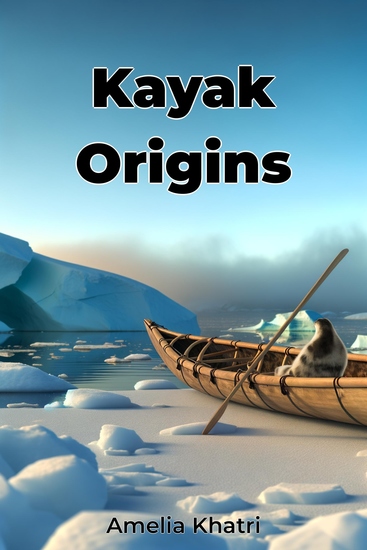
Kayak Origins - cover

Kayak Origins

Amelia Khatri

Translator A AI

Publisher: Publifye

  • 0
  • 0
  • 0

Summary

"Kayak Origins" presents a fascinating 4,000-year journey of one of humanity's most remarkable watercraft innovations, exploring how the kayak evolved from an essential Arctic hunting vessel to a globally popular recreational craft. The book masterfully weaves together archaeological evidence, indigenous knowledge, and modern engineering principles to demonstrate the sophisticated design elements that made kayaks extraordinarily effective in challenging polar waters.

 
Through meticulous research, it reveals how different Arctic communities developed unique kayak variations based on their specific hunting needs and available materials, showcasing the ingenuity of indigenous maritime engineering. The narrative unfolds across three distinct sections, beginning with an in-depth examination of traditional Arctic kayak development and the advanced engineering principles embedded within their design. The story then bridges historical practices with modern adaptations, documenting how European exploration led to the kayak's global spread.

 
The final section explores its transformation into a recreational vessel and its lasting influence on contemporary water sports and vessel design. Throughout the text, complex technical concepts are presented in an accessible manner, supported by detailed illustrations and real-world examples. What sets this comprehensive work apart is its unique integration of technical analysis with cultural history, challenging previous assumptions about indigenous engineering capabilities.

 
By drawing from archaeological findings, anthropological studies, and modern fluid dynamics research, the book demonstrates how ancient principles of hydrodynamics continue to influence contemporary watercraft design, making it an invaluable resource for both history enthusiasts and modern maritime engineers.
Available since: 01/30/2025.
Print length: 104 pages.

Other books that might interest you

  • Unseen Battles - Navigating Mental Health in Young Women - cover

    Unseen Battles - Navigating...

    Well-Being Publishing

    • 0
    • 0
    • 0
    This audiobook is narrated by an AI Voice.   
    Discover the Strength Within Every Silent Struggle 
    Unseen Battles: Navigating Mental Health in Young Women offers a profound exploration into the often overlooked and deeply personal challenges faced by young women today. This compassionate guide sheds light on the complexities of mental health, from anxiety’s quiet grip to the multifaceted nature of depression, all while honoring the unique experiences of adolescent girls and young women. 
    Dive into an empathetic journey that reveals how social pressures, academic demands, and family dynamics intertwine to impact emotional well-being. With practical insights, this book tackles difficult topics like trauma and self-identity with a voice that is both understanding and empowering. Readers will find valuable strategies to build resilience and cultivate a positive sense of self, nurturing the spark of hope that drives healing and growth. 
    Beyond identifying challenges, this book equips caregivers, educators, and young women themselves with effective tools for support, communication, and recovery. From therapeutic options to community resources, its rich content serves as a vital roadmap for those seeking strength amidst adversity. The guidance offered goes beyond theory; it is a call to compassionate action that fosters connection and authentic empowerment. 
    Whether you’re navigating your own mental health journey or supporting someone else’s, this book provides an essential foundation for understanding and overcoming unseen battles. Step into a space where struggle meets courage and where every young woman’s story of mental health is heard, honored, and embraced with unwavering compassion.
    Show book
  • California - An American History - cover

    California - An American History

    John Mack Faragher

    • 0
    • 0
    • 0
    A concise and lively history of California, the most multicultural state in the nation 
      
    “Faragher takes the reader on a captivating journey through myriad twists and turns of California’s multicultural history, enlivened by stories of people who rarely penetrate our traditional state chronicles.”—Carlos E. Cortés, University of California, Riverside 
      
    California is the most multicultural state in the nation. As John Mack Faragher argues in this concise and lively history, that is nothing new. California's natural variety has always supported diversity, including Native peoples speaking dozens of distinct languages, Spanish and Mexican colonists, gold seekers from all corners of the globe, and successive migrant waves from the eastern states, Europe, Latin America, Asia, and the Pacific Islands. 
      
    Beautifully crafted and elegantly written, Faragher tells the stories of a colorful cast of characters, some famous, others mostly unknown, including African American Archy Lee, who sued for his freedom; Sinkyone Indian woman Sally Bell, who survived genocide; and Jewish schoolgirl Marilyn Greene, who spoke up for her Japanese friends after Pearl Harbor. California's multicultural diversity often led to conflict, turmoil, and violence, but also to invention, improvisation, and a struggle for multicultural democracy.
    Show book
  • The American Operations in WW2: Rhineland - 15 September 1944–21 March 1945 - cover

    The American Operations in WW2:...

    U.S. Army Center of Military...

    • 0
    • 0
    • 0
    World War II was the largest and most violent armed conflict in the history of mankind. Highly relevant today, World War II has much to teach us, not only about the profession of arms, but also about military preparedness, global strategy, and combined operations in the coalition war against fascism. This book follows military operations of the US Army in Germany from 15 September 1944 to 21 March 1945. 
    In September 1944, the long-awaited final victory over Nazi Germany seemed close at hand for the Allies. In the East, the Red Army moved inexorably toward the German frontier. In the skies over the Third Reich and the occupied countries, Allied air power wreaked havoc on the Wehrmacht, German industry, and lines of communications. In the West, three Allied army groups stretched from the North Sea to Switzerland—poised for the final assault against the Nazi homeland.
    The mood in General Dwight D. Eisenhower's Supreme Headquarters, Allied Expeditionary Force (SHAEF), was almost euphoric. General Eisenhower's intelligence officer predicted that victory in Europe was "within sight, almost within reach." The First Army chief of intelligence was even more optimistic, declaring that it was unlikely that organized German resistance would continue beyond 1 December 1944. Others, however, believed that the Germans remained unbeaten. Col. Oscar W. Koch, the Third Army intelligence officer, was convinced that the German Army, far from being routed, was playing for time and preparing for a "last-ditch struggle in the field at all costs."
    Instead of a quick dash into the heart of Germany, what awaited General Eisenhower's armies was an exhausting campaign in horrid weather against a foe whose determination was steeled by the belief that he was fighting for the very survival of his homeland. The Rhineland Campaign was about to begin...
    Show book
  • Wells Hitler and the World State - cover

    Wells Hitler and the World State

    George Orwell

    • 0
    • 0
    • 0
    The German air power has been largely spent. It is behind the times and its first-rate men are mostly dead or disheartened or worn out. 
        In 1914 the Hohenzollern army was the best in the world. Behind that screaming little defective in Berlin there is nothing of the sort... Yet our military ‘experts’ discuss the waiting phantom. In their imaginations it is perfect in its equipment and invincible in its discipline. Sometimes it is to strike a decisive ‘blow’ through Spain and North Africa and on, or march through the Balkans, march from the Danube to Ankara, to Persia, to India, or ‘crush Russia’, or ‘pour’ over the Brenner into Italy. The weeks pass and the phantom does none of these things-for one excellent reason. It does not exist to that extent. Most of such inadequate guns and munitions as it possessed must have been taken away form it and fooled away in Hitler's silly feints to invade Britain. And its raw jerry-built discipline is wilting under the creeping realisation that the Blitzkrieg is spent, and the war is coming home to roost.
    Show book
  • Medieval History of Montenegro The: The History of the Region’s Rulers and Culture Before the Modern Era - cover

    Medieval History of Montenegro...

    Editors Charles River

    • 0
    • 0
    • 0
    Much has been written about Western intervention during the breakup of Yugoslavia, and whether it made matters worse, prevented worse atrocities, or was simply ineffective. In early 1992, however, what was clear was that Europe was hopelessly divided over the best course of action to take towards Yugoslavia, and after several years of fighting, the Bosnian War was one of the most violent conflagrations in Europe since the end of World War II.  
    	That war had been the byproduct of centuries of tensions in the Balkans, and an attempt in the wake of World War I to redraw the political boundaries of Europe and the Middle East. That included forming the Kingdom of Yugoslavia, initially known as the Kingdom of Serbs, Croats and Slovenes, a particularly fragile enterprise, and there was almost constant tension between the majority Serbs and the other Yugoslav nationalities, especially the Croats. As a result, the Kingdom was a land of political assassinations, underground terrorist organizations, and ethnic animosities. In 1929, King Alexander I suspended democracy and ruled as a dictator until he himself was assassinated in 1934.  
    	Depending on the source, many authors have focused on different catalysts for Yugoslavia’s demise, but Vesna Drapac may have succinctly summed the situation up when he wrote that by the end, the state “lacked a reason to exist.” There is certainly something in this sentiment, but the disintegration came at an enormous cost. 
    	Given what happened in Yugoslavia, it should be little surprise the area that eventually became the modern nation of Montenegro has had a turbulent history for millennia, with shifting borders, different degrees of autonomy, and various conflicts occurring within it.  
    	  
      
    Show book
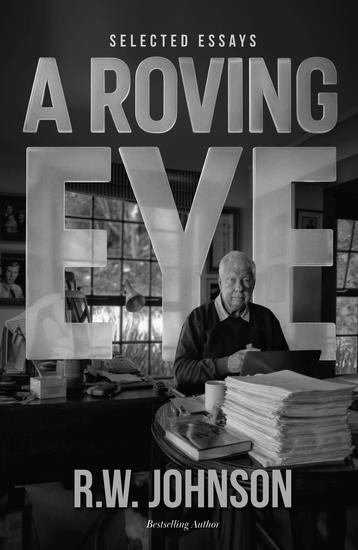
  • A Roving Eye - Selected Essays - cover

    A Roving Eye - Selected Essays

    R.W. Johnson

    • 0
    • 0
    • 0
    R.W. Johnson's articles and essays travel far beyond Southern Africa, reaching readers across continents. Their appeal lies not only in their acuity but also in his exceptional range of subjects – political, historical and cultural. As a former Oxford don and a leading international commentator, Johnson remains unmatched as an interpreter of national and world events.
    Whether he's writing about politics in South Africa, Europe or the United States, the new space race, the leading personalities of our time, or even soccer, his views are always sharp, clear, deeply informed and original.
    These essays belong unmistakably to the tradition of George Orwell. Orwell aspired to make political writing an art form, but his finest essays – even those on seemingly trivial subjects such as boys' comics – revealed both a penetrating intelligence and remarkable breadth. Johnson's writing is similar in spirit: like Orwell's, his essays can be read consecutively or dipped into at random, each one offering something striking and original.
    The result is A Roving Eye, a book that is not just distinctive but truly unique, marked by depth, range, humanity and a rare sophistication.
    R.W. Johnson, author of 17 books and innumerable articles, attended schools in the UK and South Africa, did his first degree at the University of Natal and was then a Rhodes Scholar at Oxford. For 26 years he was a Fellow and Tutor at Magdalen College, Oxford and he remains a Fellow of the College. An expert in French, British, American and South African politics, his books have ranged over all these interests and for many years he also wrote for The (London) Times, Sunday Times, the London Review of Books, Le Monde Diplomatique and other titles in the international media. Johnson's writings have been widely praised and have often excited controversy. He is a master of the essay form and his essays have had a wide circulation. He is married to the Russian scholar, Irina Filatova, and they live in Cape Town.
    Show book