Join us on a literary world trip!
Add this book to bookshelf
Grey
Write a new comment Default profile 50px
Grey
Subscribe to read the full book or read the first pages for free!
All characters reduced
Hot Sauce Evolution - cover

Hot Sauce Evolution

Amelia Khatri

Publisher: Publifye

  • 0
  • 0
  • 0

Summary

"Hot Sauce Evolution" presents a fascinating journey through time, exploring how chili-based condiments transformed from basic food preservatives into a global culinary phenomenon. The book masterfully weaves together three compelling narratives: the scientific development of heat measurement through the Scoville Scale, the historical trade routes that globalized chilies, and the rich cultural significance of regional hot sauce variations across different societies.

 
Beginning with the domestication of wild chilies in 6000 BCE by indigenous Mesoamerican peoples, the narrative tracks how capsaicin-rich fruits became integral to both sustenance and medicine. The story takes a dramatic turn during the Spanish colonization period, when maritime trade networks carried chilies across continents, fundamentally reshaping cooking practices from Asia to Europe.

 
The book reveals how hot sauce development mirrors human migration patterns, offering a unique lens through which to view cultural exchange and culinary evolution. Structured in three comprehensive sections, the work progresses from the scientific foundations of capsaicin to the geographical spread of chilies, before culminating in an analysis of modern hot sauce culture.

 
Drawing from archaeological findings, colonial trade documents, and contemporary market data, the book presents its material in an accessible academic style that appeals to both casual readers and food history enthusiasts. This approach makes complex concepts digestible while maintaining scholarly integrity, offering valuable insights into how a simple condiment has shaped agricultural practices, preservation techniques, and international trade relationships throughout history.
Available since: 01/11/2025.
Print length: 93 pages.

Other books that might interest you

  • Emotional Intelligence 20 - How To Improve Your Social Skills For Adults and Eq Develop Your Emotional Intelligence Increase Positive Intelligence and Build Healthy Relationship for Happy Life - cover

    Emotional Intelligence 20 - How...

    Daniel Newton

    • 0
    • 0
    • 0
    Even though emotional intelligence lacks the volume of quantitative empirical cognitive research that IQ has, the research in the field of cognitive learning has suggested that emotional intelligence is a key fundamental aspect of education. According to a report published by the National Center for Clinical Infant Programs, the level of success that a student has learned new material boils down to their levels of confidence, self-control, curiosity, their ability to communicate, their cooperativeness, their relatedness, and their intentionality. All these traits are aspects of emotional intelligence. More recently, social scientists are beginning to uncover the relationship of emotional intelligence to other organizational psychologies, such as leadership, group performance, individual performance, interpersonal exchange, performance evaluations, and change management. Humans are social beings, and as such, our level of success when dealing with people is intimately linked with our level of emotional intelligence. 
     What you will learn in this book: 
    ·      What Is Emotional Intelligence and How Does It Impact the Workplace?  
    ·      What Is Emotional Intelligence And Why You Must Maintain It     
    ·      What is Emotional Intelligence?       
    ·      Emotional Intelligence Tests Make People Better and More Productive Individuals     
    ·      Instructions to Improve Emotional Intelligence - The Steps on How to Develop Your Emotional Intelligence (EI)        
    ·      Emotional Intelligence - 3 Aspects Of Emotional Intelligence As Per Daniel Goleman       
    Show book
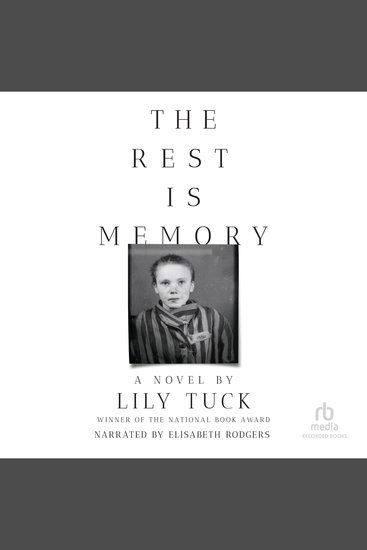
  • The Rest Is Memory - cover

    The Rest Is Memory

    Lily Tuck

    • 0
    • 0
    • 0
    THE HEARTBREAKING STORY OF A YOUNG CATHOLIC GIRL TRANSPORTED TO AUSCHWITZ BECOMES A RASHOMON-LIKE RONDO BY ONE OF OUR GREATEST NOVELISTS. 
     
    First glimpsed riding on the back of a boy’s motorcycle, fourteen-year-old Czeslawa comes to life in this mesmerizing novel by Lily Tuck, who imagines her upbringing in a small Polish village before her world imploded in late 1942.  
     
    Stripped of her modest belongings, shorn, and tattooed number 26947 on arriving at Auschwitz, Czeslawa is then photographed. Three months later, she is dead. 
     
    How did this happen to an ordinary Polish citizen? This is the question that Tuck grapples with in this haunting novel, which frames Czeslawa’s story within the epic tragedy of six million Poles who perished during the German occupation. A decade prior to writing The Rest Is Memory, Tuck read an obituary of the photographer Wilhelm Brasse, who took more than 40,000 pictures of the Auschwitz prisoners. Included were three of Czeslawa Kwoka, a Catholic girl from rural southeastern Poland. Tuck cut out the photos and kept them, determined to learn more about Czeslawa, but she was only able to glean the barest facts: the village she came from, the transport she was on, that she was accompanied by her mother and her neighbors, her tattoo number, and the date of her death. From this scant evidence, Tuck’s novel becomes a remarkable kaleidoscopic feat of imagination, something only our greatest novelists can do. 
     
    “Beautifully written, all the while instilling a sense of horror” (Susanna Moore), Tuck’s language swirls about, yet not a word is out of place. The subtly rotating images tumble out at us, accelerating as we learn about Czeslawa’s tragic stay in Auschwitz, the lives of real people such as the barbaric Commandant Rudolf Höss; his unconscionable wife, Hedwig; the psychiatrist and child rescuer Janusz Korczak; and the mordant Polish short story writer Tadeusz Borowski. 
     
    Although we are certain of Czeslawa’s fate, we have no choice but to keep turning the pages, thoroughly mesmerized by Tuck’s near otherworldly prose. 
     
    In Lily Tuck’s hands, The Rest Is Memory becomes an unforgettable work of historical reclamation that rescues an innocent life, one previously only recalled by a stark triptych of photographs. 
     
    “The Rest Is Memory is a literary resurrection, as shattering as it is astonishing. Lily Tuck has done the impossible; from darkness and hideous cruelty, she has woven an unforgettable paean to hope, to life, to justice.”—Junot Diaz
    Show book
  • Secularity and Science - What Scientists Around the World Really Think About Religion - cover

    Secularity and Science - What...

    Steven W. Lewis, Kirstin R.W....

    • 0
    • 0
    • 0
    Do scientists see conflict between science and faith? Which cultural factors shape the attitudes of scientists toward religion? Can scientists help show us a way to build collaboration between scientific and religious communities, if such collaborations are even possible? 


    To answer these questions and more, the authors of Secularity and Science: What Scientists Around the World Really Think About Religion completed the most comprehensive international study of scientists' attitudes toward religion ever undertaken, surveying more than 20,000 scientists and conducting in-depth interviews with over 600 of them. From this wealth of data, the authors extract the real story of the relationship between science and religion in the lives of scientists around the world. The book makes four key claims: there are more religious scientists than we might think; religion and science overlap in scientific work; scientists—even atheist scientists—see spirituality in science; and finally, the idea that religion and science must conflict is primarily an invention of the West. Secularity and Science leaves inaccurate assumptions about science and religion behind, offering a new, more nuanced understanding of how science and religion interact and how they can be integrated for the common good.
    Show book
  • Red Paint - The Ancestral Autobiography of a Coast Salish Punk - cover

    Red Paint - The Ancestral...

    Sasha LaPointe

    • 0
    • 0
    • 0
    Sasha LaPointe has always longed for a sense of home. When she was a child, her family moved around frequently, often staying in barely habitable church attics and trailers, dangerous places for young Sasha. 


    With little more to guide her than a passion for the thriving punk scene of the Pacific Northwest and a desire to live up to the responsibility of being the namesake of her beloved great-grandmother—a linguist who helped preserve her Indigenous language of Lushootseed—Sasha throws herself headlong into the world, determined to build a better future for herself and her people. 


    Set against a backdrop of the breathtaking beauty of Coast Salish ancestral land and imbued with the universal spirit of punk, Red Paint is ultimately a story of the ways we learn to find our true selves while fighting for our right to claim a place of our own. 


    Examining what it means to be vulnerable in love and in art, Sasha offers up an unblinking reckoning with personal traumas amplified by the collective historical traumas of colonialism and genocide that continue to haunt native peoples. Red Paint is an intersectional autobiography of lineage, resilience, and, above all, the ability to heal.
    Show book
  • Luminous Darkness - An Engaged Buddhist Approach to Embracing the Unknown - cover

    Luminous Darkness - An Engaged...

    Deborah Eden Tull

    • 0
    • 0
    • 0
    A resonant call to explore the darkness in life, in nature, and in consciousness through teachings, embodied meditations, and mindful inquiry that provide us with a powerful path to healing. 


    Darkness is deeply misunderstood in today's world; yet it offers powerful medicine, serenity, strength, healing, and regeneration. All insight, vision, creativity, and revelation arise from darkness. It is through learning to stay present and meet the dark with curiosity rather than judgment that we connect to an unwavering light within. Welcoming darkness with curiosity, rather than fear or judgment, enables us to access our innate capacity for compassion and collective healing. 


    Dharma teacher, shamanic practitioner, and deep ecologist Deborah Eden Tull addresses the spiritual, ecological, psychological, and interpersonal ramifications of our bias towards light. 


    Tull shows us how the labeling of darkness as "negative" becomes a collective excuse to justify avoiding everything that makes us uncomfortable: racism, spiritual bypass, environmental destruction. We can only find the radical path to wholeness by learning to embrace the interplay of both darkness and light.
    Show book
  • Physiologus - A Medieval Book of Nature Lore - cover

    Physiologus - A Medieval Book of...

    Michael J. Curley

    • 0
    • 1
    • 0
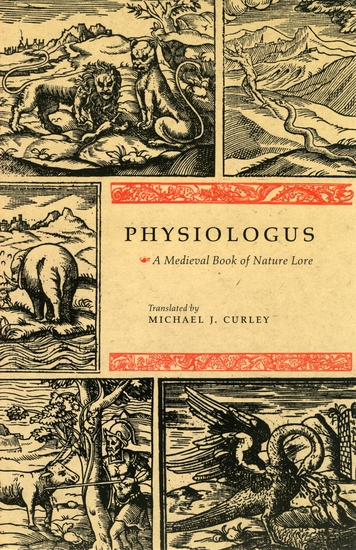
    One of the most popular and widely read books of the Middle Ages, Physiologus contains allegories of beasts, stones, and trees both real and imaginary, infused by their anonymous author with the spirit of Christian moral and mystical teaching.  Accompanied by an introduction that explains the origins, history, and literary value of this curious text, this volume also reproduces twenty woodcuts from the 1587 version. Originally composed in the fourth century in Greek, and translated into dozens of versions through the centuries, Physiologus will delight readers with its ancient tales of ant-lions, centaurs, and hedgehogs—and their allegorical significance. “An elegant little book . . . still diverting to look at today. . . . The woodcuts reproduced from the 1587 Rome edition are alone worth the price of the book.”—Raymond A. Sokolov, New York Times Book Review
    Show book