Join us on a literary world trip!
Add this book to bookshelf
Grey
Write a new comment Default profile 50px
Grey
Subscribe to read the full book or read the first pages for free!
All characters reduced
Hilarious Misunderstandings - cover

Hilarious Misunderstandings

Amelia Khatri

Translator A AI

Publisher: Publifye

  • 0
  • 0
  • 0

Summary

"Hilarious Misunderstandings" explores how historical, cultural, and linguistic misunderstandings have shaped the world, often with humorous and unexpected consequences. It delves into instances where misinterpretations have led to significant events, revealing how easily communication can break down across cultures. For example, mistranslations in diplomatic relations have altered trade agreements, and differing social norms have ignited international conflicts. The book uniquely balances serious historical analysis with an engaging tone, making complex events accessible to a broad audience interested in history world, history, and social dynamics. The book examines the impact of both linguistic and cultural misunderstandings, providing historical context to understand the specific social and political climates in which these events occurred. It progresses through case studies, each focusing on a specific historical event or social phenomenon, such as the role of cultural misunderstandings in shaping social policy. By analyzing patterns across these cases, the book draws conclusions about the nature of misunderstanding and offers insights into improving communication to avoid similar pitfalls, ultimately making the reader more aware of the nuances of cross-cultural communication.
Available since: 02/12/2025.
Print length: 57 pages.

Other books that might interest you

  • Untangling Critical Race Theory - What Christians Need to Know and Why It Matters - cover

    Untangling Critical Race Theory...

    Ed Uszynski

    • 0
    • 0
    • 0
    What is Critical Race Theory? 


    It may be one of the most widely referenced issues of the day, but it's also one of the least understood. In its translation from the academic world to the general public, Critical Race Theory (CRT) has inaccurately become a catch-all term for anything related to race. But what does it actually mean, and how should Christians engage it? 


    Ed Uszynski—whose PhD in American culture studies navigated readings in Marxism, Critical Theory, and Critical Race Theory—carefully unpacks what critical race theorists seek to accomplish and what Christians can learn from them. Uszynski generously explores CRT's roots, context, and central tenets, revealing how its insights are used and distorted but also how they might benefit the church. With responsible answers to legitimate concerns, Uszynski goes beyond the surface to provide a reliable path of just discernment and cultural engagement.
    Show book
  • Women of Ancient Babylon - Queens Priests and Architects - cover

    Women of Ancient Babylon -...

    Layla Gupta

    • 0
    • 0
    • 0
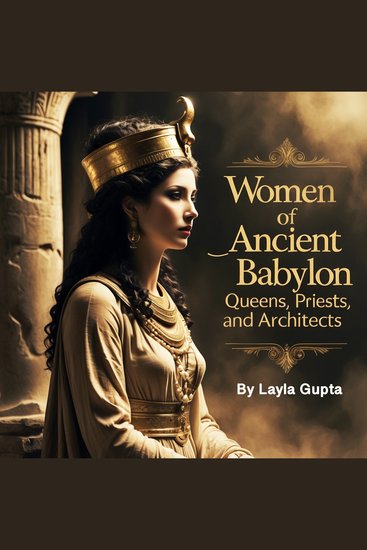
    The ancient city of Babylon, nestled along the banks of the Euphrates River in what is now modern-day Iraq, was once the heart of a thriving and sophisticated civilization. As early as the third millennium BCE, this region—Mesopotamia—was home to great cities, towering ziggurats, and a people whose innovations would echo through history. Babylon, in particular, rose to prominence under rulers like Hammurabi and later Nebuchadnezzar II, becoming a center of law, culture, architecture, and religion. It was in this complex and multilayered society that women of various classes and backgrounds lived lives shaped by intricate social structures, religious practices, and evolving legal systems. 
    Life in ancient Babylon was deeply hierarchical, with power distributed according to class, gender, and occupation. At the top of society were the royal family and elite nobles, followed by priests, scribes, merchants, and skilled artisans. Below them were laborers, slaves, and other commoners. Women existed in all these layers of society and their roles, rights, and opportunities were directly influenced by their social standing. Elite women might serve as priestesses or manage large households and estates, while lower-class women often labored in agriculture, textile production, or domestic service. Despite the limitations placed on them by patriarchal norms, Babylonian women carved out meaningful spaces for themselves in both public and private life. 
    Religion was a central pillar of Babylonian culture and offered women specific roles within its framework. Temples were among the most powerful institutions, and women—especially those from noble or priestly families—could attain influential positions as priestesses. These women oversaw rituals, managed temple property, and acted as intermediaries between the divine and human realms.
    Show book
  • Learn German With Music - cover

    Learn German With Music

    Innovative Language Learning, ...

    • 0
    • 0
    • 0
    Can learning German be as simple as listening to music? 


    And as easy as remembering song lyrics?


    Just think. You remember song lyrics because lyrics are catchy, repeated throughout the song, and go with the music, right? Now, if you stuck in German, you’d easily learn German words and phrases the same way! 


    So, yes, learning German is as easy as listening to music… with the Learn German With Music Audiobook.


    Just press play, and you’ll hear German words and phrases repeated to the beat of upbeat and cheerful music. And… follow along!


    You’ll learn 180+ most common German words and phrases… while relaxing at home, or while driving to work.


    Learn German With Music is the easiest way to start learning German.. without getting overwhelmed by complicated explanations. Perfect for new learners with little to no language learning experience.


    What will you learn?
     
    180+ Words & Phrases Including...
     
    • Basic Greetings
     
    • Numbers
     
    • Common Questions and Answers
     
    • Parts of the Body & Talking About Your Wellbeing
     
    • Common Hobbies
     
    • And much more


    Learn German With Music includes...
     
    • 15 Songs/Lessons Inside (Each is about 7 minutes long)
     
    • Fast-Paced Review Section at the End of Each Lesson
     
    • 1 Hour 50 Minutes in Total
     
    • Accompanying PDF eBook with the Words, Phrases and Translations


    Download the PDF and read along
    Show book
  • Language and Writing in Ancient Mesopotamia: The History and Legacy of the Languages and Scripts Used across the Region in Antiquity - cover

    Language and Writing in Ancient...

    Editors Charles River

    • 0
    • 0
    • 0
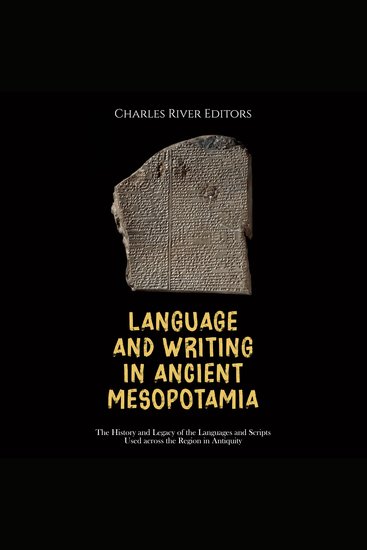
    Along with Egypt, the cultural and geographic region known as Mesopotamia was home to some of the world’s earliest civilizations and also the first known form of writing, cuneiform. Many different ethnic groups vied for power in ancient Mesopotamia over the course of antiquity, spanning about 3,000 years, and many of them spoke different languages. Despite these differences, the people in Mesopotamia shared many cultural attributes, including similar religious practices, a common art and architecture style, and a shared use of the cuneiform script.  
    	As this suggests, language and writing were different but also interconnected. The languages spoken by the peoples of Mesopotamia were as diverse as the many ethnic groups, but as those groups asserted their military, economic, and cultural power over the other groups, two languages became dominant in the region: Sumerian and Akkadian. These were the two languages that were primarily used by the people of Mesopotamia to record their myths, religious rituals, government records, and historiographical accounts.  
    	Indeed, the languages and written scripts of Mesopotamia were not just enduring over time in the region, but they also had wide geographic influence, much more than any language groups or scripts at the time. The Sumerian language continued to be learned by scribes throughout Mesopotamia centuries after it had become a “dead language,” and the Akkadian language eventually became the lingua franca of the Near East by the Late Bronze Age. Akkadian became the language of diplomacy and trade, while cuneiform was used to record agreements in Akkadian between the "Great Powers” of the era. Cuneiform was also adopted by people outside of Mesopotamia, such as the Hittites and Elamites, who modified the script to fit the lexicons and rules of grammar for their own languages.
    Show book
  • Art of War The - By Sun Tzu - cover

    Art of War The - By Sun Tzu

    Sun Tzu

    • 0
    • 0
    • 0
    The Art of War is an ancient Chinese military treatise dating from the Late Spring and Autumn Period (roughly 5th century BC). The work, which is attributed to the ancient Chinese military strategist Sun Tzu ("Master Sun"), is composed of 13 chapters. 
      
     
    01 - Laying Plans / 02 - Waging War 
    03 - Attack By Stratagem / 04 - Tactical Dispositions           
    05 - Energy / 06 - Weak Points and Strong 
    07 - Maneuvering / 08 - Variation in Tactics  
    09 - The Army on the March / 10 – Terrain 
    11 - The Nine Situations 
    12 - The Attack By Fire / 13 - The Use of Spies
    Show book
  • The Shortest History of Sex - Two Billion Years of Procreation and Recreation - cover

    The Shortest History of Sex -...

    David Baker, Simon Whistler

    • 0
    • 0
    • 0
    From the first microbial exchanges of DNA to Tinder and sexbots, how did sex begin, and how did it evolve to be so varied and complex in humans? What influence do our genetic ancestors have on our current love lives? And what might sex look like in the future? 


    With acuity, humor, and respect for human diversity, The Shortest History of Sex reveals where the many facets of our sexuality—chemical, anatomical, behavioral, social—come from. Chasing down our evolutionary family tree, from the first aquatic creatures to primate societies, David Baker sheds light on our baffling array of passions, impulses, and fetishes, and guides us toward a clear understanding of one of the deepest, most abiding forces of human nature. 


    The Shortest History of Sex also charts how sex changed for humans across the foraging, agrarian, and modern eras, showing how, even as our biology and sexual instincts have remained the same, the current nature of our sex lives has no historical or evolutionary precedent. 


    The result is a revealing, utterly unique insight into history and human behavior—and the profound forces of nature and nurture compelling our most intimate relationships.
    Show book