¡Acompáñanos a viajar por el mundo de los libros!
Añadir este libro a la estantería
Grey
Escribe un nuevo comentario Default profile 50px
Grey
Suscríbete para leer el libro completo o lee las primeras páginas gratis.
All characters reduced
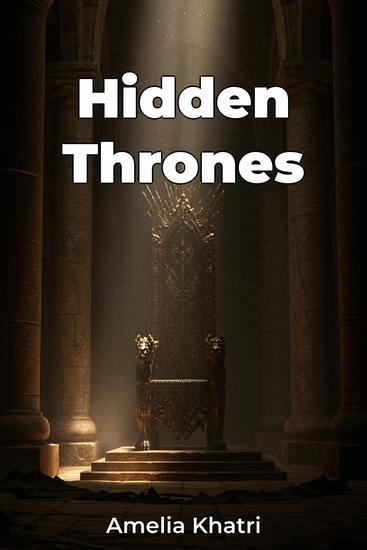
Hidden Thrones - cover

Hidden Thrones

Amelia Khatri

Traductor A AI

Editorial: Publifye

  • 0
  • 0
  • 0

Sinopsis

Hidden Thrones unveils the untold stories of secret rulers and concealed lineages that have significantly shaped world history. Moving beyond conventional narratives, the book explores the clandestine forces operating behind the scenes, revealing how unofficial rulers and powerful but unacknowledged groups manipulated political events. Consider, for example, how concealed family connections often influenced dynastic succession, subtly altering the course of empires.

 
The book progresses systematically, dedicating chapters to specific examples across key historical periods. Beginning with ancient Mesopotamia and moving through the Roman Empire to European politics, Hidden Thrones uses ancient texts and archaeological discoveries to support its arguments.

 
The central thesis challenges the completeness of official historical records, arguing they are often curated to benefit those in power. This unique approach offers a fresh perspective, shifting the focus from overt acts of power to the subtle mechanisms of influence, enriching our understanding of historical events.
Disponible desde: 27/02/2025.
Longitud de impresión: 65 páginas.

Otros libros que te pueden interesar

  • The Religious Instruction of the Negroes in the United States - cover

    The Religious Instruction of the...

    Charles Jones

    • 0
    • 0
    • 0
    This work is an extended exhortation urging white ministers and slaveowners to attend to the spiritual needs of slaves and free blacks. The book is broken into four parts. The first part is an historical sketch of slavery in the Colonies and the United States, with a focus on missionary and religious efforts directed towards the African slaves. This account goes from 1620 to 1842. Jones closes this first part with a summary of each denomination and each state. The second part treats the "Moral and Religious Condition" of slaves and free blacks, blaming their circumstances for their lack of virtue. Jones especially calls attention to their poverty and lack of education. He describes their ignorance of Christianity, their general lack of character, and their prevailing vices, noting that in the end, they are totally dependent on white men for the ability to overcome these limitations. In light of this description, Jones goes on in the third part to describe the obligations of the Christian church to rectify these problems. He asserts that the religious education of the African part of the population is a duty no Christian can ignore. In addition, he lists several benefits of religious instruction. The final part of the book proposes some strategies for implementing programs of religious instruction for slaves, making recommendations for Sabbath services as well as weekday plantation meetings. Jones says that the Christian gospel must be presented in a way that is intelligible to uneducated slaves, and must be inculcated early in childhood when possible. The guiding principle he describes for dealing with the condition of the slave is to be only concerned with the spiritual, not the secular, political, or civil. Jones concludes with pointed exhortations to masters, ministers, and the church at large, calling them all to devote more attention to the religious instruction of the African part of the American population.
    Ver libro
  • The Sociology of Crime - Understanding the Roots and Impacts of Criminal Behavior - cover

    The Sociology of Crime -...

    Fred Grandsen

    • 0
    • 0
    • 0
    Crime is not merely a legal category but a social construct shaped by historical, cultural, and political forces. What is considered criminal behavior varies across societies and time periods, reflecting changing moral values, power structures, and social interests. Understanding crime as a social construct allows us to analyze how laws are created, enforced, and challenged within different social contexts. 
    One of the key aspects of the social construction of crime is that laws are not neutral or universal. Instead, they are established by those in positions of power who determine what behaviors should be criminalized. For example, certain acts such as drug use, gambling, or even political protests have been criminalized in some societies while being tolerated or even encouraged in others. The legal system often reflects the interests of dominant groups, leading to selective enforcement of laws. Historically, vagrancy laws targeted the poor, while modern drug laws have disproportionately affected marginalized communities. 
    Crime is also shaped by cultural perceptions and media representations. The way crime is reported in the news and depicted in television shows or films influences public perceptions of who is considered criminal. For instance, street crime is often sensationalized, while corporate or white-collar crimes receive comparatively little attention, despite their significant social and economic impact. This selective framing reinforces stereotypes and can lead to policies that prioritize punishment for certain groups while overlooking more systemic forms of harm.
    Ver libro
  • Apology by Plato - cover

    Apology by Plato

    Scoobert Doobert, Plato

    • 0
    • 0
    • 0
    This isn't an apology. It's a journey back to ancient Athens for a thrilling courtroom drama... with Socrates' life on the line. 
    Charged with religious blasphemy, the corruption of the youth, and the creation of new gods, Socrates recounts his journey to become the World's Wisest Man™ — with his tongue stuck firmly inside his cheek. Hear from the gadfly of Athens, as he's guided by the oracle at Delphi and discovers his inner daimons. 
    "The Apology" is a captivating exploration of tragedy, philosophy, courage, comedy in the face of death and corruption, and the relentless pursuit of truth. This masterpiece by Plato is brought into the audiobook format by musician and producer, Scoobert Doobert. 
    It's one of his favorites from the ancient world, one that deeply shaped his personal philosophy and artistic journey. And adding to the emotional punch, this dialogue is written by Plato, Socrates' disciple who watched his friend and mentor die at the hands of a corrupt jury. It's a positively metamodern tale and feels even more so with Mr. Doobert's slight changes to the public domain translation from Attic Greek. Your purchase includes a bonus podcast episode that follows the end of the audiobook. 
    Visit www.ScoobertDoobert.Pizza to hear Mr. Doobert's music.
    Ver libro
  • Uncrowned - Royal Heirs Who Didn't Take the Throne - cover

    Uncrowned - Royal Heirs Who...

    Ashley Mantle

    • 0
    • 0
    • 0
    Through the centuries, succession to the English throne has largely been dictated by blood. Children were born to the role, their destinies entwined with that of the nation. They would be raised with the expectation that they would eventually take their place on the throne and rule the land. But not all those expected to wear the crown completed this journey. 
     
    Ashley Mantle explores the lives of several heirs apparent, from the Norman Conquest to the present day, who were destined to assume the throne of England but, for one reason or another, did not. You will meet such figures as Robert Curthose, eldest son of William the Conqueror, whose ineptitude saw him twice barred from the crown; Edward V, whose disappearance in 1483 still remains a mystery; Lady Jane Grey, the tragic Nine Days Queen; and Sophia, Electress of Hanover, who died months before her accession. Along the way we will explore the nature of rule to determine what was expected of an heir and how an heir was groomed in preparation for their ascent, as well as how the rules surrounding the succession have changed over the centuries.
    Ver libro
  • William Carey - Obliged to Go - cover

    William Carey - Obliged to Go

    Janet Benge, Geoff Benge

    • 0
    • 0
    • 0
    William Carey watched from the dock as the magnificent sailing ship headed for the English Channel without him. Tears filled his eyes, and deep disappointment filled his heart. What would he tell the missionary society? So much work awaited him half a world away. He must get to India--and soon! William's amazing journey to India would prove to be just the beginning of a missionary quest filled with hardship and heartache as well as tremendous victories. Often referred to as "the father of modern missions," William Carey displayed a single-minded determination to set his face like a flint to the task of bringing the gospel to those lost in darkness. His life of service and sacrifice is a guidpost for Christians of all generations.
    Ver libro
  • The 4th Industrial Revolution from an Ethical Perspective - cover

    The 4th Industrial Revolution...

    Timo Plutschinski, Andrew...

    • 0
    • 0
    • 0
    As the Fourth Industrial Revolution ushers into a new era of artificial intelligence (AI) and virtual reality, how should we respond to the societal and ethical dilemmas associated with this new age of transformative scientific power? This research highlights the need for an ethical and globally shared view on how technology affects the economic, social, cultural and spiritual aspects of daily life. With thanks to the international team of experts this book is outlining consequences of the Fourth Industrial Revolution in a broad range for business and work life, for leadership, for media and communication, for churches and for personal and family life. Authors are: Prof. Dr. Jack Barentsen (USA) Andrew Bunnell (USA) Jonathan Ebsworth (United Kingdom) Prof. Dr.-Ing. Klaus Henning (Germany) Prof. Dr. Bruce A. Little (USA) Jeremy Peckham (United Kingdom) Rev. Timo Plutschinski (Germany) Sallux Publishing Printed Edition: ISBN 978-94-92697-20-2
    Ver libro