Join us on a literary world trip!
Add this book to bookshelf
Grey
Write a new comment Default profile 50px
Grey
Subscribe to read the full book or read the first pages for free!
All characters reduced
Hawaiian Overthrow - cover

Hawaiian Overthrow

Amelia Khatri

Translator A AI

Publisher: Publifye

  • 0
  • 0
  • 0

Summary

Hawaiian Overthrow delves into the complex history of how the Kingdom of Hawaii, a sovereign nation with a rich cultural heritage, was overthrown and annexed by the United States. This book explores the confluence of economic interests, political maneuvering, and cultural clashes that led to the ousting of Queen Liliuokalani in 1893 and the subsequent formal annexation in 1898. Readers will gain insight into the strategic importance of Hawaii during a time of American expansionism, understanding how a small group of American and European businessmen prioritized their interests over Hawaiian sovereignty.

 
The narrative progresses chronologically, starting with pre-overthrow Hawaii, detailing its culture and governance. It then analyzes the rise of the sugar industry and the increasing power of American planters and culminates with the events of the overthrow, the establishment of the provisional government, and the long-term consequences of annexation.

 
The book emphasizes that the annexation was not inevitable but resulted from deliberate actions, challenging traditional narratives that portray American expansion as wholly benevolent.
Available since: 03/20/2025.
Print length: 56 pages.

Other books that might interest you

  • Unveil the Secrets: Epic Tales from the League of Legends - "Unlock epic stories in 'Unveil the Secrets' with thrilling audio tales for an unforgettable League of Legends experience!" - cover

    Unveil the Secrets: Epic Tales...

    Jasper Kornefeld

    • 0
    • 0
    • 0
    Unveil the Secrets: Epic Tales from the League of Legends 
    Are you eager to elevate your career and enhance your knowledge through the power of storytelling?  
    In search of a comprehensive guide filled with essential elements to unlock your potential through powerful tales of heroism? 
    Your journey starts here! 
    This audiobook is your ultimate companion for deepening your understanding, applying your skills, and immersing yourself in gripping narratives. With this guide, you are ready for success. 
    Updated to reflect current storytelling trends. 
    Key features of this captivating guide: 
    - In-depth insights into heroic adventures from the League of Legends 
    - Thorough explanations of key concepts and characters 
    - Effective strategies for engaging with the tales and applying their lessons 
    Our guide stands out with its thorough coverage, crucial for your understanding and enjoyment. Concepts are not just glossed over; they are explored with depth and clarity. 
    Please note, this guide is a purely independent resource and is not affiliated with any official League of Legends entity. 
    Crafted with a coherent structure and accessible language, our guide ensures seamless transitions between topics. Say goodbye to complex jargon and embrace clear, concise, and engaging content. 
    So, why wait? Click the BUY NOW button, secure your audiobook, and embark on your journey to unlocking the secrets of heroism!
    Show book
  • The Entanglement - How Art and Philosophy Make Us What We Are - cover

    The Entanglement - How Art and...

    Alva Noe

    • 0
    • 0
    • 0
    In The Entanglement, philosopher Alva Noë explores the inseparability of life, art, and philosophy, arguing that we have greatly underestimated what this entangled reality means for understanding human nature. 


    Life supplies art with its raw materials, but art, Noë argues, remakes life by giving us resources to live differently. Our lives are permeated with the aesthetic. Indeed, human nature is an aesthetic phenomenon, and art is the truest way of understanding ourselves. All this suggests that human nature is not a natural phenomenon. Neither biology, cognitive science, nor AI can tell a complete story of us, and we can no more pin ourselves down than we can fix or settle on the meaning of an artwork. Even more, art and philosophy are the means to set ourselves free, at least to some degree, from convention, habit, technology, culture, and even biology. In making these provocative claims, Noë explores examples of entanglement and examines a range of scientific efforts to explain the human. 


    Challenging the notions that art is a mere cultural curiosity and that philosophy has been outmoded by science, The Entanglement offers a new way of thinking about human nature, the limits of natural science in understanding the human, and the essential role of art and philosophy in trying to know ourselves.
    Show book
  • Summary: The Power of Habit by Charles Duhigg - Why We Do What We Do in Life and Business - cover

    Summary: The Power of Habit by...

    FlashBooks, Dean Bokhari

    • 0
    • 0
    • 0
    Summary of The Power of Habit by Charles Duhigg  
    by FlashBooks Book Summaries, Narrated by Dean Bokhari 
    About 
    In The Power of Habit, Charles Duhigg, award-winning business reporter for The New York Times, takes us to the thrilling edge of scientific discoveries that explain why habits exist and how they can be changed. By distilling vast amounts of information into engrossing narratives, Duhigg brings to light a whole new understanding of human nature and its potential for transformation. 
     
    Along the way, we learn why some people and companies struggle to change, despite years of trying, while others seem to remake themselves overnight. We discover the neuroscience behind how habits work and precisely which parts of the brain they develop and reside within. We discover how the right habits were crucial to the successful promotion of Pepsodent; to Tony Dungy who led his team to a Super Bowl win by changing one step in his players’ habit loop; and we learn how a large corporation managed to turned itself around by changing just one routine within the organization. 
     
    At its core, The Power of Habit contains an exhilarating argument: The key to exercising regularly, losing weight, raising exceptional children, becoming more productive, building revolutionary companies and social movements, and achieving success is about understanding how habits work. By harnessing this new science, we can transform our businesses, our communities and our lives. 
     
    Here’s what you’ll learn about in this summary: 
    Why the brain tries to make routines into habits.How cravings create and power new habits.How to apply the golden rule of habit change.What “keystone habits” are and the importance of them in creating a new routine.
    Show book
  • The Digital Paradigm Shift - A Groundbreaking Machine's Impact on Civilization - cover

    The Digital Paradigm Shift - A...

    John Harpoon

    • 0
    • 0
    • 0
    The journey into the digital age began with the spark of human ingenuity and the desire to simplify complex tasks. Early civilizations laid the groundwork for computation by devising systems to manage trade, record history, and calculate astronomical events. These early tools, such as the abacus and mechanical calculators, may seem rudimentary by modern standards, yet they were the building blocks of a monumental transformation. 
    In the late 19th and early 20th centuries, the seeds of the digital age began to take root. Pioneers like Charles Babbage and Ada Lovelace envisioned the potential of programmable machines long before the technology to build them existed. Lovelace's notes on Babbage's Analytical Engine contained the first algorithm intended for implementation on a machine, earning her recognition as the world’s first computer programmer. Their ideas laid a conceptual foundation that would inspire future innovators. 
    The advent of World War II catalyzed the development of modern computing. The need for advanced cryptography, ballistics calculations, and logistical coordination drove governments and researchers to invest in computational technologies. Alan Turing, often referred to as the father of computer science, developed the Turing Machine, a theoretical construct that became a cornerstone of computer science. His work at Bletchley Park, cracking the German Enigma code, not only shortened the war but also showcased the immense potential of automated computation.
    Show book
  • Native American Tribes - Cherokee Apache Comanche Eskimo Pawnee and Sioux - cover

    Native American Tribes -...

    Kelly Mass

    • 0
    • 0
    • 0
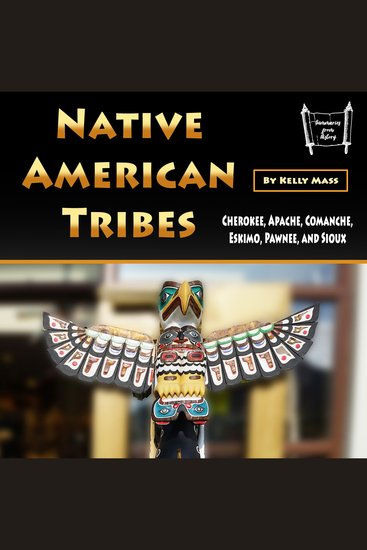
    This is a combo book with various topics represented. The Native American Tribes are the center of this book’s focus. The tribes are: 
    Apache, Cherokee, Comanche, Eskimo, Pawnee, and Sioux. 
    You will learn about various historical happenings that shaped the future of the these tribes and their destination.
    Show book
  • Ancient Egyptian Law and Governance - Systems of Order and Justice - cover

    Ancient Egyptian Law and...

    Omar Khalil

    • 0
    • 0
    • 0
    Ancient Egyptian law was deeply rooted in the concept of Ma’at, the divine order that governed the universe and ensured balance, truth, and justice. This principle was not just a philosophical ideal but a practical guide for governance and social conduct. The legal system in Egypt was designed to maintain harmony within society, regulate disputes, and uphold the authority of the ruling elite. Unlike modern legal frameworks based on written statutes, Egyptian law was a combination of tradition, royal decrees, and religious doctrines. It was adaptable, relying on the wisdom of judges and officials rather than rigid legal codes. 
    The origins of legal traditions in ancient Egypt can be traced back to the early dynastic period when the first centralized state emerged. As society became more complex, a structured system of governance was necessary to manage resources, trade, and interpersonal conflicts. The earliest evidence of legal practice comes from administrative records, tomb inscriptions, and temple documents, which indicate that law was an integral part of daily life. While no single codified legal text has survived, references to decrees issued by pharaohs suggest that laws were issued and enforced at the highest levels of authority. 
    At the heart of Egyptian governance was the role of Ma’at, which extended beyond ethical conduct to legal proceedings. Ma’at represented a cosmic balance that rulers were duty-bound to uphold. The pharaoh, as the earthly representative of the gods, was seen as the ultimate source of justice. His decrees and judgments set legal precedents, shaping the administration of law across the kingdom. This divine connection made Egyptian law unique, as it blended religious principles with practical governance, ensuring that justice was not only a human responsibility but also a sacred duty.
    Show book