Join us on a literary world trip!
Add this book to bookshelf
Grey
Write a new comment Default profile 50px
Grey
Subscribe to read the full book or read the first pages for free!
All characters reduced
Exodus Numbers Fit - cover

Exodus Numbers Fit

Amelia Khatri

Translator A AI

Publisher: Publifye

  • 0
  • 0
  • 0

Summary

Exodus Numbers Fit explores the historicity of the Exodus by examining if the Israelite population figures presented in the Book of Numbers are logistically feasible. It tackles the central question of whether the biblical census numbers, which suggest a massive Israelite population, align with the realities of sustaining, moving, and governing such a group in the ancient Near East. The book questions whether the numbers are literal or symbolic, and how the answer impacts our understanding of the Exodus narrative. One intriguing fact explored is how the water requirements alone for a population of millions would have posed a monumental challenge in the arid Sinai Peninsula.

 
The approach of Exodus Numbers Fit involves a structured analysis, starting with the biblical texts and then systematically evaluating logistical challenges such as water, food, sanitation, and military organization. It draws on archaeological data, environmental studies, and logistical modeling, even incorporating modern supply chain management principles.

 
The book progresses by introducing biblical population counts, examining logistical challenges, evaluating demographic data, and discussing implications for understanding the Exodus narrative, including alternative interpretations of numerical data.

 
This book is valuable to those in Biblical Studies and History as it offers a data-driven perspective, using evidence-based reasoning to assess the plausibility of the Exodus story.
Available since: 02/27/2025.
Print length: 74 pages.

Other books that might interest you

  • Awkwardness - A Theory - cover

    Awkwardness - A Theory

    Alexandra Plakias

    • 0
    • 0
    • 0
    Awkwardness offers an account of the psychology and philosophical significance of a ubiquitous social phenomenon. Our aversion to awkwardness mirrors our desire for inclusion. This explains its power to influence and silence us: as social creatures, we don't want to mark ourselves as outsiders. As a result, our fear of awkwardness inhibits critique and conversation, acting as an impediment to moral and social progress. Even the act of describing people as "awkward" exacerbates existing inequities, by consigning them to a social status that gives them less access to the social goods (knowledge, confidence, social esteem) needed to navigate potentially awkward situations. 


    Awkwardness discusses how we ostracize and punish those who fail to fit into existing social categories; how we all depend on—and are limited by—social scripts and norms for guidance; and how these norms frequently let us down when we need them. But awkwardness has a positive side: it can highlight opportunities for moral and social improvement, by revealing areas where our social norms and scripts fail to meet our needs or have yet to catch up with changing social and moral realities. Awkwardness ultimately underscores the conflict between our moral motivations and our desire for social approval and conformity.
    Show book
  • Poverty - The Persistent Challenge of Economic Disparities (2 in 1) - cover

    Poverty - The Persistent...

    Marcus Klein

    • 0
    • 0
    • 0
    This book contains the following books: 
    Global Poverty: Global poverty remains one of the most pressing challenges of our time, reflecting a deepening divide in the world’s wealth. Despite advances in technology, medicine, and economic systems, billions of people continue to live in conditions of extreme deprivation. This chapter introduces the complexities of global poverty, exploring its definition, scope, and implications for societies worldwide.  
    Refugees: The refugee crisis is one of the most pressing humanitarian challenges of our time. Across the globe, millions of individuals are forced to flee their homes due to conflict, violence, persecution, and natural disasters. These displaced individuals, known as refugees, face an uncertain future, often enduring unimaginable hardships in their quest for safety and stability. As of recent estimates, more than 100 million people have been forcibly displaced, with a significant portion seeking refuge in countries that already face their own social, political, and economic challenges. The sheer scale and complexity of the crisis demand urgent attention from governments, international organizations, and civil society to find sustainable solutions.
    Show book
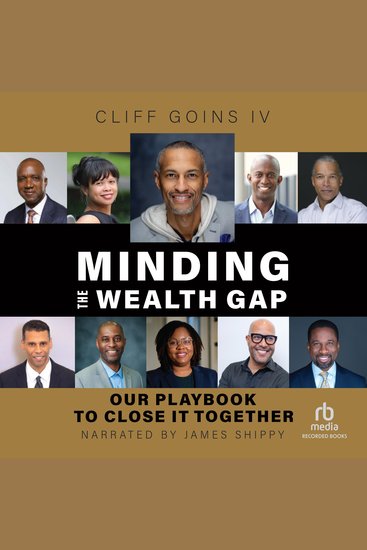
  • Minding the Wealth Gap - Our Playbook to Close It Together - cover

    Minding the Wealth Gap - Our...

    Cliff Goins IV

    • 0
    • 0
    • 0
    The US racial wealth gap is large, and it's compounding. It's time to close it. Minding the Wealth Gap shines a light on people doing this important work and explores how you can get involved too. 
      
    Generations of public and private practices have left Black households $15 trillion and 400 years behind white households. Engaging storytelling backed by data, Minding the Wealth Gap highlights the wide-ranging impact of this lack of wealth parity. It explores the intricate connections between issues such as housing disparities, employment opportunities, education, investment barriers, social networks, and over-policing, all of which contribute to the staggering wealth gap between Black and white households. 
      
    Investment professional Cliff Goins IV shines a spotlight on nine Black entrepreneurs and executives who are actively working to bridge this chasm: 
      
    • Kedra Newsom Reeves is a highly accomplished management consultant by day, serving as a partner at the Boston Consulting Group, where she drives holistic solutions to wealth creation. 
    • Mark Wilson became an accidental entrepreneur, then used his platform to empower economic mobility for under-resourced team members. 
    • C-suite executive Selena Cuffe is a world traveler and a talented business leader. She is a poster child for the power of cultivating diverse talent. 
    • Lee Henderson leveraged his role as partner at Ernst & Young LLP to help launch a network of resources to accelerate the growth of underserved ethnic minority-owned businesses. 
    • Shundrawn Thomas champions underdogs and unleashes access to financial and human capital as CEO of The Copia Group, a private investment firm. 
    • Tony Wilkins, an advisor for Google for Startups, is an entrepreneur whisperer, imparting wisdom and money that they need to flourish. 
    • Corporate lawyer turned entrepreneur George Fatheree III advocates for real estate justice and turbocharges home and land ownership. 
    • Small business banker Steve Hall locates the diamonds in the rough, putting capital to work in overlooked communities. 
    • Serial entrepreneur and sage Robert Blackwell Jr. is compelling large organizations to "just do business" and free the enterprises. 
      
    These "gap closers" have much to teach us, having pioneered initiatives such as empowering economic mobility, advocating for homeownership, and championing economic parity. Minding the Wealth Gap is both a powerful catalyst and a call to arms, urging America's entrepreneurs, executives, government officials, and other leaders to join these efforts and take meaningful steps toward a more equitable future for all.
    Show book
  • The Shortest History of Scandinavia - 14000 Years from the Stone Age and the Vikings to the Happiest Nations in the World - cover

    The Shortest History of...

    Mart Kuldkepp

    • 0
    • 0
    • 0
    Outsiders have long viewed Scandinavia as special, starting with the ancient Greeks and their myths of Ultima Thule, a place "where the Sun goes to rest." Today, we admire Scandinavia for its universal welfare, equality, peacefulness, and untouched nature—not to mention its interior design, crime literature, and love of all things hygge. 
     
    Yet Nordic history has its hardships and dark periods, too: pandemics, war, the expansionism of the Viking Age and the eighteenth century, alliances with Nazi Germany in World War II, and a eugenics movement in the twentieth century. 
     
    In The Shortest History of Scandinavia, historian Mart Kuldkepp masterfully sketches the outlines of Scandinavia's rich history—from the first known peoples of the region, who followed the ice sheet north at the end of the last Ice Age, to the Scandinavians living in nations that are among the happiest in the world today. 
     
    In this deeply insightful volume, Kuldkepp illuminates the concept of "Nordicness"—a hard-to-define quality that has nonetheless steered the region to respond to major challenges, actively shaping its history and exerting a considerable influence on European and global history in the process.
    Show book
  • Anxiety - Calm Your Inner Critic and Rewire Your Brain - cover

    Anxiety - Calm Your Inner Critic...

    Kendra Motors

    • 0
    • 0
    • 0
    What can be done to prevent or reduce anxiety? Why is it that we get into panic mode so easily in our society today? 
    These are some of the questions that will be addressed. Other topics include the inner critic that makes you discouraged, what factors contribute to our stress levels, and the unusual consequences of anxiety you may not have thought of. This guide can be an eye-opener if you let it. It can help you become more aware of what is going on in your mind, thus removing some of the stress factors that are destroying physical and mental health.
    Show book
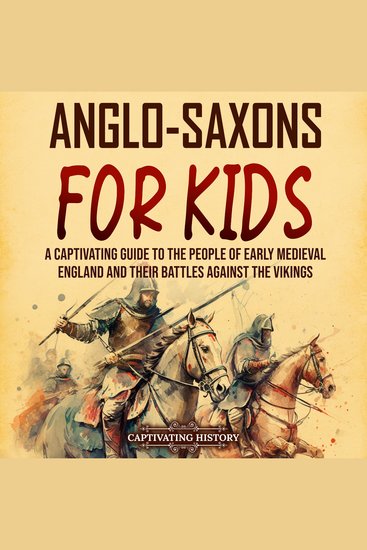
  • Anglo-Saxons for Kids: A Captivating Guide to the People of Early Medieval England and Their Battles Against the Vikings - cover

    Anglo-Saxons for Kids: A...

    Captivating History

    • 0
    • 0
    • 0
    Embark on an exciting journey to the past to meet the Anglo-Saxons! 
    The Anglo-Saxons were people from Northern Germany who came to Britain in waves and quickly established their own kingdoms between the time of the Romans and the Normans. At first glance, it may seem like the Anglo-Saxons did not contribute much to British history. They didn’t even have a writing system until Christian missionaries arrived!  
    So, why are the Anglo-Saxons so important to British history? Some people may think of this time as a dark time full of feuding kings. Although there were a lot of kings and plenty of fighting, the Anglo-Saxons also laid the foundation for modern English society. They created the structure needed to form one country out of different tribes. When the Normans took over in 1066, they built on top of Anglo-Saxon social and political structures.  
    For years, people have focused on leaders like King Alfred the Great or events like the Norman Conquest. But the Anglo-Saxons were more than just a few leaders or events. They structured a nation that would go on to conquer vast swaths of the modern world, and their ingenuity still structures life as we know it today.  
    It’s time to sail back into history and learn about the many facets of the Anglo-Saxons. In this new and captivating history audiobook, you’ll learn what made the Anglo-Saxons special and how they still shape our lives today. 
    Here are some of the questions you will uncover in this audiobook: 
    Was King Arthur real?  
    What made Wessex so special? 
    Which Germanic tribes came to Britain as the Anglo-Saxons? 
    Who was St. Augustine? 
    Where did the Normans come from? 
    Who was the first King of England? 
    Why did William the Conqueror come to England? 
    What is the difference between modern and Old English? 
    Scroll up and click the “add to cart” button to learn more about the history of the Anglo-Saxons!
    Show book