Join us on a literary world trip!
Add this book to bookshelf
Grey
Write a new comment Default profile 50px
Grey
Subscribe to read the full book or read the first pages for free!
All characters reduced
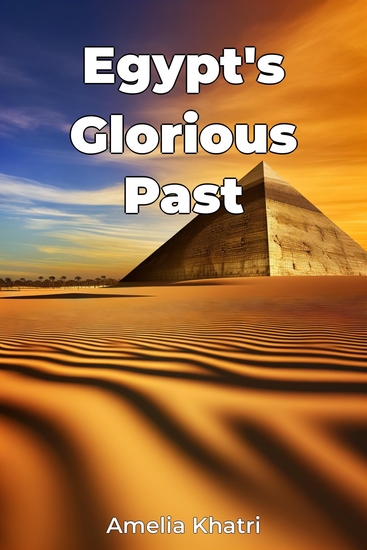
Egypt's Glorious Past - cover

Egypt's Glorious Past

Amelia Khatri

Publisher: Publifye

  • 0
  • 0
  • 0

Summary

"Egypt's Glorious Past" offers a captivating exploration of how the Nile River civilization became one of history's most influential societies, weaving together the complex tapestry of ancient Egyptian culture through three fundamental themes: political evolution across thirty-one dynasties, monumental architectural achievements, and the integration of spiritual practices into daily life.The book demonstrates how Egypt maintained remarkable stability and cultural continuity for over three millennia, establishing systems that would influence civilizations for generations to come. Through a masterful combination of archaeological evidence, contemporary documents, and hieroglyphic records, the text reveals how pharaohs developed sophisticated administrative systems that balanced religious authority with practical governance.Particular attention is given to architectural marvels like the pyramids, temples, and monuments, with detailed analysis of construction techniques and the mathematical principles that made these achievements possible. The examination of sites such as Giza, Luxor, and Abu Simbel illustrates how these structures served multiple purposes, from royal tombs to centers of religious and political power.The book's distinctive approach lies in its integration of traditional historical narrative with cutting-edge archaeological data, including insights from ground-penetrating radar surveys and digital reconstructions. By connecting ancient Egyptian innovations to multiple disciplines, including astronomy, chemistry, and mathematics, readers gain a comprehensive understanding of how this remarkable civilization's achievements continue to influence modern society.The text maintains scholarly rigor while remaining accessible to both history enthusiasts and students, making complex archaeological concepts understandable through clear, engaging prose.
Available since: 01/08/2025.
Print length: 98 pages.

Other books that might interest you

  • Holding Fire - A Reckoning with the American West - cover

    Holding Fire - A Reckoning with...

    Bryce Andrews

    • 0
    • 0
    • 0
    From the award-winning author of Down from the Mountain, a memoir of inheritance, history, and one gun’s role in the violence that shaped the American West—and an impassioned call to forge a new way forward 
    Bryce Andrews was raised to do no harm. The son of a pacifist and conscientious objector, he moved from Seattle to Montana to tend livestock and the land as a cowboy. For a decade, he was happy. Yet, when Andrews inherited his grandfather’s Smith & Wesson revolver, he felt the weight of the violence braided into his chosen life. Other white men who’d come before him had turned firearms like this one against wildlife, wilderness, and the Indigenous peoples who had lived in these landscapes for millennia. This was how the West was “won.” Now, the losses were all around him and a weapon was in his hand. 
    In precise, elegiac prose, Andrews chronicles his journey to forge a new path for himself, and to reshape one handgun into a tool for good work. As waves of gun violence swept the country and wildfires burned across his beloved valley, he began asking questions—of ranchers, his Native neighbors, his family, and a blacksmith who taught him to shape steel—in search of a new way to live with the land and with one another. In laying down his arms, he transformed an inherited weapon, his ranch, and the arc of his life. 
    Holding Fire is a deeply felt memoir of one Western heart’s wild growth, and a personal testament to how things that seem permanent—inheritance, legacies of violence, forged steel—can change. 
    Supplemental enhancement PDF accompanies the audiobook.
    Show book
  • The Smut Revolution - From Taboo to Trend - cover

    The Smut Revolution - From Taboo...

    Skyler Bosse

    • 0
    • 0
    • 0
    There is a reason your pulse quickens when you turn to that one particular scene in a book – the one where tension spills over, where restraint shatters, and where characters surrender to something primal, something undeniable. That moment, the one so many readers secretly crave, is smut. 
    Once whispered about behind closed doors, hidden beneath the guise of “guilty pleasures,” smut has clawed its way into mainstream literature, proving that what was once considered taboo is now a genre in its own right. From centuries-old erotic manuscripts to today’s bestselling scorchers, smut has evolved, adapted, and seduced millions along the way. 
    But why do we read it? Why do we write it? And why does society continue to both embrace and condemn it in equal measure? 
    Each chapter in this book begins with an excerpt – an unfiltered glimpse into the heart of smut – before shifting to the forces that shape it, the way it has been challenged, censored, and celebrated. Some scenes will linger, some may provoke, but all of them exist because smut, at its core, is more than just raw lust – it is a reflection of desire, fantasy, and the ever-changing boundaries of storytelling. 
    So, turn the page. But be warned: once you indulge, there is no going back.
    Show book
  • Compassion - The Heart of Connection - cover

    Compassion - The Heart of...

    Esther Jameson

    • 0
    • 0
    • 0
    Compassion is a fundamental human quality, one that transcends individual differences and connects us to one another in profound ways. It is often described as the ability to feel and show concern for the suffering of others, accompanied by a desire to alleviate that suffering. At its core, compassion involves recognizing the pain or distress someone else is experiencing and responding with kindness, empathy, and support. This emotional response is not just about feeling for someone else; it is about acting in ways that may help them through their difficult times. 
    The essence of compassion lies in empathy, which is the ability to deeply understand and share the feelings of another. When we empathize with someone, we can put ourselves in their shoes, imagining their emotional and physical states. Compassion takes this a step further, as it compels us to act in a way that can alleviate or ease their suffering. It is more than simply being moved by someone’s pain; it is the drive to do something about it, whether through words of encouragement, acts of service, or offering comfort. 
    It is important to distinguish compassion from sympathy. Sympathy involves feeling pity or sorrow for someone else's misfortune, but it lacks the proactive component that characterizes compassion. While sympathy may evoke a response such as feeling sad for someone, compassion urges us to take action in a positive way. Compassion connects us to others through action and intention, and it is through this action that we create genuine bonds and meaningful relationships.
    Show book
  • My Bipolar Backpack - cover

    My Bipolar Backpack

    Susan Ralphe

    • 0
    • 0
    • 0
    In this powerful memoir Susan Ralphe employs sharp storytelling skills honed over a long  newspaper reporting career to tell her own story of long-term, heart-wrenching bipolar madness.She recounts soaring accomplishments alternating with. black periods of tenseness, brain freeze and despair.
    Show book
  • Summary: Chaos - Charles Manson the CIA and the Secret History of the Sixties by Tom O’ Neill & Dan Piepenbring: Key Takeaways Summary & Analysis Included - cover

    Summary: Chaos - Charles Manson...

    Brooks Bryant

    • 0
    • 0
    • 0
    Disclaimer: This book is not the official, but a summary & it does not accompany the official. 
    Dive into the murky depths of one of America's most baffling and haunting criminal cases. Our summary of 'CHAOS' by Tom O’Neill and Dan Piepenbring peels back the layers of the Manson murders, revealing a web of governmental intrigue, CIA mind-control experiments, and a turbulent era that reshaped the nation. 
    Originally planned as a simple retelling of the infamous Manson Family murders, O’Neill’s research led him down a rabbit hole of dark and disturbing truths, challenging the official narrative that has been accepted for decades. Our summary distills years of meticulous investigation into a gripping read that will leave you questioning everything you thought you knew about this iconic case. 
    Are the Manson murders just the tip of a malevolent iceberg? Who were the real puppet masters behind the scenes? Explore these questions and more as you navigate through a labyrinth of conspiracies, cover-ups, and chilling secrets. You'll never look at the '60s—or the American justice system—the same way again.
    Show book
  • The Mythology of the Incas - Gods Legends and Rituals of Ancient Peru - cover

    The Mythology of the Incas -...

    Odessa Nightshade

    • 0
    • 0
    • 0
    The mythology of the Incas is a fascinating tapestry of gods, legends, and rituals that shaped the spiritual and cultural identity of one of the most powerful civilizations in the Americas. Unlike written traditions found in other ancient cultures, Incan mythology was passed down orally, with each generation preserving and refining the stories that explained the origins of the world, the forces of nature, and the role of human beings in the cosmos. These myths were deeply intertwined with the daily lives of the Inca people, influencing everything from their agricultural practices to their political structures.  
      
    At the heart of Incan mythology was a complex belief system that divided the universe into three realms: Hanan Pacha, the upper world of the gods; Kay Pacha, the earthly realm of humans; and Uku Pacha, the underworld where spirits and ancestors resided. These realms were connected by sacred mountains, rivers, and celestial bodies, all of which were considered divine. The gods of the Incan pantheon, led by Viracocha, the supreme creator, played a central role in shaping the world and maintaining balance within these realms. Inti, the sun god, was revered as the divine ancestor of the ruling class, while Pachamama, the earth goddess, was honored for providing sustenance and fertility.  
      
    Rituals and ceremonies were essential to maintaining harmony between the natural and supernatural worlds. The Inca performed elaborate festivals, such as Inti Raymi, the Festival of the Sun, to honor their deities and ensure the continuation of prosperity. Priests and oracles played a crucial role in interpreting the will of the gods, often conducting sacrifices—both animal and human—as acts of devotion and appeasement. Sacred sites, including Coricancha in Cusco and Machu Picchu, served as centers of worship where offerings were made to the gods. 
    Show book