Join us on a literary world trip!
Add this book to bookshelf
Grey
Write a new comment Default profile 50px
Grey
Subscribe to read the full book or read the first pages for free!
All characters reduced
Early Plowing Techniques - cover

Early Plowing Techniques

Amelia Khatri

Translator A AI

Publisher: Publifye

  • 0
  • 0
  • 0

Summary

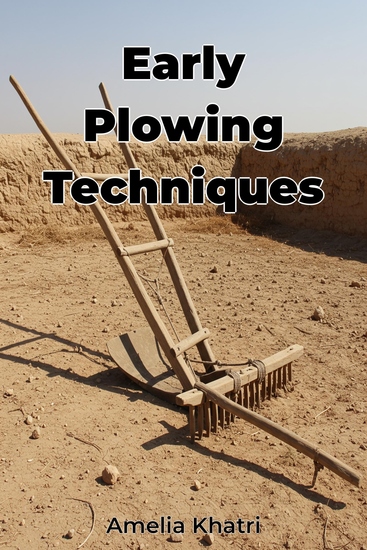
Early Plowing Techniques explores how early agrarian societies used plowing methods and equipment, fundamentally changing civilization. It examines the transition from hunter-gatherer lifestyles to settled agriculture, illustrating how plowing influenced food production and societal structures. Consider that early plows, initially simple digging sticks, evolved into complex animal-drawn tools, reflecting significant advancements in agricultural technology. The book challenges the notion of plowing as a straightforward technological advancement, instead framing it as a multifaceted adaptation shaped by the environment, social structures, and cultural beliefs.

 
The book progresses systematically, first introducing early agriculture's basic concepts and challenges. It then delves into the development of early plows in Mesopotamia and Egypt, utilizing archaeological evidence and ancient texts. Furthermore, it investigates the spread of plowing to other regions, such as Europe and Asia, highlighting adaptations to various soil types and farming systems. The book uniquely integrates technological, social, and environmental perspectives to provide a nuanced account of early plowing practices, making it valuable for understanding the roots of modern civilization.
Available since: 02/21/2025.
Print length: 56 pages.
Other books that might interest you

  • Green Capes - How Positive Psychology Unlocks Flourishing for Neurodivergent and Cognitively Challenged Minds - cover

    Green Capes - How Positive...

    Alice Jackson

    • 0
    • 0
    • 0
    What if your differences were your greatest superpower? 
    For generations, society has measured intelligence and worth by a narrow, one-size-fits-all standard, leaving countless brilliant, unconventional minds overlooked and underestimated. 
    Green Capes challenges that story. Drawing on cutting-edge research in positive psychology, this groundbreaking guide reveals how neurodivergent and cognitively challenged individuals can tap into their unique strengths, build resilience, and live deeply fulfilling lives—without conforming to someone else’s definition of “normal.” 
    Through real-life success stories, actionable strategies, and science-backed insights, you’ll discover how to: 
    ·        Identify and harness signature strengths 
    ·        Foster joy, optimism, and self-compassion 
    ·        Navigate challenges with confidence and creativity 
    ·        Build supportive environments that unlock potential 
    ·        Rewrite the narrative from “coping” to flourishing 
    Whether you’re neurodivergent yourself, a parent, an educator, or a mental health professional, Green Capes offers a hopeful, empowering roadmap for seeing—and celebrating—the brilliance in every brain. 
    Because every mind has magic, it’s time the world saw yours.
    Show book
  • Southern Beauty - Race Ritual and Memory in the Modern South - cover

    Southern Beauty - Race Ritual...

    Elizabeth Bronwyn Boyd

    • 0
    • 0
    • 0
    In a trio of popular gender rituals—sorority rush, beauty pageants, and the Confederate Pageant of the Natchez (Mississippi) Pilgrimage—young white southern women have readily ditched contemporary modes of dress and comportment for performances of purity, gentility, and deference. Clearly, the ability to "do" white southern womanhood, convincingly and on cue, has remained a valued performance. 


    Based on ethnographic research and more than sixty taped interviews, Southern Beauty goes behind the scenes of the three rituals to explore the motivations and rewards associated with participation. The picture that Boyd paints is not pretty: it is one of southern beauties securing status and sustaining segregation by making nostalgic gestures to the southern past. Boyd also maintains that the audiences for these rituals and pageants have been complicit, unwilling to acknowledge the beauties' racial work or their investment in it. 


    Southern Beauty moves beyond representations to show how femininity in motion—stylized and predictable but ephemeral—has succeeded as an enduring emblem, where other symbols faltered, by failing to draw scrutiny. Continuing to make the moves of region and race even as many Confederate symbols have been retired, the southern beauty has persisted, maintaining power and privilege through consistent performance.
    Show book
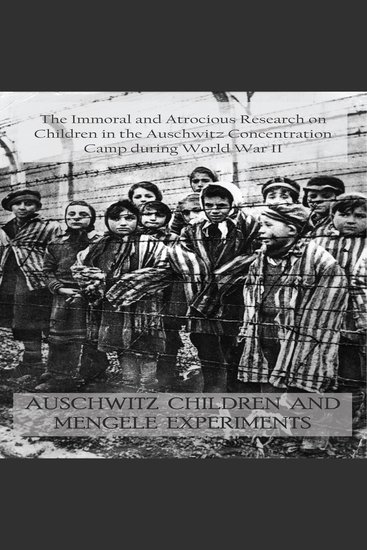
  • AUSCHWITZ CHILDREN AND MENGELE EXPERIMENTS - The Immoral and Atrocious Research on Children in the Auschwitz Concentration Camp during World War II - cover

    AUSCHWITZ CHILDREN AND MENGELE...

    Jack Stew Barretta

    • 0
    • 0
    • 0
    In the name of humanity, that was the explanation of Dr. Claus Karl Schilling for the execution of malaria experiments on 1,200 inmates of the Dachau concentration camp during the Second World War. The reputable Schilling had come to Dachau with the personal permission of the Reichsführer-SS Heinrich Himmler in 1942 because he could use the prisoners as research subjects without the restriction of obtaining their consent. Schilling was not an exception.  
    Many Nazi doctors seized the unique opportunity to execute human experiments without legal and ethical restrictions during the war. The SS and the Wehrmacht either initiated or supported the research of the Nazi doctors. The central question that puzzled jurists and scientists is how these doctors, who were educated to heal people, could execute human experiments and deliberately harm and even kill people. To some scientists, their acts stand out as ‘exemplars of evil.’ This judgment is based on the fact that prisoners did not give their informed consent, the cruel and sometimes sadistic character of the experiments, and because never before in medical experiments was the death of the research subjects a central element of the research design. Many people think that ‘science went mad’ in the Third Reich and that Nazi doctors who committed these crimes were pseudo-scientists, sadists, and even monsters. However, thinking these perpetrators were madmen or monsters is a false explanation.  
    It is confronting to know that physicians belonging to the most advanced medical community in the world at the time, who had sworn to ‘do no harm, ' could commit these crimes. 
    On this trail, Dr. Josef Mengele’s pseudo-scientific research at the Auschwitz concentration camp during World War II led to immeasurable suffering among the camp’s children.
    Show book
  • Off The Map: A Global Atlas of Non-Existent Places - Unrecognized States Disputed Lands & The Places We Cannot Go - cover

    Off The Map: A Global Atlas of...

    Dr. Nick Coman, I. A.I.

    • 0
    • 0
    • 0
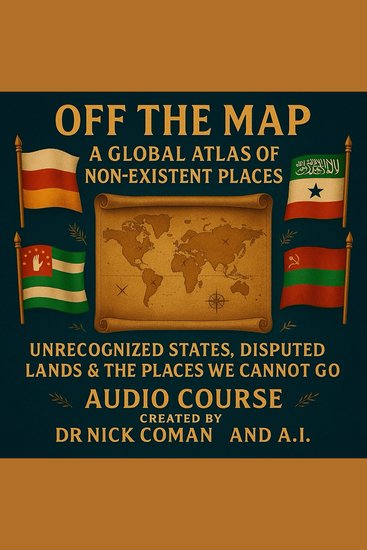
    A 24‑lecture audio expedition into the world’s cartographic glitches—unrecognized states, disputed borders, legal voids, and places you can’t enter. We move from café‑tile sovereignty in Baarle, where a front door decides your country, to the 2015 India–Bangladesh enclave exchange, and the 2022 line cut across Hans Island’s ravine; from Ceuta and Melilla’s fences and tax codes to the Danube where hydrology argues with history; from the Bir Tawil/Hala’ib paradox to the Chernobyl Exclusion Zone and America’s twin sacrifice zones, Picher and Centralia.         
    We make the atlas legible: thalweg versus cadastre, uti possidetis and boundary commissions, counter‑enclaves and neutral roads, patrol lines, CBMs, and maritime geodesy. Trace Fergana’s water politics from Golovnoi gates to the Andijan/Kempir‑Abad bargain; India’s Himalayan hinge from Siachen and Galwan to Sugauli; the pastoral circuits and patrol lines that keep the Ilemi Triangle ambiguous; and the nested Nahwa‑in‑Madha‑in‑UAE trick.     
    Markets and politics are treated as geography constraints. Learn to read sovereignty by ferries, fuel receipts, and power bills; to separate romantic claims from operational control; to test what‑ifs—who could claim Bir Tawil, what shifts if Sir Creek moves—and to map chokepoints beyond lines: customs regimes, water releases, patrol logistics, recognition cycles. Then follow the consequences—duty‑free ledgers and bunkering margins, quotas and visas, surveillance and tragedy on the fence. Rigorous, narrative‑driven, and built for the intellectually ambitious, this course is an operator’s guide to the law, logistics, and lived frictions of a planet whose map won’t sit still.  
    Show book
  • Healing Through Helping - How Giving Back Boosted One Person’s Mental Health - cover

    Healing Through Helping - How...

    vishesh kakar

    • 0
    • 0
    • 0
    Discover the transformative power of altruism. Listen to an inspiring true story of how giving back and helping others became a powerful tool for mental healing. 
    Can the simple act of helping others be the key to healing ourselves? Healing Through Helping - How Giving Back Boosted One Person’s Mental Health explores the profound, science-backed connection between altruism and mental wellness. 
    Through an inspiring and relatable personal story, this audio piece dives deep into how volunteering and community service can alleviate anxiety, combat depression, and provide a renewed sense of purpose. Whether you are navigating your own mental health journey, looking for practical ways to improve your daily mindset, or simply seeking an uplifting story of human connection, this audio provides actionable insights and emotional resonance. 
    Key themes covered:The psychology behind the "helper's high"Practical ways to integrate giving back into a busy scheduleOvercoming emotional hurdles through community connectionRebuilding self-worth and purpose 
    Listen now to discover how changing someone else's life might just be the secret to changing your own.
    Show book
  • Inspiring Native American Stories for Kids: Captivating Tales of Tradition Wisdom and Resilience to Nurture Cultural Appreciation and Empathy - cover

    Inspiring Native American...

    Ahoy Publications

    • 0
    • 0
    • 0
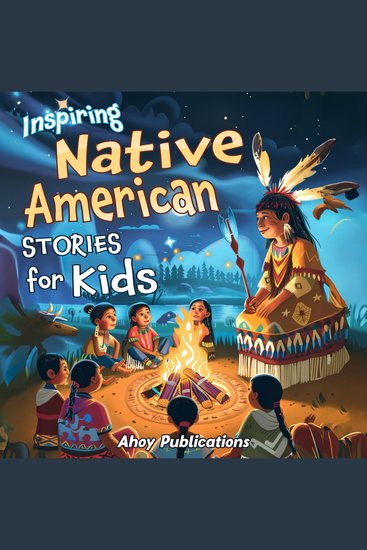
    Dive into the heartwarming world of "Inspiring Native American Stories for Kids"! 
    This audiobook is full of captivating tales that link the past with the present, teaching wisdom, courage, and respect for nature. Perfect for children aged 8-12, this collection nurtures cultural appreciation and empathy through storytelling. 
    Here’s what you’ll find inside:Timeless Wisdom: Discover ancient legends and their morals! Courage and Leadership: Be inspired by brave Native American heroes! Earth and Sky: Learn about the sacred connection between nature and the cosmos! Community Spirit: See the importance of togetherness and cooperation!Prophecies and Visions: Find hopeful messages from the past that still matter today! Nature's Celebrations: Feel the strong bond with the environment and its creatures! Trickster Tales: Enjoy the adventures of clever and cunning characters! Adventurous Spirits: Follow thrilling exploits and explorations of Native protagonists! Fireside Fables: Gather for tales of belonging and identity that warm the heart!  
    This audiobook is more than just stories; it's a gateway to understanding a rich cultural heritage. 
    Give your child a gift that keeps giving. These stories will inspire them to appreciate diversity, learn from the past, and embrace the wisdom in these traditional narratives. Grab a copy today and help preserve and share the wisdom of Native American cultures. Your journey through the echoes of the past awaits! 
    So, what are you waiting for? Click on the “Add to Cart” button now and get ready to take a stroll through time.
    Show book