¡Acompáñanos a viajar por el mundo de los libros!
Añadir este libro a la estantería
Grey
Escribe un nuevo comentario Default profile 50px
Grey
Suscríbete para leer el libro completo o lee las primeras páginas gratis.
All characters reduced
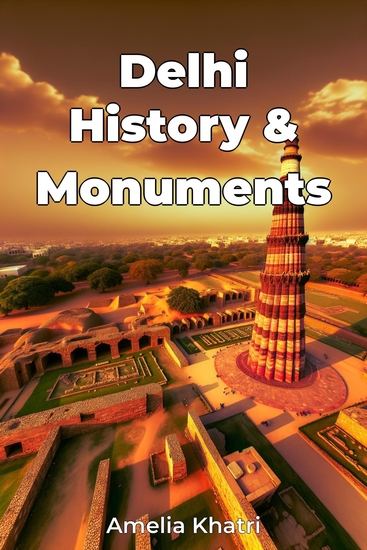
Delhi History & Monuments - cover

Delhi History & Monuments

Amelia Khatri

Traductor A AI

Editorial: Publifye

  • 0
  • 0
  • 0

Sinopsis

"Delhi History & Monuments" offers a compelling journey through seven centuries of architectural and cultural evolution in India's capital city. This comprehensive exploration reveals how Delhi transformed from seven distinct historical cities into today's modern metropolis, examining the profound influence of various ruling dynasties on its architectural landscape.

 
The book masterfully weaves together archaeological evidence and historical records to illuminate how each era contributed to Delhi's rich architectural heritage, from the majestic Qutub Complex to the iconic Red Fort. Through detailed analysis of major landmarks like Humayun's Tomb and Jama Masjid, readers discover how Persian, Turkish, and indigenous Indian architectural styles merged to create unique Indo-Islamic innovations.

 
The narrative progresses chronologically through key periods - the Delhi Sultanate, Mughal Empire, British Raj, and post-independence era - demonstrating how each epoch left its distinct mark on the city's architectural identity. What sets this work apart is its multidisciplinary approach, combining architectural studies with urban planning perspectives and social history.

 
The book goes beyond mere architectural description, positioning Delhi's monuments as dynamic repositories of cultural memory that continue to shape modern Indian identity. Using detailed site plans, archival photographs, and architectural drawings, it explores how these historical structures have adapted to serve contemporary functions while maintaining their historical significance. This balanced approach makes the work valuable for both scholars and general readers interested in understanding Delhi's architectural evolution and its ongoing role in urban heritage preservation.
Disponible desde: 04/01/2025.
Longitud de impresión: 105 páginas.
Otros libros que te pueden interesar

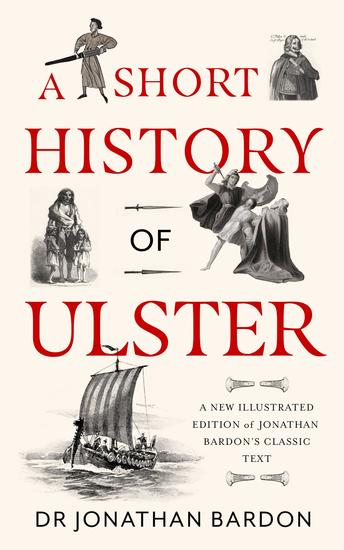
  • A Short History of Ulster - cover

    A Short History of Ulster

    Jonathan Bardon

    • 0
    • 0
    • 0
    Jonathan Bardon's A History of Ulster is widely regarded as the definitive text on the region. Updated with a more recent preface from the author, this illustrated, abridged version offers a comprehensive but accessible overview of life in the province for anyone seeking to understand the roots of its troubled history.
    The Vikings, the Norman invasions, the plantations, the Penal Laws, the rise of the United Irishmen and Orangeism, the Act of Union, the linen and shipbuilding industries, the Home Rule Crisis and partition, the civil rights movement, the Troubles and the peace process – it's all here in this essential companion to Jonathan Bardon's bestselling A History of Ireland in 100 Episodes.
    Ver libro
  • Mapping the Great Game - Explorers Spies and Maps in 19th-Century Asia - cover

    Mapping the Great Game -...

    Riaz Dean

    • 0
    • 0
    • 0
    In the 19th century, the British and Russian empires were engaged in bitter rivalry for the acquisition of Southern Asian. Although India was the ultimate prize, most of the intrigue and action took place along its northern frontier in Afghanistan, Turkestan, and Tibet. Mapping the region and gaining knowledge of the enemy were crucial to the interests of both sides. 


    The Great Trigonometrical Survey of India began in the eighteenth century with the aim of creating a detailed map of the subcontinent. Under the leadership of George Everest—whose name was later bestowed to the world's tallest mountain—it mapped the Great Arc running from the country's southern tip to the Himalayas. Much of the work was done by Indian explorers known as Pundits. They were the first to reveal the mysteries of the forbidden city of Lhasa, and discover the true course of Tibet's mighty Tsangpo River. 


    These explorers performed essential information gathering for the British Empire and filled in large portions of the map of Asia. Their adventurous exploits are vividly recounted in Mapping the Great Game.
    Ver libro
  • Delhi Sultanate - Muslim Dynasties That Shaped Medieval India - cover

    Delhi Sultanate - Muslim...

    Rolf Hedger

    • 0
    • 0
    • 0
    The Delhi Sultanate was a defining era in Indian history, marking the establishment of Muslim rule in northern India. Its rise was shaped by a series of invasions, strategic conquests, and the formation of a centralized administration. The foundation of the Sultanate can be traced back to the late 12th century when Muslim forces, primarily from Central Asia, began making inroads into the Indian subcontinent. These incursions set the stage for a new political order that would influence the region for centuries. 
    One of the earliest significant Muslim invasions was led by Mahmud of Ghazni in the 11th century. Although he did not establish permanent rule, his raids weakened Indian kingdoms and demonstrated the vulnerability of the region. However, it was Muhammad Ghori in the late 12th century who laid the groundwork for the Delhi Sultanate. Unlike Mahmud, Ghori aimed for long-term control rather than mere plundering. His victory over Prithviraj Chauhan at the Second Battle of Tarain in 1192 was a turning point, allowing Muslim forces to establish a foothold in northern India. 
    Following Ghori’s assassination in 1206, his general, Qutb al-Din Aibak, took control of his Indian territories and proclaimed himself the first Sultan of Delhi. Aibak, originally a slave who rose through the ranks, became the founder of the Mamluk or Slave Dynasty. He consolidated his rule by strengthening administrative structures and commissioning architectural marvels like the Qutb Minar, which symbolized the establishment of Muslim rule. However, his reign was short-lived, and his successor, Iltutmish, played a more crucial role in shaping the Delhi Sultanate into a powerful and stable empire.
    Ver libro
  • A Matter of Taste - A Farmers' Market Devotee's Semi-Reluctant Argument for Inviting Scientific Innovation to the Dinner Table - cover

    A Matter of Taste - A Farmers'...

    Rebecca Tucker

    • 0
    • 0
    • 0
    How farmer's markets and organic produce became synonymous with "good food" and why they shouldn't be.
       
    How did farmer's markets, nose-to-tail, locavorism, organic eating, CSAs, whole foods, and Whole Foods become synonymous with “good food”? And are these practices really producing food that is morally, environmentally, or economically sustainable? Rebecca Tucker's compelling, reported argument shows that we must work to undo the moral coding that we use to interpret how we come by what we put on our plates. She investigates not only the danger of the accepted rhetoric, but the innovative work happening on farms and university campuses to create a future where nutritious food is climate-change resilient, hardy enough to grow season after season, and, most importantly, available to all—not just those willing or able to fork over the small fortune required for a perfect heirloom tomato.
       
    Tucker argues that arriving at that future will require a broad cognitive shift away from the idea that farmer's markets, community gardens, and organic food production is the only sustainable way forward; more than that, it will require the commitment of research firms, governments, corporations, and post-secondary institutions to develop and implement agri­science innovations that do more than improve the bottom line. A Matter of Taste asks us to rethink what good food really is.
    Ver libro
  • Speed Reading - How To Read Smarter Learn Faster and Remember More - cover

    Speed Reading - How To Read...

    Steve Collins

    • 0
    • 0
    • 0
    Do you ever wish you could read faster without forgetting what you just read? 
    In today’s information-overloaded world, mastering the art of speed reading isn’t just a skill—it’s a superpower. 
    Speed Reading: How to Read Faster, Understand Better, and Retain More Information is your complete guide to unlocking your mind’s full reading potential. Whether you’re a student, professional, or lifelong learner, this book teaches you how to absorb information quickly, boost comprehension, and remember what truly matters. 
    Inside, you’ll discover:The fascinating history and science of speed readingProven techniques to double or even triple your reading speedHow to improve focus and comprehension while reading fastThe most common bad reading habits—and how to fix themEasy exercises to train your eyes and brain for faster learningPractical tips to retain key ideas long after you finish reading 
    If you want to read smarter, learn faster, and retain more knowledge, this book will show you exactly how.
    Ver libro
  • Dead Sea and the Dead Sea Scrolls The: The History of the Unique Lake and Its Ancient Jewish Manuscripts - cover

    Dead Sea and the Dead Sea...

    Charles River Editors

    • 0
    • 0
    • 0
    If the world had a navel, it would be the Dead Sea, the lowest point on Earth where one can still stand on dry land. The photographs of this unique lake seem to be taken from a science fiction movie, or a land devastated after a nuclear holocaust. To others, the fluffy shores could remind them of Antarctica although it is in one of the warmest spots on the planet. Its white, creamy masses, scattered along golden beaches, are not ice floes or frozen water, but effervescent salt formations. The famous Jordan River, where the Hebrew people entered the Promised Land and Jesus was baptized, flows into the lake, but the basin is so deeply sunk into the face of the planet that the waters never leave, as if they had fallen into a small black hole where nothing can escape.  
    	The Dead Sea is also an archaeological site loaded with history. Known among the first civilizations in the region as "Sea of Asphalt" and “Salt Sea,” innumerable myths and legends lend it an air of mystery, as if it attracted sterility and misfortune while eradicating all life from its waters. It was perhaps the inhospitable feel of the place, the almost total desolation surrounding it, which led the writer of the Pentateuch to imagine that many years ago, a cataclysm sent to annihilate perverted people had taken place there.  
    	In the mid-20th century, one of the most important religious discoveries of all time was made in a series of caves near the Dead Sea, which had hidden remnants of nearly 1,000 texts, some of which were included in the Hebrew Bible and others which were extra-biblical. In addition to being the oldest surviving copies of such documents, the mixture of languages and different kinds of papers helped shed light on the people in the region at the time, making the Dead Sea Scrolls vitally important to the world’s major religions. 
    Ver libro