Join us on a literary world trip!
Add this book to bookshelf
Grey
Write a new comment Default profile 50px
Grey
Subscribe to read the full book or read the first pages for free!
All characters reduced
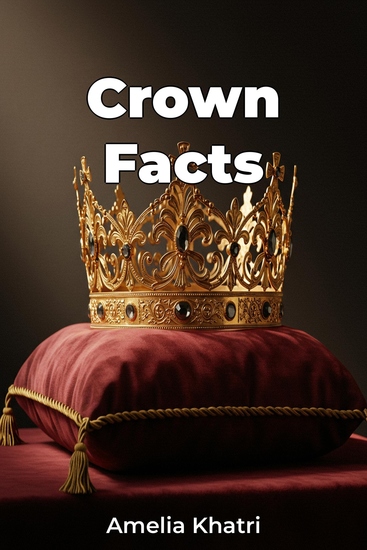
Crown Facts - cover

Crown Facts

Amelia Khatri

Translator A AI

Publisher: Publifye

  • 0
  • 0
  • 0

Summary

Crown Facts explores the rich history and symbolism embedded within royal headpieces, revealing how these objects represent national identity, cultural heritage, and the evolution of monarchy. More than mere symbols of wealth, crowns reflect intricate narratives shaped by social, political, and religious forces. For instance, the specific gemstones, metals, and shapes chosen for a crown were carefully selected to communicate authority, legitimacy, and even divine right, differing significantly across cultures.

 
The book traces the origins of crowns from ancient civilizations to modern monarchies, examining their design and function through a structured approach. Beginning with an introduction to royal regalia, it progresses to a detailed analysis of crowns from Europe, Asia, and Africa, highlighting unique cultural influences. Crown Facts further investigates the modern role of crowns in contemporary society and popular culture, using historical documents, art historical analyses, and anthropological studies to reveal how these symbols have evolved over time.

 
By connecting interdisciplinary fields like political science, art history, and anthropology, the book presents crowns as dynamic symbols reflecting changing political landscapes and cultural values. This thematic examination of crowns, rather than a biographical study of monarchs, offers readers interested in world history a unique lens to understand broader historical trends and the symbolism inherent in material culture.
Available since: 02/18/2025.
Print length: 62 pages.

Other books that might interest you

  • Real Soldiering - The US Army in the Aftermath of War 1815-1980 - cover

    Real Soldiering - The US Army in...

    Brian McAllister Linn

    • 0
    • 0
    • 0
    What happens to the US Army after the battles are over, the citizen soldiers depart, and all that remains is the Regular Army? In this pathbreaking work, Brian Linn argues that in each decade following every major conflict since the War of 1812 the postwar army has undergone a long, painful, and remarkably consistent recovery process as it struggled to build a new model force to replace the "Old Army" that entered the conflict. 


    Real Soldiering provides the first comprehensive study of the US Army's transition from war to peace. Linn challenges three common historical interpretations: confusing Washington policy with implementation in the field; conflating postwar armies with prewar armies; and describing certain postwar eras as distinct and transformational. Rather, Linn examines the postwar force as a distinct entity worthy of study as a unique and important part of US Army history. 


    Real Soldiering represents over four decades of research into the US Army and is deeply informed by Linn's experiences teaching and working with soldiers. Insightful and entertaining, provocative and empathetic, and a work of history with immediate relevance, Real Soldiering will resonate with military historians, defense analysts, and those who have proudly worn the US Army uniform.
    Show book
  • Reminiscences of My Life in Camp - cover

    Reminiscences of My Life in Camp

    Susie King Taylor

    • 0
    • 0
    • 0
    Madison & Adams Press presents the Civil War Memories Series. This meticulous selection of the firsthand accounts, memoirs and diaries is specially comprised for Civil War enthusiasts and all people curious about the personal accounts and true life stories of the unknown soldiers, the well known commanders, politicians, nurses and civilians amidst the war. 
    Reminiscences of My Life in Camp is an autobiographical work written by the first Black nurse during the American Civil War, Susie King Taylor. This exceptional reading depicts author's life as a slave, a freed woman, an educator and nurse, and a Black woman living in the postwar South.
    Show book
  • How Media Ownership Matters - cover

    How Media Ownership Matters

    Rodney Benson, Julie Sedel,...

    • 0
    • 0
    • 0
    Does it matter who owns and funds the media? As journalists and management consultants set off in search of new business models, there's a pressing need to understand anew the economic underpinnings of journalism and its role in democratic societies. 


    How Media Ownership Matters provides a fresh approach to understanding news media power, moving beyond the typical emphasis on market concentration or media moguls. Through a comparative analysis of the US, Sweden, and France, as well as interviews of news executives and editors and an original collection of industry data, this book maps and analyzes four ownership models: market, private, civil society, and public. Highlighting the effects of organizational logics, funding, and target audiences on the content of news, the authors identify both the strengths and weaknesses various forms of ownership have in facilitating journalism that meets the democratic ideals of reasoned, critical, and inclusive public debate. Ultimately, How Media Ownership Matters provides a roadmap to understanding how variable forms of ownership are shaping the future of journalism and democracy.
    Show book
  • Delhi Sultanate - Muslim Dynasties That Shaped Medieval India - cover

    Delhi Sultanate - Muslim...

    Rolf Hedger

    • 0
    • 0
    • 0
    The Delhi Sultanate was a defining era in Indian history, marking the establishment of Muslim rule in northern India. Its rise was shaped by a series of invasions, strategic conquests, and the formation of a centralized administration. The foundation of the Sultanate can be traced back to the late 12th century when Muslim forces, primarily from Central Asia, began making inroads into the Indian subcontinent. These incursions set the stage for a new political order that would influence the region for centuries. 
    One of the earliest significant Muslim invasions was led by Mahmud of Ghazni in the 11th century. Although he did not establish permanent rule, his raids weakened Indian kingdoms and demonstrated the vulnerability of the region. However, it was Muhammad Ghori in the late 12th century who laid the groundwork for the Delhi Sultanate. Unlike Mahmud, Ghori aimed for long-term control rather than mere plundering. His victory over Prithviraj Chauhan at the Second Battle of Tarain in 1192 was a turning point, allowing Muslim forces to establish a foothold in northern India. 
    Following Ghori’s assassination in 1206, his general, Qutb al-Din Aibak, took control of his Indian territories and proclaimed himself the first Sultan of Delhi. Aibak, originally a slave who rose through the ranks, became the founder of the Mamluk or Slave Dynasty. He consolidated his rule by strengthening administrative structures and commissioning architectural marvels like the Qutb Minar, which symbolized the establishment of Muslim rule. However, his reign was short-lived, and his successor, Iltutmish, played a more crucial role in shaping the Delhi Sultanate into a powerful and stable empire.
    Show book
  • Towards Happiness ― A Psychoanalytic Approach to Finding Your Way - cover

    Towards Happiness ― A...

    M.D. Ahron Friedberg, Sandra...

    • 0
    • 0
    • 0
    Drawing on a range of clinical cases, Towards Happiness presents an engaging, insightful look at how we define and achieve happiness in core aspects of our lives: work and money, wellness and personal growth, sex and love, family and friendship, and aging. 


    The book includes a series of essays by Dr. Ahron Friedberg, a prominent psychiatrist, concerning how his patients sought to achieve greater happiness during challenging periods of their lives, and how as a consequence they grew personally and professionally. Each chapter considers a core topic through the lens of Dr. Friedberg's practice, demonstrating how patients worked through difficult, sometimes chronic personal issues. Throughout, there are useful summaries of key points. While candidly acknowledging that each life is different, Towards Happiness offers practical examples that can enhance listener's efforts to achieve greater levels of happiness and reorient their lives towards a deeper capacity for happiness. 


    Towards Happiness offers honest insights into the compromises, sacrifices, and resulting degrees of success that characterize pursuing happiness, and will be of great interest to psychoanalysts, clinical psychologists, and other mental health professionals. It will also be useful listening for anyone seeking to understand the achievement of happiness in their own lives.
    Show book
  • The Working Classroom - How to make school work for working-class students - cover

    The Working Classroom - How to...

    Andy Griffith, Matt Bromley

    • 0
    • 0
    • 0
    Schools do amazing work to support children from disadvantaged backgrounds. But this book will enable them to do more. Disadvantage comes in many forms, but cultural poverty, where some students have relative knowledge gaps compared with their more affluent peers, can be addressed successfully by schools. The Working Classroom explores how working-class students are disadvantaged by a flawed system and what schools can do to close the gap.
    Written by two experienced authors with a deep understanding of the challenges that poverty and low aspiration can bring, and a passion for social justice, The Working Classroom examines how and why we must seek systemic changes. The book focuses on actions within the control of teachers and school leaders which will ensure that we create a socially just education system - one that builds on the rich heritage of the working-class, rather than seeing their background as a weakness. It offers practical ways for students and families to build on the best of working-class culture, whilst also empowering teachers, students and parents to change the system.
    The Working Classroom provides teachers with useful methods to improve the cultural capital of students from disadvantaged backgrounds that can be easily replicated and implemented in their own setting. Backed up by practical case studies that have a proven impact in schools with high levels of deprivation, this book will enable teachers to audit their current provision and encourage them to adopt new systems and practices so that they, and the wider school, will have a greater impact on the lives of working-class students and their families.
    Suitable for both teachers and leaders in a secondary school or sixth form college setting who seek to support social change in education and anyone in the corporate or non-education world who wants to practice effective altruism or philanthropy.
    Show book