Join us on a literary world trip!
Add this book to bookshelf
Grey
Write a new comment Default profile 50px
Grey
Subscribe to read the full book or read the first pages for free!
All characters reduced
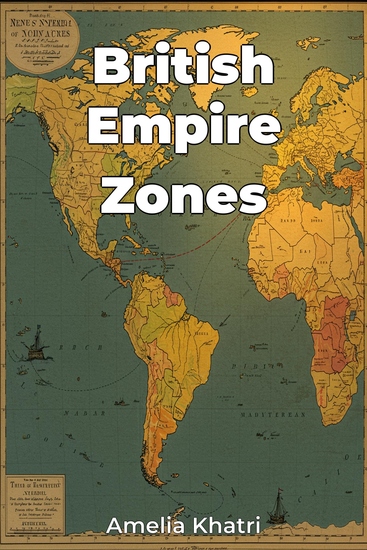
British Empire Zones - cover

British Empire Zones

Amelia Khatri

Translator A AI

Publisher: Publifye

  • 0
  • 0
  • 0

Summary

British Empire Zones explores how a relatively small nation controlled a vast global empire, examining the unique administrative and economic systems that enabled its dominance. The book reveals that the British Empire was not a uniform entity but rather a collection of distinct zones, each managed with specific colonial policies and integrated into global trade networks. Understanding this intricate structure provides critical insights into current geopolitical dynamics and the lasting impacts of colonialism.

 
The book progresses methodically, starting with an overview of the empire's administrative structures, distinguishing between crown colonies, protectorates, and dominions. It then maps the geographic zones, illustrating regional variations in imperial policy and economic exploitation across areas from the Caribbean to India and Africa. Finally, it traces the complex trade routes that fueled the empire's expansion, including the trade in raw materials like cotton and sugar, demonstrating how these routes shaped global economic systems.

 
This approach highlights the diverse experiences of people living under colonial rule and the enduring legacies of British colonialism.
Available since: 05/05/2025.
Print length: 59 pages.
Other books that might interest you

  • Utilitarianism - cover

    Utilitarianism

    John Stuart Mill

    • 0
    • 0
    • 0
    John Stuart Mill's book Utilitarianism is one of the most influential and widely-read philosophical defenses of utilitarianism in ethics. The essay first appeared as a series of three articles published in Fraser's Magazine in 1861; the articles were collected and reprinted as a single book in 1863. It went through four editions during Mill's lifetime with minor additions and revisions. 
    Although Mill includes discussions of utilitarian ethical principles in other works such as On Liberty and The Subjection of Women, Utilitarianism contains Mill's only major discussion of the fundamental grounds for utilitarian ethical theory. (Summary from Wikipedia)
    Show book
  • Late Antique Little Ice Age The: The History of the Cooling Period at the Start of the Middle Ages - cover

    Late Antique Little Ice Age The:...

    Charles River Editors

    • 0
    • 0
    • 0
    An often overlooked, yet very important, environmental process in world history is known as the “Late Antique Little Ice Age,” which took place during the 6th century A.D. across most of the Northern Hemisphere and received its name because it was shorter and less well-known than the Little Ice Age, which took place from the 16th-19th centuries. An examination of the written sources from the 6th century, along with archaeological and climatological information, reveals that the Late Antique Little Ice Age was a major event in world history that had long-lasting repercussions on numerous societies. Although it was not as long or as severe as the later Little Ice Age, the Late Antique Little Ice Age drastically impacted several advanced societies across the Northern Hemisphere, including in Europe, Central Asia, East Asia, and even North America. Perhaps the best-studied aspect of the Late Antique Little Ice Age is the role it played in the collapse of the Western Roman Empire and how it helped shape the composition of early medieval Europe. Some of these studies suggest that the Late Antique Little Ice Age played a major, if not the most important, role in the reformation of Western Europe after the fall of the Roman Empire. Other studies suggest that the Late Antique Little Ice Age affected the political structure of late ancient societies in the Middle East and Arabia, helping to give rise to Islam. And finally, although the Late Antique Little Ice Age’s effects on East Asia and North America have not been studied nearly as much as its influence on Europe, the archaeological and some textual evidence – in the case of East Asia – suggest that the Late Antique Little Ice Age also affected how complex societies transitioned in those regions during the 6th century and later.
    Show book
  • Narcissism - How to Beat the Narcissist Understanding Narcissism and Narcissistic Personality Disorder - cover

    Narcissism - How to Beat the...

    Rina Mcnally

    • 0
    • 0
    • 0
    Have you ever thought that someone in your life currently or someone you were involved with in the past is a narcissist? 
    Perhaps you think that you may be living with one. You, or someone you know, could even have horrific stories to tell of Machiavellian encounters with your “loved one” that just wouldn't stop. You may think that you are being treated like an “object” used for their every desire or used like you are a slave and you just can't understand why. Some poor souls who believe they have been victims of narcissism tell of going through hell, then ending up divorced and millions of dollars in debt. Or, you are positive your boss is a narcissist and you need to figure out how to deal with it or you are going to “go crazy” or resign before you do. Maybe people have accused you of being a narcissist and you think this accusation is just a nasty way of telling you they think you are selfish. Of course, you are better than most everyone else. Why can't the world just accept it? 
    Why won't everybody do what you tell them to do? They know you are always right! Or have you ever feared that because you have so many “broken” relationships that you are indeed a narcissist? What is narcissism anyway? Is it really a mental problem that some people have or is it just a “bad personality type”? If it is a mental condition, how do you get it? Is it contagious? Is it “terminal'? Can it be treated with drugs? Why in the world would anybody call the love-of-self narcissistic? I heard that a certain amount of narcissism is healthy and without having it, you are going to get trampled on in life. Is this true? Where did this term come from? 
    Once you have narcissism, if it is real, can anybody really do anything about it? Can a doctor help my spouse or my boss or not? If so, what kind of doctor?
    Show book
  • Persian Corridor in World War II The: The History of the Allies’ Most Important Supply Route - cover

    Persian Corridor in World War II...

    Editors Charles River

    • 0
    • 0
    • 0
    Operation Barbarossa was the most fateful decision of World War II, and when it gave the Soviets common cause with the British (and subsequently the Americans), the purpose of the Lend-Lease Act changed in nature as well. The bulk of Germany’s formidable armed forces were committed to the offensive in the east, which relieved the pressure on the British and meant that a German attack on Britain or elsewhere in Western Europe was not going to happen, so keeping the Soviets in the war became the most essential goal of the supply program. 
    Getting supplies to the Soviets to help them resist the German armies became a strategic imperative, and Iran’s geography of bordering the Persian Gulf to the south and Soviet territory to the north brought Iran to the front and center in the strategic supply effort. The German invasion devastated much of European Russia, but also devastated Ukraine and Belarus, other member “republics” in the Soviet Union, and the portions of the Soviet Union that bordered on Iran were Armenia, Azerbaijan and east of the Caspian, Turkmenistan. 
    The Persian Corridor involved British and Dominion forces, as well as Soviet armed forces and personnel, but the operation and management of the Persian Corridor became largely an American show. Most of the immense amount of aid sent was for transshipment across Iran to the Soviets, but it also involved supplying British and Commonwealth forces in Iran, Iraq and elsewhere in the Middle East. Some was used to feed and supply Iran’s people, and some was used to modernize and maintain Iran’s infrastructure. There was also the need to supply the American troops working in the Persian Corridor. While 80% or so of the aid came from the U.S., there was also a significant amount of aid sent from Canada, Australia, South Africa and especially India. 
    Show book
  • ADHD Boost: Secrets to Conquer Distraction and Thrive! - "Dive into powerful audio lessons designed to help you conquer ADHD and embrace your best self!" - cover

    ADHD Boost: Secrets to Conquer...

    Jasper Harlowe

    • 0
    • 0
    • 0
    ADHD Boost: Secrets to Conquer Distraction and Thrive!   
    ⭐⭐ Simplified Guide & Explanations Included ⭐⭐   
    Are you striving to enhance your professional journey and deepen your understanding of ADHD to leverage your unique abilities?   
    In search of a thorough guide that encompasses everything you need to unlock your potential by understanding your ADHD superpowers?   
    Your quest ends here!   
    This guide is your ultimate resource for expanding your knowledge, applying practical strategies, and participating in engaging exercises. With this material, you're set for success.   
    Updated for 2024-2025 Insights. 
    Key Features of This Enhanced Guide: 
    - In-depth information about harnessing ADHD superpowers   
    - Comprehensive exploration of ADHD and its impacts   
    - Effective strategies for managing distractions and thriving   
    Our guide sets itself apart through its extensive coverage, making it vital for your personal growth. Concepts are thoroughly explored, not just touched upon.   
    Please note that this guide is an independent resource and is not affiliated with any official ADHD organization.   
    Structured for clarity and written in accessible language, our guide guarantees seamless transitions between topics. Say goodbye to complex terminology and embrace straightforward, precise, and technically sound content.   
    So, why hesitate? Click the BUY NOW button, secure your guide, and embark on your journey to mastering your ADHD superpowers!
    Show book
  • Fighting Back - Stan Andrews and the Birth of the Israeli Air Force - cover

    Fighting Back - Stan Andrews and...

    Jeffrey Weiss, Craig Weiss

    • 0
    • 0
    • 0
    Fighting Back is the story of Stan Andrews, an assimilated American Jew and World War II veteran who became one of the first fighter pilots in the history of the Israeli Air Force. 


    In 1948, Stan Andrews left a comfortable postwar life in Los Angeles to travel to the war-torn Middle East, where a four-front Arab invasion threatened to destroy the newly-declared State of Israel. There he joined the Israeli Air Force and became one of its first fighter pilots. Andrews was an unexpected volunteer for the fight for a Jewish state. He was many things—an artist, writer, assimilated Jew, ladies' man, pilot, and combat veteran of the Pacific War. He had previously been aloof from the struggle for Jewish independence but found himself so roused by the anti-Semitism of 1940s America that he decided to go to Israel and risk everything. Stan made the most of his time in Israel, serving in fighter and bomber squadrons and leaving his mark on an Israeli Air Force that has since become the stuff of legend.
    Show book