
Join us on a literary world trip!
Add this book to bookshelf
Grey
Write a new comment Default profile 50px
Grey
Subscribe to read the full book or read the first pages for free!
All characters reduced
Birth of Vietnam - cover

Birth of Vietnam

Amelia Khatri

Translator A AI

Publisher: Publifye

  • 0
  • 0
  • 0

Summary

Birth of Vietnam explores the captivating history of Vietnam, from its early civilizations to the forging of a distinct national identity amidst centuries of foreign rule. This book investigates the political, social, and cultural forces that shaped Vietnam, providing a comprehensive understanding of its unique historical journey. It sheds light on the enduring impact of Chinese rule and Vietnamese resistance, highlighting how Confucianism, Taoism, and Buddhism were selectively integrated into Vietnamese culture. The book argues that the Vietnamese people maintained a distinct national identity through persistent resistance, adaptation, and the preservation of their unique cultural traditions, challenging simplistic narratives of cultural assimilation.

 
The book adopts a chronological approach, beginning with the geographical and cultural landscape of early Vietnam and the Dong Son culture. It meticulously analyzes the periods of Chinese rule, focusing on key uprisings such as the Trung Sisters' Rebellion. It culminates with the formation of an independent Vietnamese state, examining the rise of powerful dynasties and the development of national institutions. Drawing upon Vietnamese dynastic chronicles, Chinese historical records, and archaeological findings, this book offers valuable insights for understanding Vietnam's formative years and their implications for the present.
Available since: 02/12/2025.
Print length: 58 pages.

Other books that might interest you

  • Mexican History - Facts about Emiliano Zapata and the Santa Muerte - cover

    Mexican History - Facts about...

    Kelly Mass

    • 0
    • 0
    • 0
    This combo consists of 2 books: 
    1 - Emiliano Zapata Salazar was a revolutionary in Mexico. He was a key figure in the Mexican Revolt of the years 1910 until 1920, and also the primary leader of the people's revolution in the Mexican state of Morelos and the creator of the Zapatismo agrarian movement. Zapata was born in the rural town of Anenecuilco in the state of Morelos, at the time of a period when peasant communities dealt with increasing pressure from the small-landowning class, which monopolized land and water resources for sugar-cane production with the support of totalitarian Porfirio Daz (President from the year 1877 to 1880 and from 1884 to 1911). Zapata was associated with political efforts against Daz and the landowning hacendados from an early age, and when the Revolution emerged in the year 1910, he was placed as a key figure in the peasant insurgence in Morelos. He established the Freedom Army of the South with the help of certain other peasant leaders, and he rapidly rose to become its undisputed head. 
    2 - The cult image, female divine being, and folk saint Nuestra Seora de la Santa Muerte (Spanish meaning: Our Woman of the Holy Death) is a cult image, female divine being, and folk saint in Mexican Neopaganism and folk Catholicism. Her worshippers relate her with healing, security, and safe delivery to the afterlife simply because she's a personification of death. In spite of condemnation from Catholic Church leaders and, more just recently, evangelical movements, her following has grown substantially since the start of the twenty-first century. Santa Muerte, who was initially portrayed as a male character, is now generally illustrated as a skeletal female figure dressed in a long cape and clutching several things, most typically a scythe and a world.
    Show book
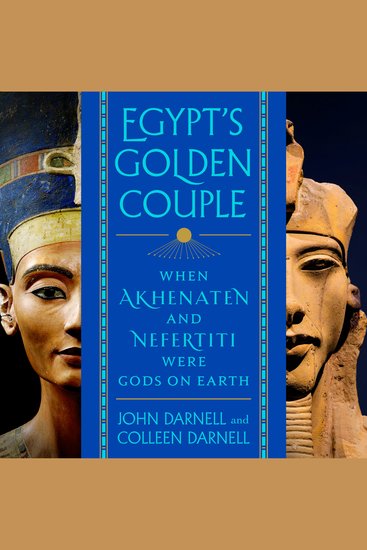
  • Egypt's Golden Couple - When Akhenaten and Nefertiti Were Gods on Earth - cover

    Egypt's Golden Couple - When...

    John Darnell, Colleen Darnell

    • 0
    • 0
    • 0
    Two celebrated Egyptologists bring to vivid life the intriguing and controversial reign of King Tut’s parents 
    Akhenaten has been the subject of radically different, even contradictory, biographies. The king has achieved fame as the world’s first individual and the first monotheist, but others have seen him as an incestuous tyrant who nearly ruined the kingdom he ruled. The gold funerary mask of his son Tutankhamun and the painted bust of his wife Nefertiti are the most recognizable artifacts from all of ancient Egypt. But who are Akhenaten and Nefertiti? And what can we actually say about rulers who lived more than three thousand years ago? 
     
    November 2022 marks the centennial of the discovery of the tomb of Tutankhamun and although “King Tut” is a household name, his nine-year rule pales in comparison to the revolutionary reign of his parents. Akhenaten and Nefertiti became gods on earth by transforming Egyptian solar worship, innovating in art and urban design, and merging religion and politics in ways never attempted before. Combining fascinating scholarship, detective suspense, and adventurous thrills, Egypt’s Golden Couple is a journey through excavations, museums, hieroglyphic texts, and stunning artifacts. From clue to clue, renowned Egyptologists, John and Colleen Darnell, reconstruct an otherwise untold story of the magnificent reign of Akhenaten and Nefertiti.
    Show book
  • Statistical Physics - The Physics of Particles and Systems - cover

    Statistical Physics - The...

    Mark Hedges

    • 0
    • 0
    • 0
    Statistical mechanics is the branch of physics that applies probability theory and statistics to describe the behavior of systems with a large number of particles. It provides a framework for understanding macroscopic phenomena in terms of the microscopic properties of individual particles. The central goal of statistical mechanics is to connect the microscopic world of atoms and molecules with the macroscopic world of thermodynamic variables like temperature, pressure, and volume. 
    Historically, statistical mechanics emerged in the 19th century as scientists sought to explain the observed laws of thermodynamics, which describe the behavior of systems in equilibrium. Classical thermodynamics, while incredibly successful, was primarily phenomenological and lacked a fundamental microscopic understanding. This gap was filled by the development of statistical mechanics, largely attributed to the works of Ludwig Boltzmann, James Clerk Maxwell, and Josiah Willard Gibbs. 
    At its core, statistical mechanics is based on the idea that the behavior of macroscopic systems can be understood by considering the collective behavior of their microscopic constituents. Instead of directly tracking every particle, which is practically impossible for large systems, statistical mechanics calculates the statistical properties of the system. These properties are derived from the laws of probability
    Show book
  • Greek Dark Ages and Greek Renaissance The: The History and Legacy of the Bronze Age Transition to Archaic Greece - cover

    Greek Dark Ages and Greek...

    Editors Charles River

    • 0
    • 0
    • 0
    The Greek Dark Ages, sometimes referred to as the Homeric Age or the Geometric Period, spans the era of Greek history from the end of the Mycenaean civilization around 1100 BCE and the emergence of the Greek poleis in the 9th century BCE. It is an era that has provided little in terms of extant archaeological evidence, which in part explains the name “Dark Ages,” but this lack of evidence has led some archaeologists and historians to make the very great assumption that little of any real significance occurred during these 200 years. Instead, they view it as a sort of hiatus between the collapse of the Mycenaean culture and the emergence of Archaic Greece. As with other so-called “Dark Ages,” this assessment is simplified, and an absence of evidence should never be assumed as evidence of absence. 
    If anything, the collapse of the Mycenaeans was a drawn-out affair, and while the early centuries of the Dark Ages might beseen as a continuation of this trend, even in the worst years, there was a degree of continuity and even some innovations. These changes including the beginnings of the use of iron as an alternative to bronze and some religious practices that continued to be observed. Furthermore, enough remained to form the basis of a recovery in economic, cultural, and artistic aspects of life in the later stage of the era, and in the political sphere, changes necessitated by the collapse in the economic system certainly paved the way for the rise of the polis, which would prove so fundamental in Greece in the centuries that followed.  
    This laid the groundwork for the Greek Renaissance of the 8th century. During that time, the Greek alphabet developed and the earliest surviving Greek literature was composed, while in terms of art and architecture, sculptures and red-figure pottery began. Warfare changed significantly as well when the hoplite became the core infantry.
    Show book
  • Armenia History - A Short Guide About Armenia and its History - cover

    Armenia History - A Short Guide...

    History Retold

    • 0
    • 0
    • 0
    Are you looking for a short guide to the history of Armenia? Look no further!  
    This book is a perfect way to get acquainted with Armenia and its history. 
    This audiobook offers an overview of the country and its geography, agriculture, industries, and economy. It then looks at the government and society, and the cultural life in Armenia.  
    From there, it goes into the history of Armenia from ancient times through the ages to the present day. It covers important rulers and occupations, such as Iran, the Ottoman Empire, and the Byzantine Empire. The audiobook is rounded off with the Velvet Revolution and Nikol Pashinyan's government.  
    This audiobook is the perfect way to start exploring Armenia and its history. It's concise, comprehensive, and easy to follow, making it ideal for both beginner and more experienced readers.  
    So don't wait - grab your copy of "Armenia History: A Short Guide About Armenia and its History" today and start your journey into Armenia's past!
    Show book
  • Occult Diseases - A Review of Unbalance - cover

    Occult Diseases - A Review of...

    Manly P. Hall

    • 0
    • 0
    • 0
    In Occult Diseases: A Review of Unbalance, Manly P. Hall turns his penetrating insight toward the hidden roots of human suffering. More than a study of physical or mental illness, this rare essay—originally published in The All-Seeing Eye—investigates the spiritual and psychological disorders that arise when harmony is broken between the soul, mind, and body. Hall reveals how ignorance, selfishness, and emotional extremes generate destructive vibrations that can manifest as disease, imbalance, and inner decay. He outlines not only the causes of occult affliction but also the principles of restoration: discipline, clarity, virtue, and alignment with higher truth. 
    This is not a medical manual—it is a guide for the soul's hygiene.
    Show book