Join us on a literary world trip!
Add this book to bookshelf
Grey
Write a new comment Default profile 50px
Grey
Subscribe to read the full book or read the first pages for free!
All characters reduced
Birth of Credit Cards - cover

Birth of Credit Cards

Amelia Khatri

Translator A AI

Publisher: Publifye

  • 0
  • 0
  • 0

Summary

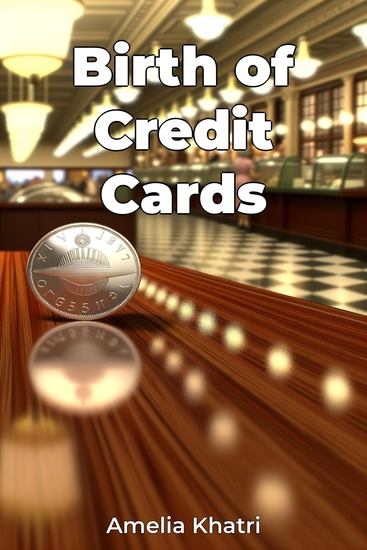
Birth of Credit Cards explores the transformation of credit cards from simple charge coins to the complex digital payment systems that underpin modern finance and consumer culture. The book examines how these small pieces of plastic revolutionized consumer spending, reshaped banking institutions, and accelerated the shift towards digital transactions. One intriguing fact is how the rise of credit cards in the mid-20th century coincided with increasing consumerism and the growth of the middle class. The book argues that credit cards represent a paradigm shift in how we perceive and manage money, fostering a culture of instant gratification and deferred payment.

 
The book progresses chronologically, beginning with the initial concepts like the Diners Club card and the challenges of establishing a nationwide system. It then analyzes the impact of credit cards on consumer spending, debt accumulation, and economic growth, exploring the social and psychological aspects of their use. Finally, the book investigates the technological innovations that have propelled the industry forward, from magnetic stripes to mobile payment systems.

 
By drawing on historical banking records, marketing materials, and economic data, Birth of Credit Cards provides a comprehensive account of the credit card's evolution and its lasting impact.
Available since: 02/12/2025.
Print length: 71 pages.

Other books that might interest you

  • Ancient Celtic Legends: The History of Celtic Folk Tales and Myths that Influenced European Mythology - cover

    Ancient Celtic Legends: The...

    Editors Charles River

    • 0
    • 0
    • 0
    The Celts are one of the most well-known groups in Europe and one of the least understood. Depending on which classifications are used, the Celts are also one of the oldest civilizations in Europe. In the centuries before Christ, the Celts were spread out across much of continental Europe, and though they are mostly identified with Gaul, evidence suggests they also spread as far as Portugal. Though they were spread out across Europe before the height of the Roman Empire, most people associate the Celts with the British Isles today, particularly Ireland and Scotland. After they had been relegated to those smaller regions as a result of the Romans and other migrations, the culture of the Celts as it is currently understood began to congeal during the Early Middle Ages, and Celtic culture, folklore, and legend have all become inextricably intertwined with Irish history and British history as a whole. 
    Historically, Celtic cultures differ from their English and French neighbors in a number of ways, including social organization, language, values and economic systems, but one of the most captivating of these has always been their myths. Celtic Myths, which can be read in translation without needing special training in grammar, are more accessible than the Celtic languages, and unlike the other distinctive features that have faded over the centuries, myths still have their immediacy and power when read today. While much has undoubtedly been lost from the ancient Celts over time, medieval manuscripts help scholars understand how Celtic myths have reached the form they have today. Like many ancient belief systems, Celtic mythology shares Indo-European roots, meaning Celtic beliefs have cousins in related societies like the Norse, Greeks, Romans and Slavs, with a foundation of shared mythmaking that goes back several millennia.
    Show book
  • How to Recognize Toxic Time Management - cover

    How to Recognize Toxic Time...

    Olivia Werner

    • 0
    • 0
    • 0
    [How to Recognize Toxic Time Management] delves into the intricate dance between human consciousness and temporal existence, unraveling the subtle violence we inflict upon ourselves in our desperate attempts to control time. With unflinching precision, this meditation on modern life exposes how we've weaponized our hours against ourselves, transforming productivity tools into instruments of self-harm. Through lyrical prose that echoes the intimacy of internal dialogue, the book illuminates the spaces between our intentions and actions, where toxicity breeds in the guilt of rest and the shame of pause. Drawing from deep psychological insights and embodied wisdom, it maps the territory of our temporal anxiety while offering a revolutionary perspective: that true freedom comes not from mastering time, but from transforming our relationship with it. This isn't just another time management guide; it's a radical reimagining of how we move through our days, challenging the cultural narratives that have taught us to view every moment as a unit of production to be optimized.
    Show book
  • "What We Wished For" - An adoption Story - cover

    "What We Wished For" - An...

    Lisa Crawford Watson

    • 0
    • 0
    • 0
    A twin herself, Lisa Crawford Watson believes she has the insight required to mother twins. When infant twins in need of a permanent, stable home come into her life, she falls in love with them and knows what she must do. Mounting obstacles impede the adoption process, and she examines whether such setbacks are signs that she shouldn’t adopt.   
      
    Determined not to give up, Lisa overcomes her doubts and adopts the sisters out of foster care. However, she faces one hardship after another and quickly learns that raising premature drug- and alcohol-exposed babies is a feat of sacrifice and unpredictability. Over the years, the twins wreak havoc on every relationship within the family and on Lisa’s heart. Has adopting the twins done more harm than good? 
      
    What We Wished For: An Adoption Story shares  a woman’s quest to build a loving family. It is a tale of courage, perseverance, and what remains when things don’t go as imagined. This memoir speaks to anyone who has ever struggled with a life-altering decision, one from which there is no turning back.
    Show book
  • Scenes From The Journey - looking for the lesson and the beauty of the moment - cover

    Scenes From The Journey -...

    Ann Tudor

    • 0
    • 0
    • 0
    Follow author and narrator Ann Tudor as she moves from one stage of life to the next, looking for the lesson as well as for the beauty of the moment. Her stories are informed by the varied experiences of her life: she has been teacher, wife, mother, grandmother, copy editor, fibre artist, practitioner of the healing arts, pianist, aspiring cellist, and, underlying it all, observer/writer.


    Ann Tudor is a Toronto-based writer of creative non-fiction whose current work includes memoirs and personal essay collections. She has a degree in English from DePauw University and an M.A.T. degree from Vanderbilt University. Her best-selling audiobooks include "Tales from My Table," "Rosie & the Angels,"  and "I Love Pie." Available commercially for the first time now are "We Called Her Eileen," and "A Child's Midwestern Christmas." At various times of her fascinating life she has been a church organist, craftsperson, wife-mother-grandmother, cook, student of the cello, hands-on healer,  and editor for a library science publisher. From each of her vocations and avocations she has coaxed a little additional information on how to make it through the journey of life. You can find essays and information at scenesfromthejourney.blogspot.com.
    Show book
  • European Regions - Perspectives Trends and Developments in the 21st Century - cover

    European Regions - Perspectives...

    Gabriele Abels, Elisabeth Donat,...

    • 0
    • 4
    • 0
    At the beginning of the 21st century, the EU is facing deep political, social, and economic changes. The benefit of supranational organization is no longer obvious to European citizens and questions of legitimacy have accompanied the EU's development over the last decades. Regions - albeit often deemed »obsolete« - present themselves as stable and reliable partners in this turbulent environment: in being important objects of identification to their citizens, but also relevant political and legal entities in the EU's multilevel governance system. This edited volume asks about the role of regions and regional identity in a European Union that is perhaps struggling more than ever about its future.
    Show book
  • Whistle-Stop Politics - Campaign Trains and the Reporters Who Covered Them - cover

    Whistle-Stop Politics - Campaign...

    Edward Segal

    • 0
    • 0
    • 0
    Discover the entertaining story of how campaigning by train shaped American politics, elections, journalism, and culture in Whistle-Stop Politics.Memories of the pivotal role campaign trains played in American elections fade with the passing of each generation. Also forgotten are the stories documented by the reporters who traveled with hundreds of whistle-stopping politicians, including Franklin Roosevelt, Harry Truman, Dwight Eisenhower, and Ronald Reagan.The trains were the backdrop of political drama, intrigue, humor, and triumph for more than 185 years. Campaign trains were an American invention that enabled politicians to connect with as many voters as possible in the country’s largest cities and smallest towns.This book is an exciting journey back into America’s political past, opening new windows into the personalities and political campaigns that shaped our history.
    Show book