Join us on a literary world trip!
Add this book to bookshelf
Grey
Write a new comment Default profile 50px
Grey
Subscribe to read the full book or read the first pages for free!
All characters reduced
Classroom Efficiency Report - cover

Classroom Efficiency Report

Amelia Green

Translator A AI

Publisher: Publifye

  • 0
  • 0
  • 0

Summary

Classroom Efficiency Report examines how classroom practices directly influence school effectiveness, providing educators and administrators with actionable strategies for improvement. It highlights the critical role of data-driven decision-making, advocating for evidence-based practices over traditional methods. The book uniquely applies management science principles to the classroom, treating each as a "mini-organization" to optimize performance.

 
The report investigates the impact of various teaching methodologies on student engagement and academic achievement, while also addressing inefficiencies in classroom management. It emphasizes that a school's overall success largely depends on the collective effectiveness of its individual classrooms. By focusing on improving teaching methods and classroom management, schools can create a synergistic effect that benefits both students and teachers.

 
Structured in four parts, the book introduces key performance indicators, analyzes diverse teaching methods, delves into classroom management strategies, and culminates in a framework for school-led efficiency audits. Classroom Efficiency Report offers a comprehensive guide for enhancing educational outcomes through targeted, classroom-level improvements, making it a valuable resource for those seeking practical, evidence-based solutions in education.
Available since: 02/21/2025.
Print length: 128 pages.

Other books that might interest you

  • Anger Unmasked for Parents - Discovering the Hidden Path to Anger Management for Happy Parenting and Raising Peaceful Kids - cover

    Anger Unmasked for Parents -...

    Sarah Thompson

    • 0
    • 0
    • 0
    Unlock the Secrets of Managing Parental AngerA Practical Guide to Transforming Anger into Positive Parenting Strategies 
    Do you find yourself losing control over your emotions as a parent? 
    You are not alone. Sarah Thompson has walked this road too, struggling with bouts of anger that clouded judgment and undermined the bond with her child. But she also found a way to break free from this cycle of anger. 
    With years of research, self-reflection, and practical application, she's developed comprehensive strategies and techniques for managing parental anger. This book is her way of sharing these insights with you, drawn from personal experience and the wisdom of various experts. 
    In this book you will discover:Effective techniques to regulate your emotions and keep your anger in checkThe power of mindfulness and how it can transform your reactionsWays to communicate more effectively with your children, fostering a healthier relationshipThe critical importance of self-care and how to integrate it into your daily lifeHow to set a positive example for your children in managing anger and expressing emotions 
    ... and much more ! 
    This book offers practical, realistic advice and exercises that can be woven into your daily routine. It provides solutions that have been tested and proven to work in real-life parenting situations. 
    Equip yourself with the tools and insights to manage your anger and create a healthier, happier family life.
    Show book
  • I Hope We Choose Love - A Trans Girl's Notes from the End of the World - cover

    I Hope We Choose Love - A Trans...

    Kai Cheng Thom

    • 0
    • 0
    • 0
    What can we hope for at the end of the world? What can we trust in when community has broken our hearts? What would it mean to pursue justice without violence? How can we love in the absence of faith? 


    In a heartbreaking yet hopeful collection of personal essays and prose poems, blending the confessional, political, and literary, Kai Cheng Thom dives deep into the questions that haunt social movements today. With the author's characteristic eloquence and honesty, I Hope We Choose Love proposes heartfelt solutions on the topics of violence, complicity, family, vengeance, and forgiveness. Taking its cues from contemporary thought leaders in the transformative justice movement such as adrienne maree brown and Leah Lakshmi Piepzna-Samarasinha, this provocative book is a call for nuance in a time of political polarization, for healing in a time of justice, and for love in an apocalypse.
    Show book
  • How to Talk to Anyone About Anything Anytime Anywhere & Everyone - cover

    How to Talk to Anyone About...

    Christopher Rothchester

    • 0
    • 0
    • 0
    Have you ever wanted to share your knowledge with others and help everyone else? 
    Have you wanted to be able to talk in-depth about any subject? 
    Do you want people around the world who have no idea what you are talking about listening attentively and understanding everything that is being said? 
    Do you want everyone else wasting their time while they only understand one or two words? 
    This book has the answers to all these questions. 
    With this book's help and your dedication, it will be possible for anyone to gain confidence in their communication skills. It will make it much easier for them when it comes out that there is a need to speak in public. It will also be easier for them when they do not understand what is being said, since they will know how to understand it. This book shows how to talk to anyone about anything, anytime, anywhere, and everyone. The user can learn how to talk in a manner that is entertaining, using the right words with the right emphasis, as well as setting up a scene where people will want to listen without any problems. 
    This book covers the following:Mastering your body language.Listening is the key.The art of building rapport fast.What to say and what not to say.And much more! 
    This book aims to teach the user how to communicate better and more effectively. The user will also learn that they can be confident in their speaking abilities. With this book, the user will be able to communicate with people who have varying levels of education and intelligence. 
    It will also be easier for them when they do not understand what is being said, since the method which is being used will have been correctly explained. The user can learn that there are ways to talk without having anxiety or excessive stress arise with them when they are talking to others.
    Show book
  • Indian Territory - Surviving 160 Acres of Betrayal - cover

    Indian Territory - Surviving 160...

    Tatianna Keblish Duncan

    • 0
    • 0
    • 0
    This audiobook is narrated by an AI Voice.   
    Indian Territory: Surviving 160 Acres of Betrayal is the true story of a Mvskoke family’s dispossession and the larger story of Tulsa, Oklahoma—once known as Tvlse—and the corruption that built it. 
    Written as a historical memoir, this book journeys through the Allotment Era to reveal how so-called “progress” stripped a young Indian family of land, language, wealth, and culture.Shrouded by the mysterious deaths of family members, the narrative centers on two full-blood Mvskoke sisters—still only pre-teen girls—forced to shoulder a battle no child should face as their Creek-speaking father struggled to defend them.Together they were trapped in a system that purposely ignored them and nullified the very decisions they made to protect their home and future. 
    Guardians and Tulsa County courts seized the land they owned, the house their father built and the wealth they had begun to build—funneling it into guardianships that left the family impoverished. 
    This is both an intimate family history and an unflinching indictment of the laws and institutions that turned survival itself into a legal battleground. 
    A true story of dispossession, survival, and generational trauma told from the bloodline who endured it. This is an Indian story experienced by many Indian families across Indian Territory of all different tribal affiliations.
    Show book
  • Life Skills For A Broken World - cover

    Life Skills For A Broken World

    Dr. Ahona Guha

    • 0
    • 0
    • 0
    A revolutionary framework for living well in a broken world, from acclaimed author and psychologist. 


    How can I manage heartbreak? How do I cope with death? How can I learn to tolerate anxiety and have hope? 


    In this helpful, practical, and realistic guide to good psychological health, Dr. Ahona Guha shows us how to cope, thrive, and still feel hopeful for the future. Combining techniques from a range of therapeutic modalities, she demonstrates how we can build a range of essential psychological skills, and apply them to live a more tranquil and joyful life. 


    Life Skills for a Broken World is a breath of fresh air, cutting through the confusion to provide solid, practical, and evidence-based answers to existential questions, big and small.
    Show book
  • Russo-Turkish Wars The: The History and Legacy of the Conflicts Between the Russian Empire and Ottoman Empire - cover

    Russo-Turkish Wars The: The...

    Editors Charles River

    • 0
    • 0
    • 0
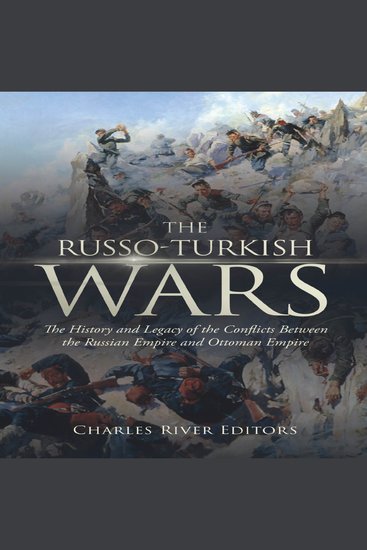
    In the wake of taking Constantinople, the Ottoman Empire would spend the next few centuries expanding its size, power, and influence, bumping up against Eastern Europe and becoming one of the world’s most important geopolitical players. It was a rise that would not truly start to wane until the 19th century, and in the centuries before the decline of the “sick man of Europe,” the Ottomans frequently tried to push further into Europe. 
    Some of those forays were memorably countered by Western Europeans and the Holy League, but the Ottomans’ most frequent foe was the Russian Empire, which opposed them for both geopolitical and religious reasons. From negotiations to battles, the two sides jockeyed for position over the course of hundreds of years, and the start of the fighting may have represented the Ottomans’ best chance to conquer Moscow and change the course of history. 
    By the 19th century, the tsar was notoriously referring to the Ottoman Empire as the “sick man of Europe,” and by the start of World War I, the Ottoman Empire was often described as a dwindling power, mired by administrative corruption, using inferior technology, and plagued by poor leadership. The general idea is that the Ottoman Empire was “lagging behind,” likely coming from the clear stagnation of the empire between 1683 and 1826. Yet it can be argued that this portrayal is often misleading and fails to give a fuller picture of the state of the Ottoman Empire. Looking at the reforms, technological advances and modernization efforts made by the Ottoman elite between 1826 and the beginning of World War I, one could really wonder why such a thirst for change failed to save the Ottomans when similar measures taken by other nations, such as Japan during the Meiji era, did in fact result in the rise of a global power in the 20th century.
    Show book