Join us on a literary world trip!
Add this book to bookshelf
Grey
Write a new comment Default profile 50px
Grey
Subscribe to read the full book or read the first pages for free!
All characters reduced
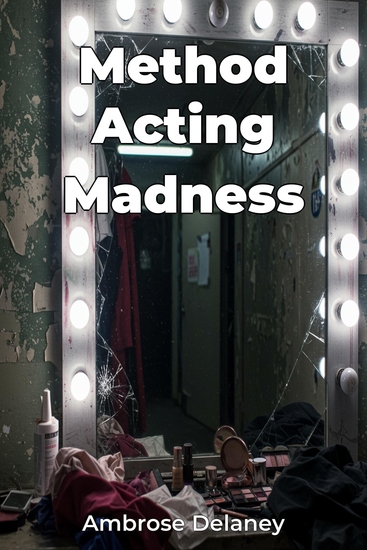
Method Acting Madness - cover

Method Acting Madness

Ambrose Delaney

Translator A AI

Publisher: Publifye

  • 0
  • 0
  • 0

Summary

"Method Acting Madness" explores the intense world of method acting, a technique where actors deeply immerse themselves in their roles, sometimes to extreme lengths. This book delves into the history, psychology, and ethical considerations surrounding this controversial approach to performing arts. Originating from Constantin Stanislavski's teachings and popularized by figures like Lee Strasberg, method acting often requires significant emotional and physical transformations. One intriguing aspect examined is the psychological impact on actors who blur the lines between performance and reality, with some experiencing long-term consequences.

 
The book traces method acting's evolution from its roots to its adoption in Hollywood, presenting case studies of actors who underwent dramatic changes for their roles, such as extreme weight fluctuations or social isolation. It analyzes the ethical dilemmas arising from these practices, questioning the responsibility of directors and producers. By examining the potential pitfalls alongside the impressive results, "Method Acting Madness" offers a balanced perspective.

 
The book progresses by first detailing the origins of method acting, then exploring specific actor examples, and finally addressing ethical concerns. This approach allows readers to understand the complexities and debates surrounding this acting style. It connects to broader fields like psychology and ethics, enriching the discussion.
Available since: 02/24/2025.
Print length: 66 pages.

Other books that might interest you

  • Who's In The Waiting Room? - Create the Life You Want through the Power of Authentic Relationships - cover

    Who's In The Waiting Room? -...

    Neal Goldstein

    • 0
    • 0
    • 0
    Can an individual turn the pain of a troubled childhood into a recipe for success as an adult?In Who’s in the Waiting Room?, Neal Goldstein tells his own story of going from high school dropout to lawyer, a dramatic transformation that he achieved by tapping into the power of relationships. Alongside his journey of self-discovery, Neal presents five behaviors anyone can adopt to foster quality relationships: find your people, acknowledge the need for each other, listen more than you talk, recognize the value of face-to-face contact, and find common ground. He explains how the pain of his youth became his power and offers actionable success moves to help anyone recognize how strengthening relationships in their own lives can lead to success and satisfaction.
    Show book
  • The Typewriter and the Guillotine - What a Journalist a Serial Killer and Prewar Paris Reveal About Truth Power and Society - cover

    The Typewriter and the...

    Troy Crawford

    • 0
    • 0
    • 0
    What unfolds between them reveals how truth is shaped, how power operates, and how societies drift toward catastrophe while insisting everything is under control. 
    The Typewriter and the Guillotine is a work of narrative history and true crime that examines prewar Paris through two converging forces: a determined journalist struggling to tell an unwelcome truth, and a murderer whose crimes became a public spectacle just as Europe stood on the edge of collapse. 
    As extremism spread quietly across the continent, Paris clung to its cultural confidence. Cafés were full. Art flourished. Stability felt assured. Yet beneath the glamor, warning signs accumulated—political hesitation, institutional denial, and a growing appetite for distraction. While editors urged restraint and neutrality, the journalist at the center of this story recognized that silence was itself a choice. 
    At the same time, the city became transfixed by the crimes, trial, and execution of a German serial killer—the last man to be publicly executed in France. His violence shocked the nation, but the fascination it inspired revealed something more unsettling: a society more comfortable consuming spectacle than confronting its own unraveling. 
    Told with clarity, restraint, and narrative tension, this book is not merely about what happened, but about how meaning is constructed under pressure. It explores journalism as moral responsibility, crime as a cultural mirror, and power’s ability to decide which truths are amplified, which are postponed, and which are ignored until it is too late. 
    The Typewriter and the Guillotine is for readers of serious history, true crime, and literary nonfiction who want more than facts alone. It is a meditation on attention, courage, and the fragile space where truth still has a chance to matter.
    Show book
  • The Fish That Ate the Whale - The Life and Times of America's Banana King - cover

    The Fish That Ate the Whale -...

    Rich Cohen

    • 0
    • 0
    • 0
    Named a Best Book of the Year by the San Francisco Chronicle and The Times-Picayune The fascinating untold tale of Samuel Zemurray, the self-made banana mogul who went from penniless roadside banana peddler to kingmaker and capitalist revolutionary  When Samuel Zemurray arrived in America in 1891, he was tall, gangly, and penniless. When he died in the grandest house in New Orleans sixty-nine years later, he was among the richest, most powerful men in the world. Working his way up from a roadside fruit peddler to conquering the United Fruit Company, Zemurray became a symbol of the best and worst of the United States: proof that America is the land of opportunity, but also a classic example of the corporate pirate who treats foreign nations as the backdrop for his adventures. Zemurray lived one of the great untold stories of the last hundred years. Starting with nothing but a cart of freckled bananas, he built a sprawling empire of banana cowboys, mercenary soldiers, Honduran  peasants, CIA agents, and American statesmen. From hustling on the docks of New Orleans to overthrowing Central American governments and precipitating the bloody thirty-six-year Guatemalan civil war, the Banana Man lived a monumental and sometimes dastardly life. Rich Cohen's brilliant historical profile The Fish That Ate the Whale unveils Zemurray as a hidden power broker, driven by an indomitable will to succeed.
    Show book
  • Billion-Dollar Heist The: Inside the Greatest Bank Fraud of the 21st Century - cover

    Billion-Dollar Heist The: Inside...

    David Williams

    • 0
    • 0
    • 0
    Uncover the $1.8 billion cyber heist that shook global finance. A gripping expose on the audacious fraud, its vulnerabilities, and the relentless hunt for the masterminds behind the 21st century's greatest bank fraud.
    Show book
  • Three Came Home - A Mother's Ordeal in a Japanese Prison Camp - cover

    Three Came Home - A Mother's...

    Agnes Keith

    • 0
    • 0
    • 0
    When the Japanese took Borneo in 1942, Agnes Keith was captured and imprisoned with her two-year-old son. Fed on minimal rations, forced to work through recurrent bouts of malaria and fighting with rats for scraps of food, Agnes Keith's spirit never completely died. Keeping notes on scraps of paper which she hid in her son's homemade toys or buried in tins, she recorded a mother's pain at watching her child go hungry and her poignant pride in his development within these strange confines. She also described her captors in all their complexity. Colonel Suga, the camp commander, was an intelligent, highly educated man, at times her adversary, at others a strange ally in a distorted world.
    Show book
  • Joining the Dots - An unauthorised biography of Pravin Gordhan - cover

    Joining the Dots - An...

    Jonathan Ancer, Chris Whitfield

    • 0
    • 0
    • 0
    PRAVIN GORDHAN has been at the centre of many of the political storms that have torn through South Africa’s political landscape. He has been investigated by the Hawks, fired as finance minister, accused of running a ‘rogue unit’ at SARS and come up against the public protector, to name a few. 
      
    Seasoned journalists Jonathan Ancer and Chris Whitfield take a magnifying glass to someone at the centre of this tumultuous period to try to understand the man behind the public image. They go back to Durban in 1949, when Gordhan was born, tracing the significant events and influences that shaped his life and prompted him to become involved in politics as a pharmacy student. 
      
    The authors interview former fellow activists to build a picture of the role Gordhan played in the struggle, including his detention and torture. It was during this time that he worked closely with Jacob Zuma, the man who would become president and Gordhan’s nemesis and, on the back of a bogus intelligence report, fire him as finance minister. 
      
    The book examines why President Cyril Ramaphosa’s right-hand man has been dragged into major controversies and made enemies such as public protector Busisiwe Mkhwebane, Julius Malema and many of those associated with corruption. 
      
    Joining the Dots is an in-depth, insightful, gripping and satisfying read about a man who found the courage to stand up to the dark forces of state capture.
    Show book