Join us on a literary world trip!
Add this book to bookshelf
Grey
Write a new comment Default profile 50px
Grey
Subscribe to read the full book or read the first pages for free!
All characters reduced
Joke Structure - cover

Joke Structure

Ambrose Delaney

Translator A AI

Publisher: Publifye

  • 0
  • 0
  • 0

Summary

Joke Structure explores the science and art behind what makes jokes funny, dissecting the elements that lead to either laughter or silence. It examines how jokes frequently rely on incongruity resolution, where expectations are set up only to be surprisingly subverted. The book also highlights the importance of tension and release in comedic timing, demonstrating how a well-crafted setup builds anticipation for the punchline. Ultimately, it stresses the subjective nature of humor, influenced by cultural background, psychology, and personal experience.

 
The book progresses from establishing a theoretical framework, drawing on linguistics, psychology, and sociology, to deconstructing the anatomy of a joke. It explores comedic devices like puns, irony, and satire, and delves into cultural context, ethical considerations, and practical applications.

 
A unique aspect of this guide is its integrated approach, combining theoretical analysis with practical guidance, making it valuable for comedians, writers, speakers, educators, and anyone interested in understanding and creating better jokes.
Available since: 03/29/2025.
Print length: 78 pages.

Other books that might interest you

  • The Yellow Wallpaper - cover

    The Yellow Wallpaper

    Charlotte Perkins Gilman

    • 0
    • 0
    • 0
    Edited with a new introduction by Aimee McLaughlin
    "The Yellow Wallpaper" by American writer Charlotte Perkins Gilman, first published in January 1892, is regarded as an important early work of American feminist literature for its illustration of the attitudes towards mental and physical health of women in the 19th century.
    What happens when a woman is pushed too far? Is she able to express her thoughts and feelings, or is she forced towards the expectation of behaving 'normally' again soon?
    A woman travels with her husband to an old colonial mansion after a nervous breakdown triggered by the birth of their child. Confined to the nursery and allowed only to breathe fresh air, eat well and rest in line with a regimented 'cure', she slowly begins to unravel at the seams. Her only distraction is writing in secret – that, and the woman she begins to see trapped inside the yellow wallpaper of the room itself.
    Isolated and breaking apart, she sets herself a task: to free the woman, and to become one with her temporary confinement.
    Charlotte Perkins-Gilman's 'The Yellow Wallpaper' presents a harrowing, disturbing account of mental stress, confinement and female turmoil - within which the only available solace can be found inside four peeling, sickly yellow walls ...
    Our new edition also features the sequence of poems "Woman" by Charlotte Perkins Gilman.
    "The gothic genre offers Gilman an effective mode of diagnosing contemporary culture whilst in tandem expressing her ensuing fears and anxieties. Gilman within this novella, gothicises the domestic setting, inverting the pillars of domesticity: family, security and understanding, in turn unveiling the dangers lurking behind the familiarity of gender roles within marital relations. The intimate first-person narration of the narrative serves to enhance Gilman's exposure of the oppressive forces of a male-dominated society, as she deplores her protagonist's inferior position in her domestic arrangement. The female narrator is encumbered by masculine superiority, undoubtedly dwelling in the middle of patriarchy. Embedded within her characterisation is the subjugated role bestowed upon Victorian women. Gilman projects derangement onto a familiar literary figure ― the middle−class wife and mother ― placing the source of this madness in the inviolate sphere for dutiful women ― the home."
    from the new introduction to The Yellow Wallpaper by Aimee McLaughlin
    Show book
  • How to Study Effectively: 7 Easy Steps to Master Effective Study Skills Student Success Note Taking & Exam Preparation - cover

    How to Study Effectively: 7 Easy...

    Troye Bates

    • 0
    • 0
    • 0
    Struggling to be effective with your study skills? 
      
    No need to worry, this study guide will provide you with the necessary tools you need to be successful in studying! 
      
    Studying is one of the most important tasks in life because it helps you to understand and respect the rule of language. If you don’t understand the rule of language, it will be impossible for you to enjoy or even be successful in your studies. 
      
    Learning how to study helps you avoid anxiety, fatigue, and frustration when you are preparing for an examination. 
      
    YOU WILL LEARN: 
    • The 7 easy steps to study effectively. 
    • 32 tips on how to become a successful student. 
    • The art of notetaking. 
    • Exam preparation techniques that will result in better grades. 
    • How to be more productive no matter what you are trying to study. 
      
    Learning how to study is an important life skill. By being a dedicated student, you are likely to witness results and boost your confidence in the process. 
      
    So, stop dreaming and get started today!
    Show book
  • House of Fiction - From Pemberley to Brideshead Great British Houses in Literature and Life - cover

    House of Fiction - From...

    Phyllis Richardson

    • 0
    • 0
    • 0
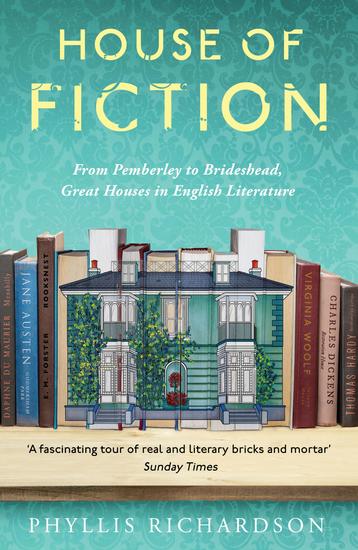
    In House of Fiction we encounter Jane Austen drinking 'too much wine' in the lavish ballroom of a Hampshire manor, discover how Virginia Woolf's love of Talland House at St Ives is palpable in  To the Lighthouse , and find Evelyn Waugh remembering Madresfield Court as he plots Charles Ryder's return to Brideshead.
    Drawing on historical sources, biographies, letters, diaries and the novels themselves,  House of Fiction  opens the doors to these celebrated houses, while offering candid glimpses of the writers who brought them to life.
    Show book
  • The Return of Resentment - The Rise and Decline and Rise Again of a Political Emotion - cover

    The Return of Resentment - The...

    Robert A. Schneider

    • 0
    • 0
    • 0
    The term "resentment" has dominated US news analysis since November 2016. Despite its increased use, this word seems to defy easy categorization. Does "resentment" describe many interlocking sentiments, or is it just another way of saying "anger"? Does it suggest an irrational grievance, as opposed to a legitimate callout of injustice? Does it imply political leanings, or is it nonpartisan by nature? 


    In The Return of Resentment, Robert A. Schneider explores these questions and more, moving from eighteenth-century Britain to the aftermath of the French Revolution to social movements throughout the twentieth century. Schneider illustrates how resentment has morphed across time, coming to express a collective sentiment felt by people and movements across the political spectrum. In this history, we discover resentment's modernity and its ambiguity—how it can be used to dismiss legitimate critique and explain away violence, but also convey a moral stance that demands recognition. Schneider anatomizes the many ways resentment has been used to label present-day movements, from followers of Trump and supporters of Brexit to radical Islamicists and proponents of identity politics. Addressing our contemporary political situation in a novel way, The Return of Resentment challenges us to think critically about the roles different emotions play in politics.
    Show book
  • It's Time To Talk About ACES! - Breaking Cycles Through Awareness Community & Empowerment - cover

    It's Time To Talk About ACES! -...

    Dr. E'Toyare McDonald-Williams

    • 0
    • 0
    • 0
    Creating victory through understanding Adverse Childhood Experiences (ACEs) involves a commitment to shared knowledge, support, and empathy. By acknowledging the profound impact of childhood trauma, individuals and communities can come together to foster a collective healing process. This journey begins with educating ourselves and others about ACEs, recognizing their effects on mental and physical health, and understanding that trauma does not define one's future. Through open dialogue, compassionate support networks, and evidence-based interventions, we can build a community that supports those affected by ACEs and actively works towards healing and positive change. Together, we can create a resilient, empathetic society where every individual has the opportunity to thrive despite past adversities. 
    If you are a survivor, a parent trying to do better than what was done to you, an educator who sees a child struggling and doesn't know why, or simply someone finally ready to name what happened — this audiobook was made for you. Trauma is not a life sentence. Healing is possible, and this conversation is long overdue. "It's time to talk about ACEs."
    Show book
  • From Trauma to Strength - The Human Journey of Resilience in Times of Crisis - cover

    From Trauma to Strength - The...

    Brian Gibson

    • 0
    • 0
    • 0
    Is your child struggling after a crisis, loss, or traumatic experience? 
     You're not alone—and neither are they. 
    When children face trauma—whether through family upheaval, natural disasters, violence, or loss—they often don't have the tools or language to process what's happened. From Trauma to Strength offers parents, caregivers, educators, and professionals a compassionate guide to helping children heal and thrive after crisis. 
    This book will help you understand what trauma looks like in children and what resilience can become. 
    Inside, you'll learn: 
    ·        How trauma affects a child's brain, behavior, and development 
    ·        The signs of hidden trauma and how to identify them early 
    ·        Proven strategies for supporting children through grief, anxiety, and emotional overwhelm 
    ·        How to create a safe, healing environment—at home, in classrooms, or therapy 
    ·        Tools and exercises that promote emotional regulation, connection, and long-term resilience 
    Whether you're a parent trying to comfort your child after a painful experience or a professional supporting traumatized youth, this book equips you with the knowledge and tools to make a difference. 
    Help your child turn their pain into power. 
    Buy From Trauma to Strength now, and start guiding the young people in your life toward healing, resilience, and lasting strength.
    Show book