Join us on a literary world trip!
Add this book to bookshelf
Grey
Write a new comment Default profile 50px
Grey
Subscribe to read the full book or read the first pages for free!
All characters reduced
Yoon Suk-yeol's South Korea - cover

Yoon Suk-yeol's South Korea

Amara Darwin

Translator A AI

Publisher: Publifye

  • 0
  • 0
  • 0

Summary

"Yoon Suk-yeol's South Korea" offers a comprehensive analysis of how South Korea's conservative president is reshaping one of Asia's most influential democracies during a pivotal period of global change. The book examines three crucial dimensions of Yoon's presidency: his market liberalization economic reforms, his strategic approach to regional diplomacy, and his commitment to strengthening the US-South Korea alliance.

 
Against the backdrop of South Korea's transition from the Moon Jae-in administration, the book illuminates how Yoon's background as a prosecutor influences his governance style and policy decisions. Through methodically organized sections, the narrative explores Yoon's economic vision for regulatory reform and innovation-driven growth, followed by an examination of his foreign policy doctrine that emphasizes stronger ties with democratic allies and a more assertive stance toward North Korea.

 
The book draws from extensive research, including government documents, economic data, and policymaker interviews, presenting a balanced analysis of both the potential and challenges of Yoon's policy agenda. What distinguishes this work is its multidisciplinary approach, connecting political science, economics, and international relations to demonstrate how South Korea's domestic policies influence regional dynamics and global partnerships.

 
While maintaining scholarly rigor, the book remains accessible to readers interested in Asian politics and economics, offering valuable insights for policymakers, business leaders, and informed citizens seeking to understand South Korea's evolving role in global affairs.
Available since: 01/17/2025.
Print length: 103 pages.
Other books that might interest you

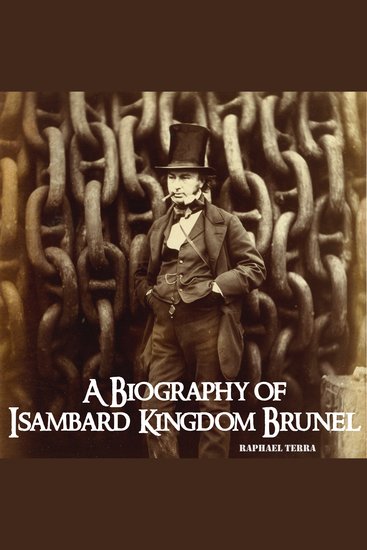
  • A Biography of Isambard Kingdom Brunel - cover

    A Biography of Isambard Kingdom...

    Raphael Terra

    • 0
    • 0
    • 0
    This audiobook has been recorded using Text to speech (TTS). 
     
    The year is 1806 – a baby boy has just been born in a small English coastal town. This child was born into a world without the lightbulb, without cars; a world in which only two years previously mankind had discovered that steam could be used to power a locomotive engine. This was a time of rapid change – the industrial revolution was beginning and one of the world's greatest and most inventive minds was about to make history. 
     
    He would become one of the leading figures of this new technological age, helping to bring the world out of the darkness of the previous centuries, and into a new era of progress. 
     
    He was a visionary – an engineer and inventor of unparalleled ingenuity and ambition. With his railway projects he would conquer rivers, mountains, and vast stretches of land. His oceanic projects would produce the largest and most powerful ships the world had ever seen – helping thousands of people to bridge the continents and bringing mankind closer than ever before. His architectural projects would serve as testament to the ingenuity of mankind and would stamp his legacy upon the landscape. But his legacy endures in more than his constructions and inventions – his genius would come to inspire whole generations of new engineers, architects, and scientists – his legacy lives on all around us. 
     
    So, join us now, as we trace his story from its very beginnings – join us on an exploration of the life and times of Isambard Kingdom Brunel.
    Show book
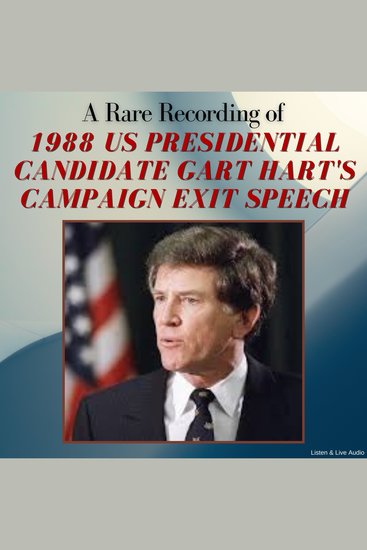
  • A Rare Recording of 1988 US Presidential Candidate Gary Hart's Campaign Exit Speech - cover

    A Rare Recording of 1988 US...

    Gary Hart

    • 0
    • 0
    • 0
    Gary Warren Hart (born November 28, 1936) is an American politician, diplomat, and lawyer. He was the front-runner for the 1984 and 1988 Democratic presidential nominations, until in 1988, he dropped out amid revelations of extramarital affairs. He represented Colorado in the United States Senate from 1975 to 1987. The following is Hart's public announcement on May 8, 1987 that he was ending his presidential campaign.
    Show book
  • Minos - What Is Law? – Plato’s Fragmentary Dialogue on Justice and Political Philosophy - cover

    Minos - What Is Law? – Plato’s...

    Plato, Tim Zengerink

    • 0
    • 0
    • 0
    What if the law wasn’t just what is written—but what ought to be? 
    In Minos, Plato examines the very essence of law in a philosophical dialogue that challenges the foundation of political authority. Socrates asks whether true law is simply what cities declare—or if it must reflect something deeper, more eternal, and more just. 
    This modern translation captures the gravity and insight of Plato’s early political thought, providing a brief but powerful introduction to the eternal question: What is justice? 
    What you'll discover inside: 
    •	A Philosophical Inquiry into the Nature of Law – Beyond rules, toward universal truth 
    •	Socratic Method Applied to Politics – Questioning whether law equals justice 
    •	A Rare and Fragmentary Text Revived – One of Plato’s boldest but most overlooked dialogues 
    •	A Contemporary, Clear Translation – Ideal for modern listeners engaged in legal, ethical, or political thought 
    Step into one of Plato’s most daring conversations—and reconsider what gives law its true legitimacy.
    Show book
  • Politics and the English Language - cover

    Politics and the English Language

    George Orwell

    • 0
    • 0
    • 0
    This audiobook is narrated by an AI Voice.   
    MOST people who bother with the matter at all would admit that the English language is in a bad way, but it is generally assumed that we cannot by conscious action do anything about it. Our civilization is decadent, and our language—so the argument runs—must inevitably share in the general collapse. It follows that any struggle against the abuse of language is a sentimental archaism, like preferring candles to electric light or hansom cabs to aeroplanes. Underneath this lies the half-conscious belief that language is a natural growth and not an instrument which we shape for our own purposes. 
    Now, it is clear that the decline of a language must ultimately have political and economic causes: it is not due simply to the bad influence of this or that individual writer. But an effect can become a cause, reinforcing the original cause and producing the same effect in an intensified form, and so on indefinitely. A man may take to drink because he feels himself to be a failure, and then fail all the more completely because he drinks. It is rather the same thing that is happening to the English language. It becomes ugly and inaccurate because our thoughts are foolish, but the slovenliness of our language makes it easier for us to have foolish thoughts. The point is that the process is reversible. Modern English, especially written English, is full of bad habits which spread by imitation and which can be avoided if one is willing to take the necessary trouble. If one gets rid of these habits one can think more clearly, and to think clearly is a necessary first step towards political regeneration: so that the fight against bad English is not frivolous and is not the exclusive concern of professional writers. I will come back to this presently, and I hope that by that time the meaning of what I have said here will have become clearer. Meanwhile, here are five specimens of the English language as it is now habitually written.
    Show book
  • Humans: A Brief History of How We F*cked It All Up - cover

    Humans: A Brief History of How...

    Anonymous

    • 0
    • 0
    • 0
    Modern humans have come a long way in the seventy thousand years they’ve walked the earth. Art, science, culture, trade—on the evolutionary food chain, we’re true winners. But it hasn’t always been smooth sailing, and sometimes—just occasionally—we’ve managed to truly f*ck things up.Weaving together history, science, politics and pop culture, Humans offers a panoramic exploration of humankind in all its glory, or lack thereof. From Lucy, our first ancestor, who fell out of a tree and died, to General Zhou Shou of China, who stored gunpowder in his palace before a lantern festival, to the Austrian army attacking itself one drunken night, to the most spectacular fails of the present day, Humans reveals how even the most mundane mistakes can shift the course of civilization as we know it. Lively, wry and brimming with brilliant insight, this unique compendium offers a fresh take on world history and is one of the most entertaining reads of the year.
    Show book
  • D-Day Through French Eyes - Normandy 1944 - cover

    D-Day Through French Eyes -...

    Mary Louise Roberts

    • 0
    • 0
    • 0
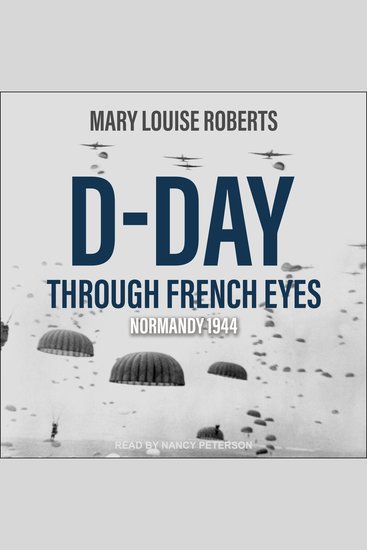
    Silent parachutes dotting the night sky—that's how one Normandy woman learned that the D-Day invasion was under way in June of 1944. Though they yearned for liberation, the French had to steel themselves for war, knowing that their homes, lands, and fellow citizens would have to bear the brunt of the attack. 


    With D-Day through French Eyes, Mary Louise Roberts turns the conventional narrative of D-Day on its head, taking listeners across the Channel to view the invasion anew. Roberts builds her history from an impressive range of gripping first-person accounts by French citizens throughout the region. A farm family notices that cabbage is missing from their garden—then discovers that the guilty culprits are American paratroopers hiding in the cowshed. Fishermen rescue pilots from the wreck of their B-17, then search for clothes big enough to disguise them as civilians. A young man learns to determine whether a bomb is whistling overhead or silently plummeting toward them. When the allied infantry arrived, French citizens guided them to hidden paths and little-known bridges, giving them crucial advantages over the German occupiers. As she did in her acclaimed account of GIs in postwar France, What Soldiers Do, Roberts here sheds vital new light on a story we thought we knew.
    Show book