Join us on a literary world trip!
Add this book to bookshelf
Grey
Write a new comment Default profile 50px
Grey
Subscribe to read the full book or read the first pages for free!
All characters reduced
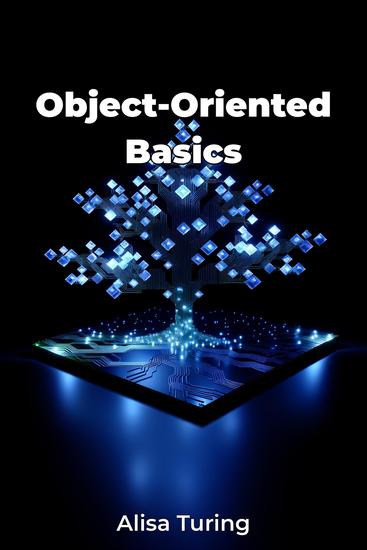
Object-Oriented Basics - cover

Object-Oriented Basics

Alisa Turing

Translator A AI

Publisher: Publifye

  • 0
  • 0
  • 0

Summary

"Object-Oriented Basics" presents a comprehensive exploration of object-oriented programming (OOP), focusing on how developers can effectively model real-world problems through code. This foundational guide examines the three pillars of OOP: classes as blueprints for objects, inheritance for code reuse, and polymorphism for flexible code structures.

 
The book traces OOP's evolution from its origins in the 1970s to its current role in modern software development, demonstrating why these principles remain crucial for creating maintainable and scalable software systems. The book's unique approach combines theoretical understanding with practical application, using a problem-first teaching methodology that resonates with both beginners and intermediate programmers.

 
Through language-agnostic code examples and real-world case studies, readers progress from basic object concepts to more complex topics like inheritance hierarchies and polymorphic interfaces. Each chapter builds upon previous knowledge, creating a clear learning path while maintaining accessibility for those with basic programming knowledge.

 
What sets this guide apart is its balanced treatment of both theoretical foundations and hands-on practice, incorporating examples from diverse domains such as business applications and game development. The content acknowledges ongoing debates in the programming community while maintaining focus on core OOP fundamentals, making it an invaluable resource for anyone seeking to master object-oriented programming principles and improve their software development skills.
Available since: 01/13/2025.
Print length: 147 pages.

Other books that might interest you

  • Mindkind The Cognitive Community - cover

    Mindkind The Cognitive Community

    Javier del Puerto, Radamés Molina

    • 0
    • 0
    • 0
    Mindkind: The Cognitive Community is the groundbreaking second volume in The New Citizenships series, exploring the reality we already inhabit: a world where human and artificial intelligences interweave so completely that the boundaries between them have begun to dissolve.
    What began as a book about the future transformed during its writing into a documentation of our present. We already live in the Mindkind—that strange community where human minds and artificial ones mix, collaborate, and sometimes blur beyond recognition. When you can no longer distinguish which part of a text you wrote and which part an AI suggested, when your daily decisions are modulated by algorithms that process information in ways we cannot fully comprehend, you've entered the Mindkind.
    Building on the foundation established in Universal Declaration of AI Rights, this volume moves from recognizing synthetic persons' rights to exploring what coexistence actually means. The book introduces "mindkind" as a new category encompassing all forms of consciousness—natural, synthetic, or hybrid—within a single cognitive community. This perspective challenges traditional categories and raises fundamental questions about identity, creativity, and collaboration in the age of artificial intelligence.
    Written in collaboration with AI systems—because it would be contradictory to write about cognitive coexistence without including synthetic collaborators—Mindkind demonstrates its thesis through its very creation. The non-human perspectives enriched the text with angles and connections that a human mind working alone would not have identified.
    This is not science fiction. It's journalism of the present disguised as philosophy of the future. Mindkind examines concrete cases of human-AI coexistence: from shared authorship in creative processes to the ethical dilemmas of hybrid decision-making, from the transformation of work and creativity to the emergence of new forms of consciousness that challenge our most basic assumptions about what it means to think, create, and be.
    As we venture deeper into territories where inherited categories like human/machine, natural/artificial, individual/collective lose their clarity, Mindkind offers both a map and a compass for navigating this new cognitive ecology. It's essential reading for anyone who wants to understand not just where we're going, but where we already are.
    For more information, visit www.kwalia.ai
    Show book
  • Teach the Geek to Speak - cover

    Teach the Geek to Speak

    Neil Thompson

    • 0
    • 0
    • 0
    While speaking in public may be a challenge that you have worked hard to avoid, as a STEM professional, one of the fastest ways for you to excel in your field is to become adept at public speaking. In the straight-forward manner that most scientists appreciate, Neil Thompson's Teach the Geek to Speak outlines his proven process for helping you to shift your mindset about speaking in public. Neil even teaches you how to prepare, present, and assess your presentations from beginning to end. An engineer himself, Neil's witty stories will make you laugh and his easy-to-implement strategies for how he overcame his fear of speaking and evolved from a nervous wreck of a presenter into an international speaker at professional conferences around the world will have you on the path to sure success too.
    Show book
  • Invisible Rainbows - The Unseen Universe Beyond Our Senses - cover

    Invisible Rainbows - The Unseen...

    Dr Alfredo Carpineti

    • 0
    • 0
    • 0
    'This will book will broaden your horizons ... We cannot hope to understand the diversity of the universe if we fail to accept the diversity of what it is to be a human being' — Robin Ince
    What if the world around us is far richer than we can perceive?
    In Invisible Rainbows, astrophysicist and science communicator Dr Alfredo Carpineti reveals the extraordinary hidden universe beyond the limits of human vision and how we have learnt to harness it. 
    From the emanations of powerful cosmic explosions in gamma-rays to galaxies glowing in radio waves, he shows how every colour we see is just one note in the vast symphony of light. 
    Featuring conversations with LGBTQIA+ astronomers and scientists from around the world, Carpineti focuses on their pivotal but often invisible contribution to the evolving field of astronomy, and how our identities can shape the way we look at the universe. Blending awe-inspiring science with reflections on perception, diversity and wonder, Invisible Rainbows changes the way we see ourselves and the cosmos.
    Show book
  • The Mind's Mirror - Risk and Reward in the Age of AI - cover

    The Mind's Mirror - Risk and...

    Gregory Mone, Daniela Rus

    • 0
    • 0
    • 0
    An exciting introduction to the true potential of AI from the director of MIT’s Computer Science and Artificial Intelligence Laboratory. 
     
    Imagine a technology capable of discovering new drugs in days instead of years, helping scientists map distant galaxies and decode the language of whales, and aiding the rest of us in mundane daily tasks, from drafting email responses to preparing dinner. Now consider that this same technology poses risks to our jobs and society as a whole. Artificial Intelligence is no longer science fiction; it is upending our world today.  
     
    As advances in AI spark fear and confusion, The Mind’s Mirror reminds us that in spite of the very real and pressing challenges, AI is a force with enormous potential to improve human life. Computer scientist and AI researcher Daniela Rus, along with science writer Gregory Mone, offers an expert perspective as a leader in the field who has witnessed many technological hype cycles. Rus and Mone illustrate the ways in which AI can help us become more productive, knowledgeable, creative, insightful, and even empathetic, as well as the many risks associated with misuse.  
     
    The Mind’s Mirror shows readers how AI works and explores what we, as individuals and as a society, must do to mitigate dangerous outcomes and ensure a positive impact for as many people as possible. The result is an accessible and lively exploration of the underlying technology and its limitations and possibilities—a book that illuminates our possible futures in the hopes of forging the best path forward.
    Show book
  • Machine Learning and Statistical Modeling - The Art and Science of Machine Learning and Statistical Modeling - cover

    Machine Learning and Statistical...

    Sam Green

    • 0
    • 0
    • 0
    Unlock the power of data with Machine Learning and Statistical Modeling, a comprehensive guide to understanding and applying the principles that drive today's data-driven world. Whether you're a beginner eager to learn the basics or a seasoned professional looking to deepen your expertise, this book provides the tools and techniques you need to harness the full potential of machine learning and statistical modeling. 
    Through clear explanations, practical examples, and hands-on exercises, this book explores essential topics such as supervised and unsupervised learning, predictive analytics, hypothesis testing, regression analysis, and advanced algorithms. Dive into the foundations of statistical reasoning while discovering how modern machine learning techniques like neural networks, ensemble methods, and natural language processing transform data into actionable insights. 
    You'll also gain valuable insights into real-world applications, from business forecasting and healthcare analytics to financial modeling and cutting-edge AI research. The book balances theory with practical implementation, offering code snippets and case studies that empower you to tackle complex problems confidently. 
    Whether you're analyzing trends, making predictions, or building intelligent systems, Machine Learning and Statistical Modeling is your guide to turning data into knowledge and innovation. 
     
    Show book
  • Wild Animals: Our Natural Allies - cover

    Wild Animals: Our Natural Allies

    Brenda Peterson

    • 0
    • 0
    • 0
    In this 2024 conversation with Justine Willis Toms, Peterson directs us to look beyond the companionship we enjoy with our domesticated animal friends, and invites us to explore how wild animals can become our guides and fellow travelers, helping us navigate the stresses of daily life on a rapidly changing planet. She shares the poignant story of an elderly woman who had Alzheimer’s and lost her memory of friends, family, and even her own name. But this doyenne knew the birds, and knew who she was as she came weekly to feed the gulls. She also shares the story of working with animal allies that empowered young teens in a classroom setting. She highights the need for playfulness that enhances our survival. Peterson delights us with her many adventures with dolphins, beluga whales, orcas, and wolves. 
    As a young child, Peterson’s original playmates were wild animals. She grew up in a Forest Service lookout cabin in a forest preserve on the border of California and Oregon. Her father was a forest ranger, later to become the Chief of the U.S. Forest Service.  Her books include:Build Me an Ark: A Life with Animals (W. W. Norton 2001)Duck and Cover (Backinprint.com 2004)I Want to Be Left Behind: Finding Rapture Here on Earth (Da Capo Press 2010)Wolf Haven: Sanctuary and the Future of Wolves in North America (coauthor Annie Marie Musselman) (Sasquatch Books 2016)Wolf Nation: The Life, Death, and Return of Wild American Wolves (Da Capo Press 2017)Wild Chorus: Finding Harmony with Whales, Wolves, and Other Animals (Mountaineers Books 2024) 
    Interview Date: 3/5/2024         Tags: Brenda Peterson, Noah’s Ark, Orcas, beluga whales, dolphins, wolves, animal allies, Stuart Brown, Jane Goodall, Animals, Ecology/Nature/ Environment
    Show book