Join us on a literary world trip!
Add this book to bookshelf
Grey
Write a new comment Default profile 50px
Grey
Subscribe to read the full book or read the first pages for free!
All characters reduced
THE DIVINE COMEDY: Inferno Purgatorio & Paradiso (3 Classic Translations in One Edition) - Enriched edition Cary's Longfellow's Norton's Translation With Original Illustrations by Gustave Doré - cover

THE DIVINE COMEDY: Inferno Purgatorio & Paradiso (3 Classic Translations in One Edition) - Enriched edition Cary's Longfellow's Norton's Translation With Original Illustrations by Gustave Doré

Alighieri Dante

Publisher: Musaicum Books

  • 0
  • 0
  • 0

Summary

Dante Alighieri's epic masterpiece, 'The Divine Comedy: Inferno, Purgatorio & Paradiso,' is a monumental work that explores the author's journey through Hell, Purgatory, and Heaven. Written in the early 14th century, this allegorical poem is considered one of the greatest works of world literature. The three parts of the book offer a vivid depiction of the afterlife, filled with complex allegories, rich symbolism, and moral lessons. Dante's vivid descriptions and powerful imagery bring the spiritual journey to life, inviting readers to contemplate the nature of sin, redemption, and the human soul. The book is a masterpiece of medieval poetry, blending theology, philosophy, and poetic imagination in a captivating narrative. Dante Alighieri, a prominent Italian poet and philosopher, wrote 'The Divine Comedy' during a period of political turmoil and personal exile. Influenced by his own life experiences and theological beliefs, Dante created a work that reflects his deep understanding of medieval theology and philosophy. His exploration of the afterlife serves as a powerful reflection on the human condition and the nature of salvation. I highly recommend 'The Divine Comedy' to readers interested in classic literature, theology, philosophy, and poetry. Dante's timeless work offers profound insights into the complexities of faith, sin, and redemption, making it a must-read for anyone seeking a deeper understanding of the human experience.

In this enriched edition, we have carefully created added value for your reading experience:
- A comprehensive Introduction outlines these selected works' unifying features, themes, or stylistic evolutions.
- The Author Biography highlights personal milestones and literary influences that shape the entire body of writing.
- A Historical Context section situates the works in their broader era—social currents, cultural trends, and key events that underpin their creation.
- A concise Synopsis (Selection) offers an accessible overview of the included texts, helping readers navigate plotlines and main ideas without revealing critical twists.
- A unified Analysis examines recurring motifs and stylistic hallmarks across the collection, tying the stories together while spotlighting the different work's strengths.
- Reflection questions inspire deeper contemplation of the author's overarching message, inviting readers to draw connections among different texts and relate them to modern contexts.
- Lastly, our hand‐picked Memorable Quotes distill pivotal lines and turning points, serving as touchstones for the collection's central themes.
Available since: 12/06/2017.
Print length: 640 pages.
Other books that might interest you

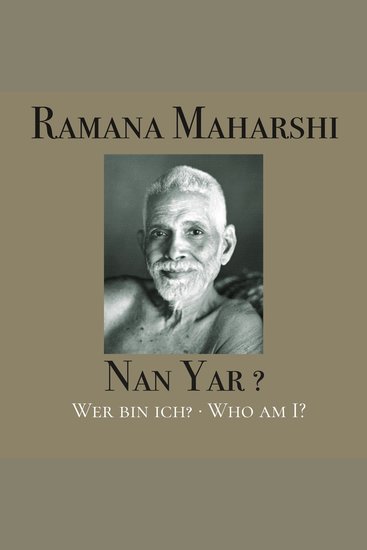
  • Nan Yar? - Who am I? - The Teachings of Bhagavan Sri Ramana Maharshi - cover

    Nan Yar? - Who am I? - The...

    Ramana Maharshi

    • 0
    • 0
    • 0
    What is liberation? How does the mind become still? What is happiness?Who am I? is the title of a series of 28 questions and answers that Sri M. Shivaprakasham Pillai asked the Indian master Bhagavan Sri Ramana Maharshi around 1902. He visited the master in a cave on Mount Arunachala in southern India and asked for spiritual guidance.It is recorded that Ramana Maharshi answered these questions in Tamil, the language he was familiar with. This text was first published in Tamil in 1923, underwent several revisions, was translated into English by an Indian scholar from the University of Madras in 1982 and finally translated into a modern German version in 2002. The questions that were asked over a hundred years ago have lost none of their validity. The radical answers bear witness to a profound knowledge of the nature of the human spirit and point in an emphatic and uncompromising way to the possibility of realising our true self.This work is one of the only two prose pieces among Ramana Maharshi's messages in his own words. They clearly represent the central teaching that the path of knowledge, the enquiry with the question 'Who am I?' is the direct path to liberation. 'Self-enquiry leads directly to Self-realisation by removing the obstacles that make us think that the Self is not yet realised.'  Sri Ramana MaharshiIn the foreword, OM C. Parkin describes the essence of this spiritual treasure in clear and impressive words: 'All questions that arise from the depths of the human soul ultimately lead to a single one: "Who am I?" The instruction to this last of all questions contains the knowledge that everything a person seeks can only be found within. Love is within. Truth is within. God is within. God is the Self.'
    Show book
  • Societal Issues - Understanding Problems Like Exploitation Trafficking Organized Crime Poverty War and Global Disasters (19 Titles!) - cover

    Societal Issues - Understanding...

    Marcus Klein

    • 0
    • 0
    • 0
    This goldmine of a bundle consists of 19 titles, which are the following: 
    Border Control - The Global Struggle to Manage Immigration and Security 
    Child Soldiers - The Tragic Exploitation of Youth in Armed Conflicts 
    Children’s Rights - A Global Call for Justice and Protection of the Most Vulnerable 
    Cybersecurity - The New Frontline in Protecting Our Digital Future 
    Deforestation - The Silent Crisis Threatening Our Planet’s Survival 
    Destructive Artificial Intelligence - How Technology Can Be a Double-Edged Sword 
    Drug Cartels - The Dark Underworld of Drug Trafficking and Its Global Consequences 
    Exploitation - How Inequality and the Income Gap Is Shaping the Future of Our Societies 
    Freedom of Speech - Navigating the Balance Between Expression and Responsibility 
    Global Debt - The Financial Time Bomb Affecting Nations and Citizens 
    Global Disasters - The Escalating Crisis of Natural and Man-Made Calamities 
    Global Poverty - Addressing the Deepening Divide in the World's Wealth 
    Human Trafficking - Modern-Day Slavery, Sex Trafficking, and Child Prostitution in the Global Economy 
    Organ Harvesting - The Black Market for Human Organs and Its Global Impact 
    Pollution - The Environmental Crisis That Threatens Our Health 
    Racism - The Enduring Battle for Equality and Human Dignity 
    Refugees - The Crisis of Displacement and the Search for Solutions 
    Sexism - The Persistent Struggle for Gender Equality Across the World 
    War Crimes - Accountability and Justice for the Atrocities of War 
    Take advantage of this discounted deal now!
    Show book
  • The Con - How Scams Work Why You're Vulnerable and How to Protect Yourself - cover

    The Con - How Scams Work Why...

    James Munton, Jelita McLeod

    • 0
    • 0
    • 0
    “[A] fascinating, informative, and highly entertaining primer on the various ways the uninitiated may find themselves ripped off by a con artist.” —Publishers Weekly   No one thinks it can happen to them, but Americans are forty times more likely to be defrauded than to have their cars stolen or their homes burgled. Con artists ruin people financially and emotionally, leaving in their wake a trail of destruction, broken hearts, and deflated dreams.    The first step to combating fraud is to understand it. What do scams look like? Why are they effective? The next step is to take action. How can we protect ourselves and our families? The Con: How Scams Work, Why You’re Vulnerable, and How to Protect Yourself informs and engages with accessible stories of ordinary people from all walks of life thrown into unexpected and disorienting circumstances. The book goes behind the scenes of real-world cons to examine the logistics and psychology that enable scams to succeed. The goal is to help people understand and recognize deception, and in the same way that they avoid other potentially dangerous situations, take a detour. Once readers have gained a clear idea of what scams look and sound like and learned simple strategies to reduce personal risk, protecting themselves will be just as instinctive as putting on a seat belt.  “This compelling work goes a long way toward putting distance between scammers and their prey.” —Foreword Reviews  “Completely fascinating and insightful.” —Booklist  
    Show book
  • Security Secrets: Transform Your Knowledge for Ultimate Protection - "Unlock your expertise with audio lessons designed to boost your security knowledge for maximum protection!" - cover

    Security Secrets: Transform Your...

    Ronan Ashworthy

    • 0
    • 0
    • 0
    Security Secrets: Transform Your Knowledge for Ultimate Protection 
    ⭐⭐ Simplified Guide & Explanations Included ⭐⭐ 
    Are you eager to elevate your career and enhance your expertise in cybersecurity? 
    Do you need a thorough guide that encompasses everything required to master the essential cybersecurity concepts for a successful career today? 
    Your search ends here! 
    This guide is your ultimate resource for deepening your understanding, applying your skills, and engaging in practical exercises. With this knowledge in hand, you are set for success. 
    Updated for the latest cybersecurity standards and practices. 
    Key features of this enhanced guide: 
    - In-depth insights into pivotal cybersecurity concepts and practices essential for a successful career. 
    - Comprehensive explanations of critical security strategies and measures. 
    - Effective strategies for preparation and real-world application in cybersecurity. 
    Our guide stands out due to its thorough coverage, which is crucial for your career advancement. Key concepts are explored in depth and with clarity. 
    Please remember that this guide is an independent resource and is not affiliated with any official cybersecurity organization. 
    Structured for clarity with straightforward language, our guide to mastering cybersecurity concepts ensures seamless transitions between topics. Say goodbye to convoluted terminology and embrace content that is clear, precise, and technically accurate. 
    So, why hesitate? Click the BUY NOW button, secure your guide, and embark on your journey toward a successful career in cybersecurity!
    Show book
  • Battle of Culloden The: The History and Legacy of the Jacobite Revolts’ Most Famous Battle - cover

    Battle of Culloden The: The...

    Editors Charles River

    • 0
    • 0
    • 0
    The Jacobites conjure up many images to 21st century Britons, including romantic heroism, the Outlander series, and Bonnie Prince Charlie as the doomed hero of the cause, but Jacobitism was a cause that had far reaching consequences across 18th century Europe. The Jacobites were not only supporters of the exiled Stuart monarchy, but also against the political and religious settlements agreed to across the British Isles. As Jacobite historians such as Daniel Szechi and Frank McLynn have noted, the specter of the Jacobite threat was present for the British government and monarchy in their dealings with European powers throughout the 18th century. This was especially true in France, the country that supported the exiled Stuarts and gave them a home until 1714. This soured the French monarchy’s relationship with Britain, and the Hanoverian kings who replaced the Stuarts were always aware of it. 
    Of all the fighting conducted by the Jacobites, the Battle of Culloden, fought on April 16, 1746, was probably the most famous battle of them all, and it was a complete disaster for the Jacobite army. The government army outnumbered and outgunned the Jacobites, and when snow fell that morning, it left the battlefield wet and boggy. The exposed field also meant there would be nowhere for the Jacobites to avoid the enemy’s gunfire. The battle began around 1:00 p.m. with British artillery fire that the Jacobites struggled to respond against, and the famous Highland charge employed by the Scottish clans was hopeless in a boggy field. Their opposition had learned from previous encounters by attacking their opponent on the right instead of straight ahead, which bypassed the Highlanders’ shield. The battle lasted about an hour, and in that time the Jacobites lost about 2,000 men, a resounding defeat that marked the end of the Jacobites’ struggle to restore a Stuart to the throne.
    Show book
  • The South African Famine of 1820 - Colonial Mismanagement and Drought - cover

    The South African Famine of 1820...

    Sarah Willards

    • 0
    • 0
    • 0
    In the early 19th century, South Africa was a land marked by contrasts—fertile valleys and arid plains, indigenous traditions and growing colonial ambition. The region most affected by the famine of 1820 was the Cape Colony, which had come under British control in 1806. This colony served as a strategic resupply point for British ships sailing to and from the East Indies, and it was gradually becoming a hub for European settlement, particularly by the Dutch-descended Boers and British immigrants arriving as part of state-sponsored schemes. These settlers introduced European agricultural practices, often ill-suited to the diverse and unpredictable South African climate. 
    The colony’s geography played a significant role in shaping life and livelihoods. Coastal areas received more rainfall and were relatively fertile, while the interior—known as the Karoo and other semi-arid zones—was prone to drought and soil erosion. Farming communities depended heavily on seasonal rainfall to sustain crops such as wheat, maize, and barley, as well as livestock including sheep and cattle. When these rains failed, communities faced immediate and severe consequences, especially in regions where irrigation infrastructure was minimal or nonexistent. 
    The social landscape of the Cape was equally complex. Indigenous groups such as the Xhosa, Khoikhoi, and San had long adapted to the challenges of the land through mixed economies of herding, gathering, and small-scale farming. Their interaction with European settlers was often strained, marked by competition over land and water sources, cultural misunderstandings, and colonial policies that marginalized local traditions and governance structures.
    Show book