Join us on a literary world trip!
Add this book to bookshelf
Grey
Write a new comment Default profile 50px
Grey
Subscribe to read the full book or read the first pages for free!
All characters reduced
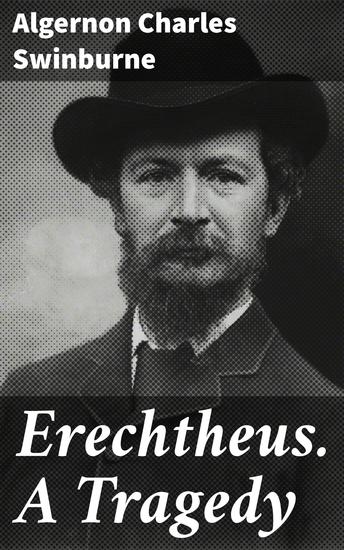
Erechtheus A Tragedy - A Poetic Exploration of Power and Fate in Greek Tragedy - cover

Erechtheus A Tragedy - A Poetic Exploration of Power and Fate in Greek Tragedy

Algernon Charles Swinburne

Publisher: Good Press

  • 0
  • 0
  • 0

Summary

Erechtheus. A Tragedy is a compelling exploration of ancient themes, weaving the myth of Erechtheus, the Athenian king, into a rich tapestry of poetic diction and dramatic structure. Swinburne's characteristic use of lyrical intensity and rhythmic innovation shines through, as he delves into profound questions of duty, sacrifice, and the intersection of personal desire with the demands of fate. The work stands as a homage to classical tragedy, drawing inspiration from Greek drama while simultaneously infusing it with Victorian sensibilities, reflecting Swinburne's fascination with the interplay of love, death, and divine retribution. Algernon Charles Swinburne, a prominent figure in the 19th-century literary scene, was known for his radical views on aesthetics and morality, and his fascination with themes of freedom and constraint. Influenced by the classical canon, as well as by his own experiences with political upheaval, Swinburne often grappled with the tensions between individual will and societal expectations. His intimate knowledge of Greek mythology and tragedy culminated in this bold work, which resonates with the emotional weight and ethical dilemmas of his time. Erechtheus is a must-read for enthusiasts of both classical literature and Victorian poetry. Swinburne's masterful command of language combined with the timeless themes of love, loss, and the relentless march of destiny invite readers into a world that transcends its historical context. This tragedy serves not merely as a retelling of an ancient tale but as a profound reflection on the human condition, making it an essential addition to the canon of literary classics.
Available since: 08/22/2023.
Print length: 42 pages.

Other books that might interest you

  • The Lost World - cover

    The Lost World

    Arthur Conan Doyle

    • 0
    • 0
    • 0
    Venture into The Lost World, Arthur Conan Doyle’s thrilling tale of discovery and adventure in a land untouched by time. Join Professor Challenger and his team of explorers as they journey deep into the Amazon, where they stumble upon a plateau filled with prehistoric creatures and extraordinary dangers. Dinosaurs roam freely, and survival becomes a gripping challenge in this untouched world beyond imagination. 
    Blending suspense, science fiction, and the excitement of exploration, The Lost World captures Doyle’s skill for weaving mystery with adventure. This classic tale of resilience and discovery has inspired generations and remains one of the foundational works of adventure fiction. 
    Narrated to bring each peril and wonder to life, this audiobook is a captivating listen for fans of thrilling adventures and timeless classics. 
    Start listening to The Lost World today and explore a land of wonders where anything is possible!
    Show book
  • Saki's Cats - cover

    Saki's Cats

    Saki Saki

    • 0
    • 0
    • 0
    Saki's Cats rounds up the tales about cats, big and small, by the undisputed master of the short story.
    'Tobermory', one of Saki's most famous pieces, demonstrates the danger that would ensue from granting cats the power of speech – animals have long lurked unseen, eavesdropping, in the background. The tom in 'The Philanthropist and the Happy Cat' is the only one to enjoy his meal, as is the leopard in 'The Guests'. In 'The Penance' and 'Mrs Packletide's Tiger', hunters who put cats in their sights are humiliated and blackmailed. 'The Achievement of the Cat' considers how cats have come to be served by the human race.
    In addition to the short stories about cats, Saki's Cats also collects Saki's juvenile letters to his sister Ethel about the tiger cub he adopted while living in Burma.
    The feisty felines of these tales are the only clear winners, and, with a characteristic smirk and dash of his pen, it is Edwardian Society that Saki sends slinking off, tail between its legs.
    Show book
  • Jogyono Ay Re - Bengali Classical Song - cover

    Jogyono Ay Re - Bengali...

    NiradBaran

    • 0
    • 0
    • 0
    Bengali Classical Song. 
    Song Name : jogyono Ay Re Mp3 
    Total 6 part 
    Permanent Antara, Boltan, Pakar, Ascendant - Descendant. 
    Rhythm: Trital 
    Middle level
    Show book
  • Dickon the Devil - From their pens to your ears genius in every story - cover

    Dickon the Devil - From their...

    Sheridan Le Fanu

    • 0
    • 0
    • 0
    Joseph Sheridan Le Fanu was born on 28th August 1814 in Dublin into a literary family with Huguenot, Irish and English roots.   
    For a time he and his siblings were tutored but Le Fanu would often immerse himself in the books of his father’s library. 
    In 1833 Le Fanu began his Law studies at Trinity College, Dublin and graduated in 1839. Although called to the bar he instead began a career in journalism.   
    He was also writing. His first fiction story ‘The Ghost and the Bonesetter’ was published in 1838.  In 1843 came the novella ‘Spalatro: From the Notes of Fra Giacomo’, a hero with a particular necrophiliac passion for an undead blood-drinking beauty, a forerunner to his later female vampire ‘Carmilla’.  
    In 1844 Le Fanu married Susanna Bennett with whom he had 4 children. The following year his first novel ‘The C'ock and Anchor’ was published. Works now flowed from his pen and with a rapid increase in family finances they moved, in 1851, to Merrion Square, Dublin, where he remained until his death.  
    In 1858 Susanna died and Le Fanu became reclusive. It was during this period that he produced some of his best work.  Working only by candlelight he wrote through the night, burnishing his reputation as a major figure of 19th Century supernaturalism with many classics including; ‘Green Tea’, ‘Mr Justice Harbottle’, and ‘In a Glass Darkly’.  
    Joseph Thomas Sheridan Le Fanu died in Merrion Square in his native Dublin on February 7th, 1873, at the age of 58.
    Show book
  • The Secret Garden - cover

    The Secret Garden

    Frances Hodgson Burnett

    • 0
    • 0
    • 0
    The beautiful classic story of The Secret Garden comes to life with reader, Christina Ann Phile Traverso.
    Show book
  • A Profitable Weakness - From their pens to your ears genius in every story - cover

    A Profitable Weakness - From...

    George Gissing

    • 0
    • 0
    • 0
    George Robert Gissing was born on November 22nd, 1857 in Wakefield, Yorkshire.  
    He was educated at Back Lane School in Wakefield. Gissing loved school. He was enthusiastic with a thirst for learning and always diligent.  By the age of ten he was reading Dickens, a lifelong hero. 
    In 1872 Gissing won a scholarship to Owens College. Whilst there Gissing worked hard but remained solitary. Unfortunately, he had run short of funds and stole from his fellow students. He was arrested, prosecuted, found guilty, expelled and sentenced to a month's hard labour in 1876. 
    On release he decided to start over.  In September 1876 he travelled to the United States. Here he wrote short stories for the Chicago Tribune and other newspapers. On his return home he was ready for novels. 
    Gissing self-published his first novel but it failed to sell.  His second was acquired but never published. His writing career was static.  Something had to change.  And it did. 
    By 1884 The Unclassed was published.  Now everything he wrote was published. Both Isabel Clarendon and Demos appeared in 1886. He mined the lives of the working class as diligently as any capitalist. 
    In 1889 Gissing used the proceeds from the sale of The Nether World to go to Italy. This trip formed the basis for his 1890 work The Emancipated. 
    Gissing's works began to command higher payments. New Grub Street (1891) brought a fee of £250.  
    Short stories followed and in 1895, three novellas were published; Eve's Ransom, The Paying Guest and Sleeping Fires. Gissing was careful to keep up with the changing attitudes of his audience.  
    Unfortunately, he was also diagnosed as suffering from emphysema. The last years of his life were spent as a semi-invalid in France but he continued to write. 1899; The Crown of Life. Our Friend the Charlatan appeared in 1901, followed two years later by The Private Papers of Henry Ryecroft. 
    George Robert Gissing died aged 46 on December 28th, 1903 after catching a chill on a winter walk.
    Show book