Join us on a literary world trip!
Add this book to bookshelf
Grey
Write a new comment Default profile 50px
Grey
Subscribe to read the full book or read the first pages for free!
All characters reduced
Chastelard a Tragedy - cover

Chastelard a Tragedy

Algernon Charles Swinburne

Publisher: DigiCat

  • 0
  • 0
  • 0

Summary

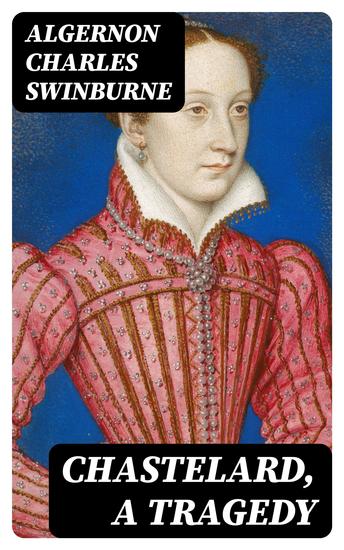
In "Chastelard, a Tragedy," Algernon Charles Swinburne explores the themes of obsession, love, and betrayal through the lens of historical drama. Set against the backdrop of 16th-century Scotland, the play centers on the tragic figure of Chastelard, whose tumultuous pursuit of Mary, Queen of Scots, leads to disastrous consequences. Swinburne's poetic verse is characterized by rich imagery and a musical quality, showcasing his mastery of language and his interest in the emotional depths of his characters. The play embodies the Victorian fascination with history and human psychology, making it a significant work in the context of both the period's literature and the genre of tragedy itself. Algernon Charles Swinburne, a prominent figure of the Pre-Raphaelite movement and an instrumental voice in Victorian poetry, was known for his unconventional themes and radical views on sexuality and politics. His deep admiration for the turbulent reign of Mary, Queen of Scots, and his interest in the heightened passions of historical figures inspires much of the intense drama and lyrical beauty found in "Chastelard." Swinburne's personal struggles with authority and societal norms heavily influenced his exploration of tragic inevitability and the darker facets of human nature. "Chastelard, a Tragedy" is a must-read for scholars and enthusiasts of 19th-century literature, offering a thought-provoking examination of the complexities of desire and the inexorable pull of fate. Readers will appreciate Swinburne's innovative use of language and his ability to evoke deep emotional resonance, making this work a pivotal part of the tragic canon that deserves a place on every literary critic's shelf.
Available since: 09/16/2022.
Print length: 64 pages.
Other books that might interest you

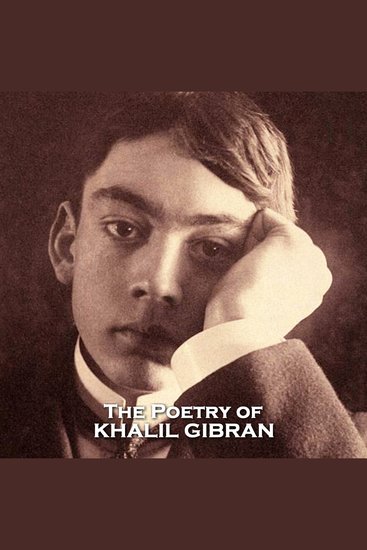
  • The Poetry of Khalil Gibran - Collection from the titan of world literature author of The Prophet - cover

    The Poetry of Khalil Gibran -...

    Kahlil Gibran

    • 0
    • 0
    • 0
    Gibran Khalil Gibran was born on 6th January 1883 in the village of Bsharri, Beirut Vilayet, then part of the Ottoman Empire 
    His mother took him and his siblings to the United States in 1895 where he was enrolled into a Boston school and his creative talents soon noted.  He was sent home to be schooled at the Collège de la Sagesse in Beirut but returned to Boston following the death of his youngest sister in 1902.  Within a year his mother had also died. 
    In 1904, Gibran's drawings were displayed for the first time and, a year later, his first book, in Arabic, was published in New York City.  With financial help from a benefactress he studied art in Paris from 1908 and here his path crossed with dissident Syrian exiles.  Over the years he would meet many more like-minded exiles who were exploring ways to overthrow the yoke of the Ottoman Empire.   
    By 1911 he had settled in New York working on his drawings and paintings which were now being regularly exhibited. His writing was also attracting much attention and gaining an audience.   
    His first book in English, ‘The Madman’ became an international phenomenon.  Whilst his writing has overshadowed his visual works there is no doubt that a copy of ‘The Mad Man’ is never far from any bookshelf.  This and other works have ensured his stature as an artist is world-wide and that it continues into these more modern times.  Gibran was regarded as a literary rebel and a leading figure of the Arabic literary Renaissance and made influential contributions to Western poetry, stories and thought. 
    Khalil Gibran died on 10th April 1931 in New York City from cirrhosis and incipient tuberculosis in one lung.  He was 48.   
    Gibran was one of a number of Arab intellectuals and writers who lived in the United States at the beginning of the twentieth century and who had a great influence on the development of modern Arabic literature through the exploration of Western literary movements.  The group was presided over by Gibran himself and was baptized Arrabitah, or “The League.”  Its influence is acknowledged as fundamental. 
    In this volume of poetry Gibran is able to capture and demonstrate and enlighten much of the human condition and the wonder of the world around him.
    Show book
  • Jingle Bell Jingle Bell: A Thottie Christmas - cover

    Jingle Bell Jingle Bell: A...

    Bobby Burgess

    • 0
    • 0
    • 0
    It's Christmas and Meka and friends are getting together. What she doesn't know is that this Christmas is going to be different as her friend Sasha has plans. Join us on a happy yet scary and short Christmas story Jingle Bell, Jingle Bell A Thottie Christmas.
    Show book
  • My Mother's Funeral: The Show - cover

    My Mother's Funeral: The Show

    Kelly Jones

    • 0
    • 0
    • 0
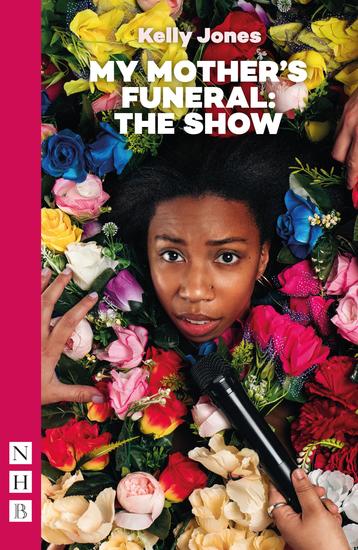
    Abigail's mum is dead. But it turns out she can't afford her to be. Did you know how expensive it is to die? It's £4,000 for the funeral. Extra for flowers. And even more if you want sausage rolls. Otherwise, she'll get a council funeral and an unmarked grave.
    In her work as a playwright, Abigail has been asked to write about something raw, from her 'unique working-class lens'. Something that will make the audience feel gratifyingly bad about themselves. And so, to afford the funeral, she has to write about her mum.
    Kelly Jones's My Mother's Funeral: The Show playfully tackles the inequalities we face around death, and the cost of turning your loved ones into art. It was co-produced by Paines Plough; Mercury Theatre, Colchester; Belgrade Theatre, Coventry; Landmark Theatres and Royal & Derngate, Northampton – and premiered in 2024 at the Belgrade, before a UK tour including a run at Paines Plough's Roundabout at the Edinburgh Festival Fringe, where it won a Fringe First Award and a Summerhall Lustrum Award.
    Show book
  • Twelfth Night - cover

    Twelfth Night

    William Shakespeare

    • 0
    • 0
    • 0
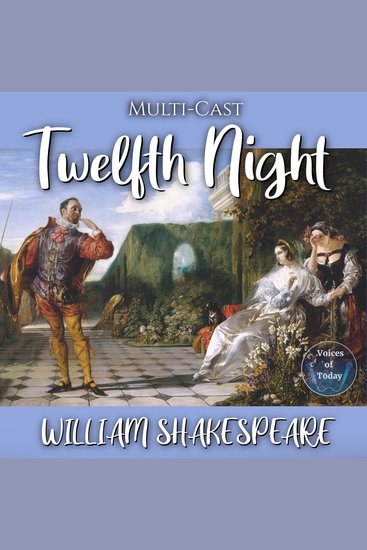
    As the generating force of its plot, Twelfth Night uses a device which has since become a staple in comedy: gender confusion. Viola and her twin brother Sebastian, are shipwrecked on the coast of Illyria, a country ruled by the melancholy Duke Orsino. The twins are separated and Viola is led to believe that her brother has perished. She disguises herself as a male under the name of Cesario and makes her way to the ducal court, where Orsino employs her as a messenger, to communicate his love to the reclusive lady, Olivia—who is not willing to return his affection. Olivia is also the target of two other romantic schemes. Her pompous steward, Malvolio, has persuaded himself that Olivia has fallen for him but is too diffident to reveal her passion. Her dissipated uncle, Sir Toby Belch, has plans to set up a match for her with Sir Andrew Aguecheek, a feeble-minded squire. Viola/Cesario falls in love with Orsino and Olivia with Cesario, but all of the parties are obliged to hide their feelings. Having survived the shipwreck, Sebastian now appears on the scene and contracts a secret marriage with Olivia, who believes him to be Cesario. In the final act, Viola reveals her true identity … 
    Featuring Emma Faye as Viola, Kendra Murray as Olivia, Cate Barratt as Sir Toby Belch, Alan Weyman as Sir Andrew Aguecheek, Lillian Rachel as Malvolio, Marty Krz as Feste and Laura Richcreek as Orsino. Also featuring the voices of Claudia Anglade, Linda Barrans, PJ Morgan, Denis Daly and John Burlinson. 
    Songs arranged by Alan Weyman and Marty Krz 
    Audio edited by Denis Daly 
    Text kindly provided by playshakespeare.com
    Show book
  • King of Scotland - cover

    King of Scotland

    Iain Heggie

    • 0
    • 0
    • 0
    King of Scotland is an award-winning, dark comedy and a free adaptation of Gogol's A Diary of a Madman. 
    Long-term unemployed Tommy McMillan joins a government-funded retraining scheme, "Up the Ladder". Cited as a shining example of the government's employment policies and chosen for a media profile, Tommy is taken on by the Department of Upward Mobility. The department gets more than they bargained for; however, when they discover just how far up the ladder Tommy is expecting to go. 
    Featuring trouserless bankers, talking dogs, flying taxis, and a razor-sharp parody of the workings of politics, King of Scotland is an outrageous Fringe First-winning monologue. 
    About the author: Award-winning playwright Iain Heggie is one of Scotland's leading playwrights. His plays include the Mobil prize-winning play A Wholly Healthy Glasgow (1988) and the John Whiting Award-winning play American Bagpipes (1989). His other plays include An Experienced Woman Gives Advice, Don Juan, Love Freaks, and Wiping My Mother's Arse.
    Show book
  • The Prophet - cover

    The Prophet

    Kahlil Gibran

    • 0
    • 0
    • 0
    This audiobook is narrated by an AI Voice.   
    The Prophet — Audiobook 
    "No man can reveal to you aught but that which already lies half asleep in the dawning of your knowledge." 
    First published in 1923, The Prophet by Kahlil Gibran is one of the most beloved and enduring works of world literature — translated into over 100 languages and never once out of print. 
    Consisting of 26 prose poetry fables, the book speaks through the voice of a prophet on the deepest themes of human life — love, children, freedom, sorrow, beauty, and death. 
    "You are the bows from which your children as living arrows are sent forth." "What is evil but good tortured by its own hunger and thirst?" "Self is a sea boundless and measureless." 
    A Production Crafted with Care 
    This audiobook breathes life into Gibran's timeless words through a carefully crafted cast of voices. Almustafa and the narrator speak in American English, while the citizens of Orphalese — the ploughman, the merchant, the judge, the priestess, the scholar, the astronomer, and more — are voiced in British English, giving each figure their own distinct warmth and character. Every line has been reviewed by human editors to ensure a smooth listening experience. 
    Tip for the impatient listener: Chapters 1 and 28 are slightly longer than the rest — feel free to begin at Chapter 2 and circle back.
    Show book