Join us on a literary world trip!
Add this book to bookshelf
Grey
Write a new comment Default profile 50px
Grey
Subscribe to read the full book or read the first pages for free!
All characters reduced
The Influence of Sea Power upon the French Revolution and Empire: 1793-1812 - Complete Edition (Vol 1&2) - cover

The Influence of Sea Power upon the French Revolution and Empire: 1793-1812 - Complete Edition (Vol 1&2)

Alfred Thayer Mahan

Publisher: DigiCat

  • 0
  • 0
  • 0

Summary

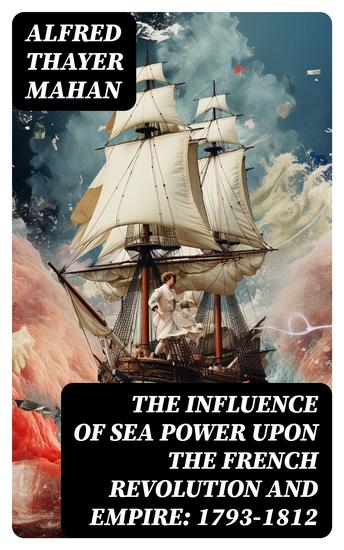
In "The Influence of Sea Power upon the French Revolution and Empire: 1793-1812," Alfred Thayer Mahan meticulously examines the pivotal role maritime strategy played in shaping the geopolitical landscape of the late 18th and early 19th centuries. Through a combination of rigorous historical analysis and eloquent prose, Mahan investigates how naval power influenced the French Revolution and subsequent Napoleonic wars, emphasizing the interplay between sea domination and national policy. His argument is underpinned by a comprehensive examination of naval battles, logistics, and colonial ambitions, marking a significant contribution to the literature on military strategy and international relations during a transformative period in European history. Alfred Thayer Mahan, a U.S. naval officer and historian, is renowned for his theories concerning the importance of sea power in global politics. His career, which spanned influential roles in naval education and strategy, fueled his understanding of maritime dynamics as integral to national strength. Mahan's scholarship was shaped by his experiences in the late 19th century, a time when the world began to recognize the strategic value of naval supremacy in imperialistic endeavors. This scholarly work is an essential read for anyone interested in military history, naval strategy, or the dynamics of revolution and empire. Mahan's insights will leave readers contemplating the enduring significance of sea power in shaping world events and the ongoing relevance of maritime strategy in contemporary geopolitics.
Available since: 11/12/2023.
Print length: 682 pages.
Other books that might interest you

  • Battle of Flodden The: The History of the Most Famous Battle Between England and Scotland - cover

    Battle of Flodden The: The...

    Editors Charles River

    • 0
    • 0
    • 0
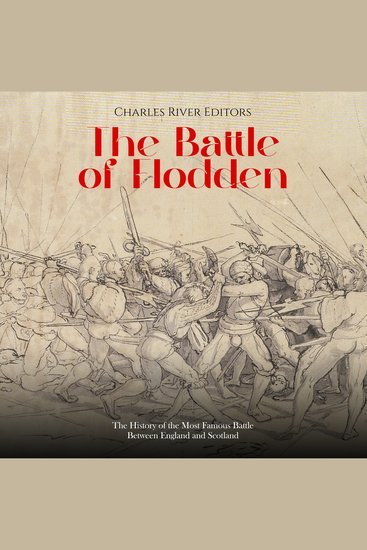
    The relationship between Scotland and England has always been rocky. For most of their history they have been at loggerheads and frequently at war, and, even after the Act of Union of 1707 which united the two nations, there were at least four Scottish uprisings. Today, the Scottish threat to separate from the post-Brexit UK is well-known. England has historically viewed the northern nation as a threat, and Scotland for its part has feared, with justification, its richer and more powerful neighbor.  
    	Famous encounters between the two countries include Falkirk (1298), Bannockburn (1314), Solway Moss (1542), Prestonpans (1745) and Culloden (1746), but the Battle of Flodden, or Flodden Field, fought on September 9, 1513, was the largest and perhaps most spectacular of the clashes between the ancient enemies. It involved the deployment of 56,000 men and vies with the 1461 Battle of Towton during the Wars of the Roses as the largest battle ever fought on British soil. The English had never entirely conquered Scotland, and since Bannockburn they had been unable to claim any degree of control, but it was not until 1328 that they finally acknowledged Scotland's independence. 
    On top of that, the nature of political marriages in England, and Europe in general, tied nations together even as they remained enemies. Indeed, throughout the 16th century, Scottish rulers would be eyed with suspicion by English royals who were fully aware that no shortage of Englishmen considered the Scottish royals the true heirs to England’s throne. Flodden Field would be one of the biggest battles in English and Scottish history, yet the two countries would still be at war a generation later. 
    Show book
  • The Workaholic Trap - Escape Burnout Reclaim Your Life And Still Succeed - cover

    The Workaholic Trap - Escape...

    Brian Ginson

    • 0
    • 0
    • 0
    Do you feel trapped in a cycle of endless work, exhaustion, and guilt whenever you try to slow down? You're not alone. In today's hustle-driven world, success often comes at the cost of mental and physical well-being. But what if you could achieve your goals without sacrificing your health, relationships, or happiness? 
    In The Workaholic Trap, you'll uncover the hidden dangers of overwork, the psychological patterns that fuel burnout, and — most importantly — how to break free while still excelling in your career. Packed with real-life insights, science-backed strategies, and practical exercises, this book will help you:Identify the warning signs of workaholism before it takes a toll on your lifeShift your mindset from busyness to purposeful productivitySet boundaries that protect your time, energy, and mental well-beingReclaim joy, creativity, and balance—without losing momentum in your careerRedefine success on your terms so you can thrive both professionally and personally 
    You don't have to choose between success and sanity. It's time to escape The Workaholic Trap and start living the fulfilling, balanced life you deserve.
    Show book
  • Resilient Grieving Second Edition - How to Find Your Way Through a Devastating Loss - cover

    Resilient Grieving Second...

    PhD Lucy Hone, PhD Karen Reivich

    • 0
    • 0
    • 0
    The death of someone we hold dear may be inevitable; being paralyzed by our grief is not. Recent research has revealed our capacity for resilient grieving, our innate ability to respond to traumatic loss by finding ways to grow—by becoming more engaged with our lives, and discovering new, profound meaning. 


    In this completely updated and expanded second edition, author and resilience/well-being expert Lucy Hone, a pioneer in positive psychology and bereavement research, continues to push her field forward. In 2014, Lucy was faced with her own inescapable sorrow after her twelve-year-old daughter was killed in a car accident. By following the strategies of resilient grieving, she found a proactive way to move through her grief, and, over time, embrace life again. Since then, Lucy has become a leading voice in resilience and bereavement science, overturning widely held myths and misconceptions, making plain the harms of rigid models such as Kübler-Ross's five stages, and advocating for a more adaptive grieving process that emphasizes emotions, relationships, attention, forgiveness, and self-compassion. 


    As heard on NPR's Hidden Brain and CBS News 


    2017 Foreword INDIES Bronze Winner
    Show book
  • Georgy Zhukov: The Life and Legacy of the Soviet Union’s Greatest General during World War II - cover

    Georgy Zhukov: The Life and...

    Editors Charles River

    • 0
    • 0
    • 0
    In the warm predawn darkness of June 22, 1941, 3 million men waited along a front hundreds of miles long, stretching from the Baltic coast of Poland to the Balkans. Ahead of them in the darkness lay the Soviet Union, its border guarded by millions of Red Army troops echeloned deep throughout the huge spaces of Russia. This massive gathering of Wehrmacht soldiers from Adolf Hitler's Third Reich and his allied states – notably Hungary and Romania – stood poised to carry out Operation Barbarossa, Hitler's surprise attack against the country of his putative ally, Soviet dictator Joseph Stalin.  
    Of the Soviet generals, none played as crucial a role in the war as Georgy Konstantinovich Zhukov, one of the most highly decorated army officers in Russian military history. At critical stages during the Second World War, it seemed as if it was Zhukov alone who stood between Russian defeat and German victory. Zhukov was ultimately involved in all the major battles on the Eastern Front, including Moscow, Leningrad, Stalingrad, Kursk, Bagration, and the final assaults into Poland and Germany to capture Berlin.  
    Stalin came to depend on Zhukov’s ruthless military skills for victory, but in the cut-throat Soviet Union, that was always a double-edged sword, because it seemed that Stalin envied Zhukov and feared him as well. Zhukov, who could be as aggressive and blunt as Stalin, was one of the few people prepared to stand up to the Soviet dictator and argue with him, and as many Soviet politicians and generals learned to their detriment, going toe to toe with one of the most brutal leaders of the 20th century was a highly risky venture. However, the mutual understanding they forged as they confronted the Germans may have played the biggest role in Hitler’s demise. 
    Show book
  • The Greatest Evil is War - cover

    The Greatest Evil is War

    Chris Hedges

    • 0
    • 0
    • 0
    In fifteen short chapters, Chris Hedges astonishes us with his clear and cogent argument against war, not on philosophical grounds or through moral arguments, but in an irrefutable stream of personal encounters with the victims of war, from veterans and parents to gravely wounded American serviceman who served in the Iraq War, to survivors of the Holocaust, to soldiers in the Falklands War, among others. Hedges reported from Sarajevo, and was in the Balkans to witness the collapse of the Soviet Union. 


    In 2002 he published War Is a Force That Gives Us Meaning, which the Los Angeles Times described as "the best kind of war journalism . . . bitterly poetic and ruthlessly philosophical" and the New York Times called "a brilliant, thoughtful, timely, and unsettling book." In the twenty years since, Hedges has not wanted to write another book on the subject of war—until now, with the outbreak of war in Ukraine. It is important again to be reminded who are the victors of the spoils of war and of other unerring truths, not only in this war but in all modern wars, where civilians are always the main victims, and the tools and methods of war are capable of so much destruction it boggles the mind. This book is an unflinching indictment of the horror and obscenity of war by one of our finest war correspondents.
    Show book
  • Quit Everything - Interpreting Depression - cover

    Quit Everything - Interpreting...

    Franco Bifo Berardi

    • 0
    • 0
    • 0
    Analyzes the current wave of depression, or "desertion," that is causing more and more people to abandon hope and desire in a world where social, political, and environment collapse seems inevitable. 


    Depression is rife amongst young people the world over. But what if this isn't depression as we know it, but instead a reaction to the chaos and collapse of a seemingly unchangeable and unlivable future? 


    In Quit Everything, Franco Berardi argues that this "depression" is actually conscious or unconscious withdrawal of psychological energy and a dis-investment of desire that he defines instead as "desertion." A desertion from political participation, from the daily grind of capitalism, from the brutal reality of climate collapse, and from a society which offers nothing but chaos and pain. 


    Berardi analyzes why this desertion is on the rise and why more people are quitting everything in our age of political impotence and the rise of the far-right, asking if we can find some political hope in desertion amongst the ruins of a world on the brink of collapse.
    Show book