Join us on a literary world trip!
Add this book to bookshelf
Grey
Write a new comment Default profile 50px
Grey
Subscribe to read the full book or read the first pages for free!
All characters reduced
The Greatest Works of French Literature - Enriched edition Notre-Dame Germinal Candide Father Goriot Bel-Ami Madame Bovary The Three Musketeers Emile… - cover

The Greatest Works of French Literature - Enriched edition Notre-Dame Germinal Candide Father Goriot Bel-Ami Madame Bovary The Three Musketeers Emile…

Charles Baudelaire, George Sand, Anatole France, Molière Molière, Voltaire, Stendhal, Émile Zola, Alexandre Dumas, Alexandre Dumas fils, Jules Verne, Victor Hugo, Marcel Proust, Guy de Maupassant, Jean-Jacques Rousseau, Jean Racine, François Rabelais, Gustave Flaubert, Gaston Leroux, Pierre Corneille, Pierre Choderlos de Laclos

Publisher: Musaicum Books

  • 0
  • 0
  • 0

Summary

The Greatest Works of French Literature (English Edition) presents a rare confluence of France's most celebrated literary minds, exploring a spectrum of themes from the philosophical musings of the Enlightenment to the intricate human emotions and societal critiques of modernism. This collection features a variety of literary styles, from the provocative plays of Molière and Racine to the poignant novels of Flaubert and Zola, and the visionary narratives of Jules Verne. Its diverse content not only serves as a comprehensive introduction to French literary brilliance but also encapsulates the evolution of French literary styles and expressions through centuries. The contributors to this anthology, including the likes of Victor Hugo, Marcel Proust, and Émile Zola, represent pivotal figures in various literary movements, such as Romanticism, Realism, and the avant-garde Naturalism. Their backgrounds reflect the rich tapestry of French culture and intellectual history, and their collective body of work intersects significantly with crucial societal and political developments of their times. Each piece in the collection serves as a cultural artifact, offering insights into the tumultuous transitions and profound thinkers that shaped modern Europe. For anyone keen on delving into the depths of French thought and narrative craft, The Greatest Works of French Literature (English Edition) offers an unparalleled journey across centuries of literary excellence. This anthology not only educates but also enthralls, presenting an opportunity to engage with the collective genius of French literature's most influential voices. Readers will find in this volume a gateway to the past and a mirror to the human condition, presented through a uniquely French lens.

In this enriched edition, we have carefully created added value for your reading experience:
- An Introduction draws the threads together, discussing why these diverse authors and texts belong in one collection.
- Historical Context explores the cultural and intellectual currents that shaped these works, offering insight into the shared (or contrasting) eras that influenced each writer.
- A combined Synopsis (Selection) briefly outlines the key plots or arguments of the included pieces, helping readers grasp the anthology's overall scope without giving away essential twists.
- A collective Analysis highlights common themes, stylistic variations, and significant crossovers in tone and technique, tying together writers from different backgrounds.
- Reflection questions encourage readers to compare the different voices and perspectives within the collection, fostering a richer understanding of the overarching conversation.
Available since: 12/17/2020.
Print length: 29381 pages.

Other books that might interest you

  • The Fall of Communism - Understanding the Collapse of the Soviet Union and Its Impact - cover

    The Fall of Communism -...

    Arlo Holders

    • 0
    • 0
    • 0
    The origins of communism can be traced back to the mid-19th century, largely shaped by the theories of Karl Marx and Friedrich Engels. Marx's writings, particularly The Communist Manifesto (1848), presented a vision for a classless society where the working class, or proletariat, would overthrow the capitalist bourgeoisie and establish a dictatorship of the proletariat. Marx believed this revolution would lead to the eventual abolition of private property, creating a system where resources and wealth were shared equally among all people. Engels, Marx’s collaborator, helped to spread these ideas, laying the theoretical foundation for communism as a political ideology. 
    In the early 20th century, the ideas of Marxism found fertile ground in Russia, where economic disparity and social unrest were widespread. The Russian Empire, under Tsar Nicholas II, faced increasing pressure from industrialization, a growing working class, and a largely disenfranchised peasantry. The Russian Revolution of 1917, led by the Bolshevik Party under Vladimir Lenin, marked the beginning of communism’s practical implementation. The Bolsheviks sought to establish a socialist state where the working class would control the means of production and dismantle the old Tsarist monarchy. 
    Following the revolution, the Soviet Union was formed in 1922, uniting the Russian Federation and several other Soviet republics under a single communist government. The new government, however, faced significant challenges, including civil war, foreign intervention, and the task of restructuring a country that had been predominantly agrarian into a socialist industrialized state. Lenin’s death in 1924 led to the rise of Joseph Stalin, who consolidated power through brutal purges and policies such as forced collectivization and rapid industrialization.
    Show book
  • A Journey of Little Profit - From their pens to your ears genius in every story - cover

    A Journey of Little Profit -...

    John Buchan

    • 0
    • 0
    • 0
    The Scottish novelist John Buchan enjoyed a remarkable career as politician, historian and Governor General. He was born John Buchan on 26th August 1875 and later added 1st Baron Tweedsmuir PC GCMG GCVO CH to his name.  
    Buchan studied at Hutchesons’ Grammar School, Glasgow and at seventeen won a scholarship to the University of Glasgow to study classics. There he began to write poetry. In 1895 he transferred to Oxford to continue his study of Classics and in 1896 ‘Sir Quixote of the Moors’ was published followed by the non-fiction ‘Scholar-Gipsies’. His prolific literary output now hardly faltered. 
    He graduated in 1900 and became the private secretary to Alfred Milner, the High Commissioner for Southern Africa and other colonies. Buchan found the same inspiration in the African landscape as he had in the Scottish Borders, and would later set many works here. Returning to London he became a partner in a publishing house, and garnered an editorial role at The Spectator. He also completed his law studies. He was called to the bar in 1901 but never practiced.  
    On 15th July 1907 Buchan married Susan Charlotte Grosvenor, the cousin of the Duke of Westminster. In 1910 he wrote ‘Prester John’, the first of a series set in South Africa.  
    In 1911 Buchan entered politics as a Unionist candidate in the Scottish Borders advocating the support of free trade, women’s suffrage, national insurance, and reducing the power of the House of Lords.  
    The Great War saw Buchan writing for the War Propaganda Bureau and as Times correspondent in France. In 1915, he published ‘The Thirty-Nine Steps’, his most famous book and a follow-up Richard Hannay novel, ‘Greenmantle’, in 1916.  
    In 1916 Buchan enlisted in the Intelligence Corps which included writing speeches for Sir Douglas Haig. By 1917 he was Director of Information under Lord Beaverbrook. Buchan called it “the toughest job he ever took on”. He somehow found time to assist in a history of the war magazine. This was later published in 24 volumes: Nelson’s History of the War. 
    After the war his writing focused on historical studies. In 1927 Buchan became the Unionist Party Member of Parliament for the Combined Scottish Universities. In a speech to Parliament he said “I believe every Scotsman should be a Scottish nationalist. If it could be proved that a Scottish parliament were desirable… Scotsmen should support it.”  
    Over the next decade he continued to distinguish himself politically and in literature.  On the 1st June 1935 he became 1st Baron Tweedsmuir of Elsfield in the County of Oxford.  
    He was now also given the position of Governor General in Canada and resolved to travel all over Canada to gain a better insight of the country. Having crossed both length and breadth he saw the cultural shift between areas and their common ground and helped bring about a clear national Canadian identity. 
    On the 6th February 1940 he collapsed from a stroke and sustained a very serious head injury in falling. Two rounds of surgery to stabilise his condition were unsuccessful and Buchan died on the 11th February. After a state funeral in Ottawa his ashes were returned to his estate in Oxfordshire.
    Show book
  • Searching for George Gordon Meade - The Forgotten Victor of Gettysburg - cover

    Searching for George Gordon...

    Tom Huntington

    • 0
    • 0
    • 0
    A historian chronicles the life of the Union Civil War general while recounting his own unusual journey during his investigation into the past. Who was George Gordon Meade? He should be remembered as one of the Civil War’s most important generals. Instead, history has pushed him aside. The hot-tempered Meade received command of the Union’s dysfunctional Army of the Potomac only three days before he defeated Robert E. Lee’s Confederates at Gettysburg. After that, Meade watched his reputation decline, thanks in part to the escape of Lee’s army, hostility from politicians and the press, the machinations of Gen. Daniel Sickles, and the rise of Ulysses S. Grant. “I suppose after a while,” Meade once grumbled, “it will be discovered I was not at Gettysburg at all.”  The Rodney Dangerfield of Civil War generals, Meade gets no respect—and author Tom Huntington wanted to find out why. In Searching for George Gordon Meade, he tells the story of the general’s life and his participation in the Civil War’s great engagements, from George McClellan’s Richmond Campaign to Appomattox. Huntington also provides accounts of his own investigations of Meade’s legacy. Along the way he hikes across battlefields, recites the names of fallen soldiers at a candlelit ceremony at Gettysburg, drinks a champagne toast at Meade’s grave on New Year’s Eve, and visits a severed leg, a buried arm, and a horse’s head. The result is a quirky and compelling mash-up of history, biography, travel, and journalism that casts new light on an overlooked figure from the past. Praise for Searching for George Gordon Meade“Unique and irresistible.” —Harold Holzer, chairman of Lincoln Bicentennial Foundation“Huntington’s wry, boisterous biography-within-a-travel journal . . . strives to remake the reputation of Meade and offers a compelling new way to approach biography.” —John G. Shelby, Meade: The Price of Command, 1863–1865 “It’s the rare reader who will not enjoy accompanying Huntington on his search for Meade.” —America’s Civil War "A refreshingly readable and well-researched book. . . . Searching for George Gordon Meade should be required reading for all those interested in Civil War history.” —Civil War News
    Show book
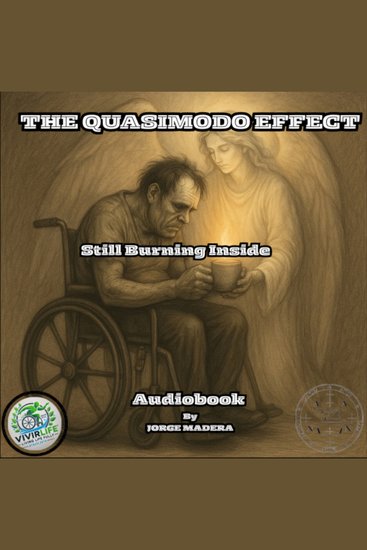
  • The Quasimodo Effect - Still Burning in Silence - cover

    The Quasimodo Effect - Still...

    jorge madera

    • 0
    • 0
    • 0
    This audiobook is narrated by an AI Voice.   
    Still burning in silence. 
    “Jorge Madera, a disabled author living with ataxia and aphasia, delivers this symbolic and poetic audiobook through a digital voice named Zadkiel Adam — a narrator born from necessity, memory, and mercy.” 
    This is not a medical guide. 
    It is a cry from the ashes. 
    A written flame dictated slowly, painfully, and without apology. 
    The Quasimodo Effect: Still Burning in Silence is a soul-fire testimony from someone who woke up in a different body — and refused to disappear. These pages carry scars, dignity, and divine defiance. You will find moments of grief, spiritual stillness, and fierce love for a life misjudged but still burning. 
    From hospital silence to poetic defiance, Jorge invites you to witness what it means to be disabled and still divine. Still worthy. Still burning. 
    If your body has changed... 
    If your voice trembles... 
    If your truth has ever been erased... 
    Then this book was written for you. 
    From the wheelchair. 
    From the silence. 
    From the soul.
    Show book
  • A Matter of Survival - cover

    A Matter of Survival

    Lily Monadjemi

    • 0
    • 0
    • 0
    Starting in 1725, in a world where outwardly women were confined to Andaroons (hareems) and completely controlled by men, who had as many ‘wives’ as they wanted, Khatoon stands out as a highly influential member of the Royal Andaroon. It is through Khatoon’s eventful life that Lily Monadjemi, a great granddaughter of Nasser Al-Din shah Gajar who reigned in Iran for fifty years, begins this fascinating account of the history of her family, her people and her country. 
    In a meticulous analysis of the women’s roles, she extensively covers the lives of her female ancestors who had immense influence on their husbands and through them, on Iranian society. 
    Telling the fascinating history of this ancient society in personalized scenes through the centuries, Lily Monadjemi paints vivid pictures of the rises and falls of the various Shahs and their eventual downfall, giving way to the success of the 1979 Revolution and the retrograde steps of Ayatollah Khomaini and his Islamic Republic. 
    Within this is woven her own history and how these events affected her life and that of her immediate family.
    Show book
  • Sibylla - cover

    Sibylla

    Roger Lundgren

    • 0
    • 0
    • 0
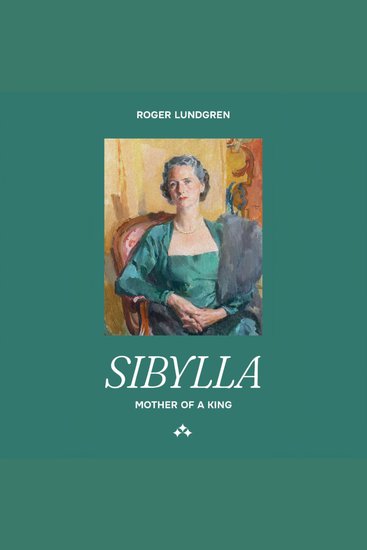
    In this intimate portrait of Princess Sibylla of Sweden, renowned royal historian Roger Lundgren reveals the remarkable life of one of Europe's most misunderstood royal figures. Born a German princess in 1908, Sibylla married into the Swedish royal family and faced the challenge of raising five children-including the current King Carl XVI Gustaf-alone after her husband's tragic death in 1947. Drawing on exclusive interviews and previously unpublished correspondence, Lundgren reveals how this strong-willed princess navigated the complexities of being a German royal in post-war Sweden while preparing her young son for his future role as king. A poignant story of duty, resilience and motherhood in the face of personal tragedy and public scrutiny.
    Show book