Join us on a literary world trip!
Add this book to bookshelf
Grey
Write a new comment Default profile 50px
Grey
Subscribe to read the full book or read the first pages for free!
All characters reduced
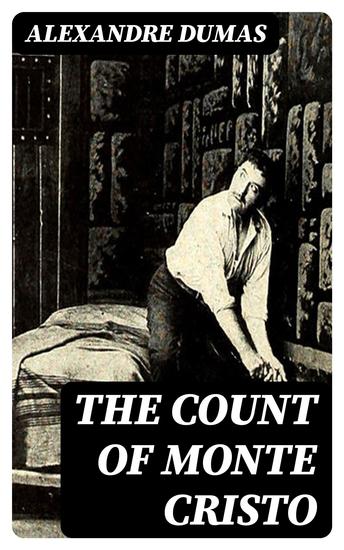
The Count Of Monte Cristo - Illustrated Edition - cover

The Count Of Monte Cristo - Illustrated Edition

Alexandre Dumas

Publisher: DigiCat

  • 0
  • 0
  • 0

Summary

In "The Count of Monte Cristo," Alexandre Dumas weaves a masterful tale of betrayal, vengeance, and redemption set against the backdrop of early 19th-century France. The narrative astutely employs a rich, descriptive literary style that combines adventure with intricate character development, reflecting the romantic ideals prevalent in post-Revolutionary Europe. Dumas delves deep into themes of justice, hope, and the consequences of revenge, as he chronicles the metamorphosis of Edmond Dantès from an innocent sailor into the enigmatic Count of Monte Cristo, a character fueled by an unrelenting desire for retribution. Alexandre Dumas, born in 1802, was not only a prolific novelist but also a playwright and a historical figure of mixed heritage, which influenced his perspective on justice and social mobility. His early experiences with betrayal and loss, as well as his fascination with history, played a crucial role in shaping the complex narrative found in this seminal work. Dumas's unique ability to blend reality with engaging storytelling has established him as a defining figure of the literary canon. "The Count of Monte Cristo" is a timeless exploration of human nature and moral ambiguity, making it essential reading for anyone interested in literature that challenges the boundaries of right and wrong. Readers will find themselves captivated by Dumas's intricate plotting and unforgettable characters, urging them to reflect on the profound implications of vengeance and mercy.
Available since: 05/17/2022.
Print length: 730 pages.

Other books that might interest you

  • Blood at the Whistletop - Murder on Florida's Peace River - cover

    Blood at the Whistletop - Murder...

    James D. Brewer

    • 0
    • 0
    • 0
    "You're the most famous railroad detective that nobody ever heard of," says railroad tycoon Henry Plant when in May of 1887 he hires Jimmy Lee "Choctaw" Parker to investigate the murder of his head surveyor and geologist Leon Skarvo. In a story that ranges from Tampa to Ybor City and along the Florida Southern Railroad line to Arcadia, Choctaw Parker and his colleagues battle deceitful politicians, bolita gamblers, and ruthless cracker cowboys to uncover the truth in this fast-paced mystery set in Florida during the Gilded Age. About the Choctaw Parker Mysteries, The Historical Novel Society says that Brewer creates "…an engaging, anchored crime tale. [He] crafts an interesting cast of many memorable, despicable, and even some semi-honorable characters within a realistic historical setting."
    Show book
  • Les Miserables - cover

    Les Miserables

    Victor Hugo

    • 0
    • 0
    • 0
    Jean Valjean is one of society's victims. A poor but honest peasant, he is caught stealing a loaf of bread to feed his sister's starving family and is sent to prison. By the time of his eventual release, he has become a hardened criminal, but his friendship with the saintly Monseigneur Bienvenu gives him another chance at life. This new, respectable life is precarious, for Valjean is still sought by the law, in the person of the implacable Inspector Javert.
    Show book
  • No God West of Hays - cover

    No God West of Hays

    Eric B. Ruark

    • 0
    • 0
    • 0
    In the 1870s, a young John Wesley Hardin is just beginning to develop his gunslinging reputation.  At eighteen, he is already a killer and in Abilene adds to his legend by shooting a man for snoring.  He goes on the run pursued by the town's marshal, the formidable Wild Bill Hickok.  While on the run, Hardin falls in with a vicious gang of outlaws and falls in love with one of their hostages.  He realizes that there are too many of them for him to take on alone.  His only option is to ask Hickok for help. This story first appeared in Alfred Hitchcock's Mystery Magazine.
    Show book
  • Big Red - A Novel Starring Rita Hayworth and Orson Welles - cover

    Big Red - A Novel Starring Rita...

    Jerome Charyn

    • 0
    • 0
    • 0
    Since he first appeared on the American literary scene, Jerome Charyn has dazzled readers with his "blunt, brilliantly crafted prose" (Washington Post). Yet Charyn, a beloved comedic novelist, also possesses an extraordinary knowledge of Golden Age Hollywood, having taught film history both in the United States and France. 


    With Big Red, Charyn reimagines the life of one of America's most enduring icons, "Gilda" herself, Rita Hayworth, whose fiery red tresses and hypnotic dancing graced the silver screen over sixty times in her nearly forty-year career. The quintessential movie star of the 1940s, Hayworth has long been objectified as a sex symbol, pin-up girl, and so-called Love Goddess. Here Charyn, channeling the ghosts of a buried past, finally lifts the veils that have long enshrouded Hayworth, evoking her emotional complexity—her passions, her pain, and her inner turmoil. 


    Reanimating such classic films as Gilda and The Lady from Shanghai, Big Red is a bittersweet paean to Hollywood's Golden Age, a tender yet honest portrait of a time before blockbusters and film franchises—one that promises to consume both Hollywood cinephiles and neophytes alike. Lauded for his "polymorphous imagination" (Jonathan Lethem), Charyn once again has created one of the most inventive novels in recent American literature.
    Show book
  • The Homestead - cover

    The Homestead

    Russell J. Atwater

    • 0
    • 0
    • 0
    The Cowans have arrived in Texas to homestead. After their dangerous trek west, they want to settle, free from worry and danger. With the help of his son, Wes, the McLeod brothers, and Pony Boy, Bruce is ready to raise his cabin. 


    Unfortunately for them, their troubles have just begun! 


    They discover that Cord McGregor, the cattle baron they had a run in with on the Santa Fe Trail, has a spread nearby. To make matters worse, the cattle ranchers are in a range war against homesteaders and sheepherders. 


    McGregor and the other ranchers aren't their only problem. There's a tribe of hostile Apaches nearby and the Owens gang to the north. 


    Caught between three different enemies, Bruce raises his log cabin, hoping his family can live in peace. It's not to be. 


    Amid the growing issues that threaten the lives of the settlers, Trent waits for the perfect time to ask Becky to marry him. 


    Forced once again to defend themselves, the McLeod brothers face their deadliest foes yet. They can't move on this time. The stakes are high. Life or death. They must protect their lives and their homestead, or die. Will they ever live in peace?
    Show book
  • Fascist as Author The - A Short Story Collection - Celebrated war era authors who had questionable political leanings… - cover

    Fascist as Author The - A Short...

    Knut Hamsun, Luigi Pirandello,...

    • 0
    • 0
    • 0
    Authors are authors and we are drawn to their works because of their style, their narrative, and their characters and how each part is assembled into the arc of the whole. 
     
    But are we?  Do social conventions, or fashion or other influences decide what we read or what we listen to? 
     
    Its famously said that everyone has a story, everyone should be heard. 
     
    So, when we discover a particular author has a dark past, a difficult character, what do we do?   
     
    Europe was in the last century riven by two catastrophic world wars and a myriad of other local ones.  And like good citizens everywhere our thoughts are stilled by the word ‘Fascist’.  This word which originally meant many strands held together to make a stronger whole is now a one word response to evil and work done in its name. 
     
    In this volume our approach has been to take authors of then great renown, two of whom won the Nobel Prize, and compile a work from each which is seen in a literary context rather than in the heinous shadow of their political and social beliefs.   
     
    We are taught that authors write of their own experiences, but is that really true?  Can an author be separated from their nihilistic approach to politics and actually be a good writer who adds to our knowledge and experience rather than taint us with their reprehensible beliefs on their fellow man. 
     
    Its an ongoing argument.  Perhaps both sides are right.  Perhaps both sides are wrong.
    Show book