Join us on a literary world trip!
Add this book to bookshelf
Grey
Write a new comment Default profile 50px
Grey
Subscribe to read the full book or read the first pages for free!
All characters reduced
Eugene Onegin - Must Read Classics - cover

Eugene Onegin - Must Read Classics

Alexander Pushkin

Translator Henry Spalding

Publisher: DigiCat

  • 0
  • 0
  • 0

Summary

In "Eugene Onegin," Alexander Pushkin masterfully weaves a narrative that marries the elegance of verse with the complexity of human emotion. This novel in verse, first published in the 1820s, is celebrated for its rich character development and intricate exploration of societal norms in 19th-century Russia. Through the life of the disillusioned aristocrat Eugene Onegin and his interactions with the passionate Tatyana, Pushkin delves into themes of unrequited love, friendship, and the ennui of the Russian gentry. The structure of the work, employing the unique Odessan stanza, showcases Pushkin's innovative approach to poetry and storytelling, marking a pivotal contribution to the Russian literary canon and the development of the modern novel. Alexander Pushkin, often regarded as the father of Russian literature, was profoundly influenced by his life experiences, including his mixed heritage and the political turbulence of his time. These factors informed his perspectives on love, society, and the individual's place within it. His encounters with different social strata and his personal conflicts greatly influenced his creation of Eugene Onegin, encapsulating the contradictions of a society in transition. Readers are invited to immerse themselves in this quintessential work, which not only reflects the depth of human connection but also serves as a profound commentary on the complexities of Russian society. Pushkin's nuanced portrayal of his characters makes "Eugene Onegin" a timeless exploration of unfulfilled desires and the intricacies of social interaction, rendering it essential reading for anyone interested in the interplay of romance and existential reflection.
Available since: 05/17/2022.
Print length: 419 pages.

Other books that might interest you

  • The Moving Finger - An detective story that brings mystery and revelation by occult means - cover

    The Moving Finger - An detective...

    Rose Champion de Crespigny

    • 0
    • 0
    • 0
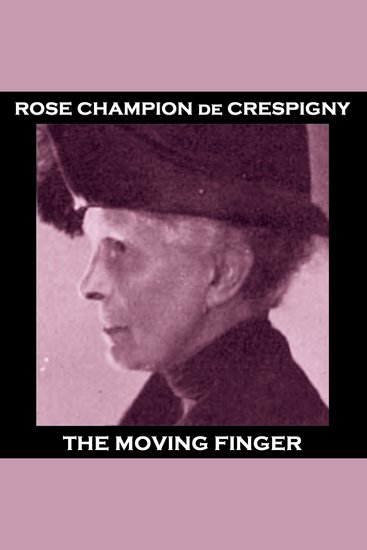
    Annie Rose Charlotte Key was born on 9th November 1859 in Kensington, London. 
     
    With a privileged background—her father was an admiral, her mother a Lady, Rose began her creative life as a painter before a stab at writing local history settled her into popular fiction. 
     
    Her works were solidly written and often described as having a ‘certain graceful facility’. 
     
    Her marriage to Philip Augustus Champion de Crespigny in 1878 resulted in a family of 4 children and a name of status. 
     
    Rose was a leading member of the Ridley Art Club, the Lyceum Club in Piccadilly, and of the British College of Psychic Science.  Victorian society had a particular fascination with spiritualism and in ‘The Moving Finger’ Rose uses the theme as a background to introduce her popular occult detective Norton Vyse into her series of short stories.  
     
    Rose Champion de Crespigny died on 10th February 1935.  She was 75.
    Show book
  • King Midas - A Romance - cover

    King Midas - A Romance

    Upton Sinclair

    • 0
    • 0
    • 0
    This captivating novel weaves the tale of two idealistic lovers, Billy Fairfax and Ethel Hever, whose dreams clash with the greed and materialism of their families. As they navigate love and ambition, they encounter the timeless tale of King Midas, drawing poignant parallels between myth and their reality. Sinclair's richly detailed romance explores the moral dilemmas of wealth and the enduring power of true love, making it a deeply touching and thought-provoking read.
    Show book
  • A Society - From their pens to your ears genius in every story - cover

    A Society - From their pens to...

    Virginia Woolf

    • 0
    • 0
    • 0
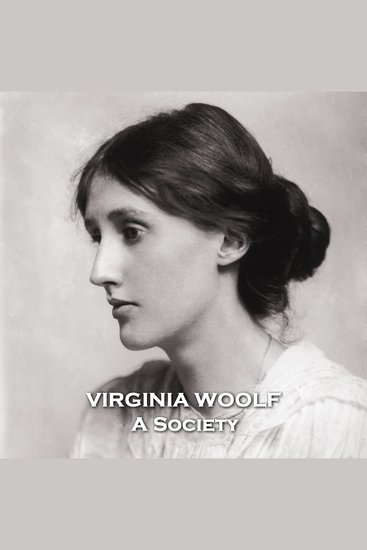
    Adeline Virginia Woolf was born on the 25th January 1882 in South Kensington in London. 
    Although lauded as a founder of modernist writing with such classics as ‘Orlando’, ‘Mrs Dalloway’ and ‘To the Lighthouse’ and, of course, many classic short stories, her background is filled with elements of tragedy that she somehow overcame to become such a revered writer.   Her mother died when she was 13, her half-sister Stella two years later and with it her first of several nervous breakdowns.  Appallingly it was later found that three of her half-brothers had sexually abused her so darkness must have seemed ever present.   
    She began writing professionally at age 20 but her father’s death two years later brought a complete mental collapse and she was briefly institutionalised.  Somehow she found within herself a literary career and with it great innovations in writing; she was a pioneer of “stream of consciousness”.    
    Her tight circle of friends were the founders of the Bloomsbury Group, a movement whose legacy still influences across the arts and society in many way to this day.   
    Whilst the dark periods continued to interrupt her emotional state her rate of work never ceased.  Until, on 28th March 1941, Woolf put on her overcoat, filled up its pockets with stones, and walked into the River Ouse, in Lewes, East Sussex and drowned herself.  Her body was not recovered until the 18th April.  She was 59. 
    She left behind a note which read in part “Dearest, I feel certain that I am going mad again.  I feel we can't go through another of those terrible times.  And I shan't recover this time.  I begin to hear voices, and I can't concentrate.  So I am doing what seems the best thing to do”.
    Show book
  • Anne of Green Gables - cover

    Anne of Green Gables

    Lucy Montgomery

    • 0
    • 0
    • 0
    "Anne of Green Gables" by Lucy Maud Montgomery is the enchanting story of Anne Shirley, an imaginative and spirited orphan who unexpectedly finds a home with Marilla and Matthew Cuthbert in the picturesque village of Avonlea. Initially wanting a boy to help with farm work, the Cuthberts quickly fall under Anne's spell. As Anne navigates school, friendships, and the trials of growing up, her vibrant personality and boundless optimism transform the lives of those around her, creating a timeless classic filled with charm and heart.
    Show book
  • A Wagner Matinee - From their pens to your ears genius in every story - cover

    A Wagner Matinee - From their...

    Willa Cather

    • 0
    • 0
    • 0
    Willa Sibert Cather had Welsh ancestry but like her parents Charles and Mary, was born in Virginia, on 7th December 1873.  Despite strong roots in the community, Willa was 9, when the family moved to Nebraska, to work the rich soil and avoid TB of which there were numerous outbreaks in Virginia.   
    The vastness and drama of the Nebraska prairie and its’ extreme weather conditions as well as the many diverse cultures of the local families proved to be a major influence on her and can be evidenced in much of her later writing.   
    Her first writing was for the local journal when she was at the University of Nebraska and later became the managing editor of the student newspaper.    
    In 1896 she obtained work for a woman’s magazine in Pittsburgh and soon after became a regular contributor to the Pittsburgh Leader and wrote poetry and short stories for the Library, another local publication.   
    Her first collection of short stories, ‘The Troll Garden’, was published in 1905 and contains several of her most famous including ‘A Wagner Matinee’ and ‘Paul's Case.’ As a writer Cather was now taking immense strides forward.   
    Between 1913 and 1918 Cather wrote her Prairie Trilogy: ‘O Pioneers!’, ‘The Song of the Lark’, and ‘My Ántonia’ and in 1922 the Pulitizer Prize was hers for her novel ‘One of Ours’ set during WWI.  
    Acknowledged as one of America's greatest writers’ further honours flowed. In 1943 she was elected a Fellow of the American Academy of Arts and Sciences. The following year Cather received the gold medal for fiction from the National Institute of Arts and Letters.  
    A determinedly private person, Cather destroyed many old drafts, personal papers, and letters. Her will would also restrict the ability of scholars to quote from personal papers that remained. 
    On 24th April 1947, Willa Siebert Cather died of a cerebral haemorrhage at her Manhattan home. She was 73.
    Show book
  • The Dead Smile - A true gothic masterpiece rich with suspense and atmosphere - cover

    The Dead Smile - A true gothic...

    F. Marion Crawford

    • 0
    • 0
    • 0
    Francis Marion Crawford, an only child, was born on 2nd August 1854 at Bagni di Lucca, Italy. He was a nephew to Julia Ward Howe, the American poet and writer of ‘The Battle Hymn of the Republic’.  
     
    Crawford was educated at St Paul's School, Concord, New Hampshire and then on to Cambridge University, the University of Heidelberg and the University of Rome.  
     
    In 1879 he went to India, to study Sanskrit and then to edit The Indian Herald. In 1881 he returned to America to continue his Sanskrit studies at Harvard University. 
     
    His family became increasingly concerned about his employment prospects.  After an attempt at a singing career as a baritone was ruled out, he was encouraged to write.  
     
    In December 1882 his first novel, ‘Mr Isaacs’, was published and was an immediate hit as was his second novel ‘Dr Claudius’ in 1883.  
     
    In October 1884 he married Elizabeth Berdan and encouraged by his excellent start to a literary career they returned to Sant Agnello, Italy to make a permanent home, buying the Villa Renzi that then became Villa Crawford.  
     
    In the late 1890s, Crawford began work on his historical works which would later include ‘Corleone’, in 1897, the first major treatment of the Mafia in literature.  
     
    Crawford is also exceedingly popular and anthologized as a short story writer of bizarre and creepy tales.   
     
    Francis Marion Crawford died at Sorrento on Good Friday 1909 at Villa Crawford of a heart attack.  
     
    On the death of a cruel man, the terms of a secret are demanded from him to no avail.  When the facts are finally revealed his true evil has changed everything.
    Show book