Join us on a literary world trip!
Add this book to bookshelf
Grey
Write a new comment Default profile 50px
Grey
Subscribe to read the full book or read the first pages for free!
All characters reduced
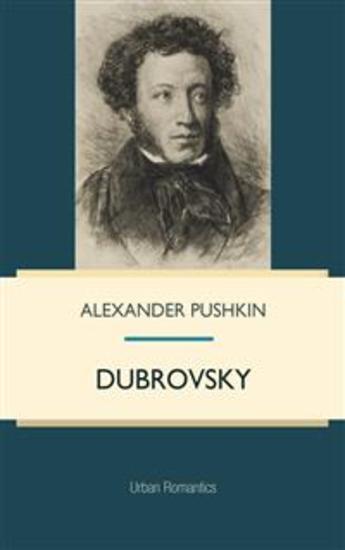
Dubrovsky - cover

Dubrovsky

Alexander Puschkin

Publisher: Interactive Media

  • 0
  • 1
  • 0

Summary

Vladimir Dubrovsky is a young nobleman whose land is confiscated by a greedy and powerful aristocrat, Kirila Petrovitch Troekurov. Determined to get justice one way or another, Dubrovsky gathers a band of serfs and goes on the rampage, stealing from the rich and giving to the poor. Along the way, Dubrovsky falls in love with Masha, Troekurov’s daughter, and lets his guard down, with tragic results.
Available since: 02/09/2020.
Print length: 96 pages.

Other books that might interest you

  • Anna Karenina Part 6 - cover

    Anna Karenina Part 6

    Leo Tolstoy

    • 0
    • 0
    • 0
    In Part 6 of Anna Karenina, Anna’s descent into despair culminates as her isolation deepens and her relationship with Vronsky crumbles. Consumed by jealousy and societal rejection, she spirals toward tragedy. Meanwhile, Levin achieves spiritual clarity, finding peace in family life and faith. The contrast between Anna’s unraveling world and Levin’s fulfillment underscores themes of redemption, purpose, and the cost of defying societal norms. As the novel approaches its climax, Tolstoy poignantly explores the fragility of human happiness and the inevitability of fate.
    Show book
  • The Aloe - cover

    The Aloe

    Katherine Mansfield

    • 0
    • 0
    • 0
    'It was not sadness exactly, but a kind of aching sweetness.'
    
    One of Katherine Mansfield's forgotten gems, and a precursor to what would become her acclaimed Prelude, The Aloe is a tender, impressionistic portrait of family life that transforms the mundane into the extraordinary.
    
    First written in 1915, The Aloe is a deeply personal novella that captures Mansfield's childhood in New Zealand. Through a series of finely observed domestic vignettes, the narrative follows the Burnell family, as they move to a new house on the outskirts of Wellington. Mansfield expertly conveys the subtleties of family dynamics: the exhausted yet appreciative father, the imaginative yet quickly maturing children, the inner emotional life of the mother. Through these characters, Mansfield asserts her ability to turn everyday moments into opportunities for exploring memory, belonging and identity.
    Katherine Mansfield (1888 – 1923) was a New Zealand writer and critic. She was an important figurehead of the modernist movement, befriending the likes of Virginia Woolf and D. H. Lawrence amongst others. Her works regularly explored themes such as sexuality, religion and existentialism, and have been translated into twenty-five different languages across the world.
    Show book
  • Robinson Crusoe - cover

    Robinson Crusoe

    Daniel Defoe

    • 0
    • 0
    • 0
    "Robinson Crusoe" is one of the earliest novels in the English language, written by Daniel Defoe and first published in 1719. It tells the story of a young man named Robinson Crusoe who desires to go to sea, against the wishes of his family. After several voyages and misadventures, he finds himself shipwrecked on a deserted island. With only a few salvaged items from the ship, Crusoe learns to create a life for himself, building shelter, hunting, and planting crops. He remains on the island for 28 years, experiencing encounters with cannibals, mutineers, and even befriending a man whom he names Friday. The novel delves deep into themes of survival, civilization versus nature, and the human drive for mastery and control.
    Show book
  • Black Beauty - The Autobiography of a Horse - cover

    Black Beauty - The Autobiography...

    Anna Sewell

    • 0
    • 0
    • 0
    "Black Beauty: The Autobiography of a Horse" by Anna Sewell is a compelling tale told from the unique perspective of Black Beauty, a noble and gentle horse. Through his eyes, we experience the highs and lows of his life, from idyllic days in the countryside to the harsh realities of urban work. Along the way, Beauty encounters both kind and cruel humans, revealing profound insights into the treatment of animals. This timeless story champions empathy, kindness, and the enduring bond between humans and horses.
    Show book
  • Margaret's Patient - cover

    Margaret's Patient

    Lucy Maud Montgomery

    • 0
    • 0
    • 0
    Lucy Maud Montgomery (November 30, 1874 – April 24, 1942), published as L. M. Montgomery, was a Canadian author best known for a series of novels beginning in 1908 with Anne of Green Gables. The book was an immediate success. The title character, orphan Anne Shirley, made Montgomery famous in her lifetime and gave her an international following.
    Margaret's Patient: Margaret paused a moment at the gate and looked back at the quaint old house under its snowy firs with a thrill of proprietary affection. It was her home; for the first time in her life she had a real home, and the long, weary years of poorly paid drudgery were all behind her.
    Show book
  • War And Peace - The Original Manuscript - cover

    War And Peace - The Original...

    Leo Tolstoy

    • 0
    • 0
    • 0
    Arguably the greatest literary masterpiece, War and Peace is an amazing blend of philosophy, history, spirituality, and love told through two families, the Rostovs and the Bolkonskys. The Rostovs personify the Russian spirit. Count Rostov, a generous, kind spendthrift, can deny his family nothing. His countess is a warm, loving, overindulged woman. These characteristics are reflected in their children, while the austere Bolkonskys are duty-bound. As normal human beings do, the three main characters grow, expand, and change over the course of fifteen years (1805-1820) beginning when Natasha Rostov is a young girl. It is a joy to watch her evolve into a beautiful, mature woman who loves two men: Prince Andrey Bolkonsky, an elegant, aristocratic army officer, and his friend, Count Pierre Bezukhov, a bear of a man who seeks answers to life in Freemasonry, mysticism, and superstition, and finally finding them in the philosophy of Platon Karatayev, an illiterate peasant soldier. Andrey and Pierre argue the plight of the peasants, the rights of the aristocracy, and the merits of war, mirroring Tolstoy’s own reflections. The main focus is Napoleon’s invasion of Russia and his ignominious retreat.
    Show book