Join us on a literary world trip!
Add this book to bookshelf
Grey
Write a new comment Default profile 50px
Grey
Subscribe to read the full book or read the first pages for free!
All characters reduced
Federalist Versus Anti-Federalist in America - cover

Federalist Versus Anti-Federalist in America

Alexander Hamilton, James Madison, John Jay, Patrick Henry, Samuel Bryan

Publisher: e-artnow

  • 0
  • 0
  • 0

Summary

Some of the greatest thinkers of the Revolutionary era took part in this extraordinary constitution debate that shaped the America we know today. Read their opinions and arguments on various topics including nature and powers of the Union, need for stronger Union, the judiciary, election organization, defense, taxation and many other subjects in order to understand how this debate influenced our present and shaped the very core of American democracy. The Federalist Papers are a collection of 85 articles and essays written by Alexander Hamilton, James Madison, and John Jay promoting the ratification of the United States Constitution. The work of the Founding Fathers who were opposed to or concerned with the merits of the United States Constitution, including Samuel Bryan and Patrick Henry, is collectively named Anti-Federalist.
Available since: 12/13/2023.
Print length: 491 pages.
Other books that might interest you

  • Being Cosmopolitan - A Political Approach - cover

    Being Cosmopolitan - A Political...

    Luke Ulas

    • 0
    • 0
    • 0
    What does it mean to be cosmopolitan? Typically, cosmopolitanism is understood as a broad moral orientation, involving some kind of commitment to global moral equality. On this understanding, to be cosmopolitan is simply to evidence that moral orientation oneself. By contrast, Being Cosmopolitan takes up a thoroughly political approach. The focus is on what it might mean, and what it is like, to be political in a distinctly cosmopolitan form. What it means to be cosmopolitan in this thoroughly political sense cannot involve appeal to any particular moral orientation, because politics is about, inter alia, the contestation of such orientations and commitments. Instead, this book offers an account that is based upon the internalization of particular kind of global "social imaginary," involving the imagination of a global public to which certain issues—or global public affairs—are understood to pertain. 


    Within which kind of global order is it possible, or comfortable, for a cosmopolitical agent to live? In answer to this question, the book argues against the viability of both a world of self-determining peoples, and of "pluralist" global visions—both of which are popular with moral cosmopolitan theorists.
    Show book
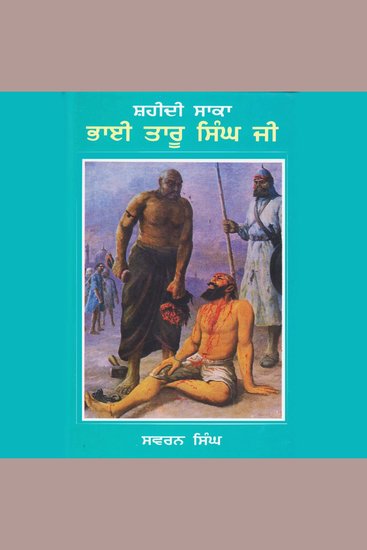
  • Shaheedi Saka Bhai Taru Singh Ji - Bhai Taru Singh Ji Da Upkari Jeewan - cover

    Shaheedi Saka Bhai Taru Singh Ji...

    Swarn Singh

    • 0
    • 0
    • 0
    Shaheedi Saka Bhai Taru Singh Ji by Swaran Singh 
    In this book, the author gives a detailed account of Bhai Taru Singh Ji's martyrdom. It also talks about two important phases of his life before his sacrifice. These phases show his deep devotion to God, his selfless and helpful nature as a Khalsa, and his dedication to serving the Sikh community. 
    Before becoming a martyr, Bhai Taru Singh was known for his spiritual practices, including prayer and meditation. He was a brave, fearless warrior who cared about the well-being of others. The book explains how these qualities of courage and sacrifice emerged, especially in the fight for the freedom of the country and religion. Understanding these earlier parts of his life helps to better understand the significance of his martyrdom. 
    You can order it from Sikh Siyasat and get it delivered anywhere in the world.
    Show book
  • The Bone Woman - A Forensic Anthropologist's Search for Truth in the Mass Graves of Rwanda Bosnia Croatia and Kosovo - cover

    The Bone Woman - A Forensic...

    Clea Koff

    • 0
    • 0
    • 0
    In 1994, Rwanda was the scene of the first acts since World War II to be legally defined as genocide. Two years later, Clea Koff, a twenty-three-year-old forensic anthropologist, left the safe confines of a lab in Berkeley, California, to serve as one of sixteen scientists chosen by the United Nations to unearth the physical evidence of the Rwandan genocide. Over the next four years, Koff’s grueling investigations took her across geography synonymous with some of the worst crimes of the twentieth century. The Bone Woman is Koff’s unflinching, riveting account of her seven UN missions to Bosnia, Croatia, Kosovo, and Rwanda, as she shares what she saw, how it affected her, who was prosecuted based on evidence she found, and what she learned about the world. Yet even as she recounts the hellish nature of her work and the heartbreak of the survivors, she imbues her story with purpose, humanity, and a sense of justice. A tale of science in service of human rights, The Bone Woman is, even more profoundly, a story of hope and enduring moral principles.
    Show book
  • The Kingdom of Kush - Nubian Kings and the Black Pharaohs of the Nile - cover

    The Kingdom of Kush - Nubian...

    Rolf Hedger

    • 0
    • 0
    • 0
    The Kingdom of Kush, an ancient African civilization, flourished along the Nile River in what is now modern-day Sudan. This powerful kingdom played a crucial role in the history of northeastern Africa, often interacting with its northern neighbor, Egypt. The land of Kush was known for its rich natural resources, strategic location, and unique cultural identity, which set it apart from other civilizations of the time. 
    Geographically, Kush was centered in the region known as Nubia, a stretch of land between the first and sixth cataracts of the Nile. This location provided fertile lands for agriculture, supported by the annual flooding of the river. Unlike Egypt, which relied heavily on the predictable flooding of the Nile, the Kushites also adapted to drier conditions, developing irrigation techniques to sustain their crops. The region was abundant in valuable resources such as gold, ivory, ebony, and exotic animal skins, making it an important trade hub in the ancient world. These resources attracted merchants from Egypt, the Mediterranean, and even as far as the Middle East, contributing to the kingdom's economic strength. 
    Kushite civilization was heavily influenced by its relationship with Egypt, but it also maintained distinct cultural and political traditions. Early Kushite settlements date back to around 2500 BCE, and by the time of the Egyptian Middle and New Kingdoms, Kush had grown into a formidable power. Egyptian pharaohs often sought control over Nubia due to its wealth, leading to periods of conquest and integration. However, Kush was not merely a passive recipient of Egyptian influence. It developed its own identity, blending Egyptian religious beliefs with native Nubian traditions, which would later be reflected in Kushite art, architecture, and burial practices.
    Show book
  • The Death of Expertise - The Campaign against Established Knowledge and Why it Matters 2nd Edition - cover

    The Death of Expertise - The...

    Tom Nichols

    • 0
    • 0
    • 0
    Fully updated chapters continue to address how technology and increasing levels of education have exposed people to more information than ever before. These societal gains, however, have also helped fuel a surge in narcissistic and misguided intellectual egalitarianism that has crippled informed debates on any number of issues. Over the past several years, the rise of populism and conspiracy theories have taken this to new levels. All voices, even the most ridiculous, demand to be taken with equal seriousness, and any claim to the contrary is dismissed as undemocratic elitism. 


    Tom Nichols' The Death of Expertise, Second Edition, follows up on how this rejection of experts has occurred: the openness of the internet, the emergence of a customer satisfaction model in higher education, the transformation of the news industry into a 24-hour entertainment machine, and importantly, the election of Donald Trump. Paradoxically, the increasingly democratic dissemination of information, rather than producing an educated public, has instead created an army of ill-informed and angry citizens who denounce intellectual achievement. When ordinary citizens believe that no one knows more than anyone else, democratic institutions themselves are in danger of falling either to populism or to technocracy or, in the worst case, a combination of both.
    Show book
  • Abuse - Understanding Its Impact and Pathways to Healing - cover

    Abuse - Understanding Its Impact...

    Coral Nunez

    • 0
    • 0
    • 0
    Abuse is a profound, complex issue that impacts millions of lives around the world. Defined broadly, abuse refers to any behavior that is intended to control, manipulate, or harm another individual, whether physically, emotionally, financially, or psychologically. While most people may recognize abuse in extreme forms, it often exists in subtle, less visible ways that are harder to detect and address. Abuse can happen in almost any context—families, intimate relationships, workplaces, institutions, and even online spaces. Its presence affects individuals across all demographics, cutting through barriers of age, gender, race, and socioeconomic background. 
    The widespread effects of abuse are staggering, with survivors often facing long-term consequences that extend well beyond the initial trauma. Abuse impacts not only physical health but also psychological well-being, creating ripple effects that influence how survivors perceive themselves, interact with others, and navigate the world. Anxiety, depression, post-traumatic stress disorder, and self-destructive behaviors are common among survivors, often requiring years of recovery. Tragically, the damage can be compounded by social stigma, disbelief, or victim-blaming attitudes, leaving many survivors feeling isolated and misunderstood. Addressing abuse requires recognizing these nuanced impacts and supporting survivors in ways that foster trust and empowerment.
    Show book