Join us on a literary world trip!
Add this book to bookshelf
Grey
Write a new comment Default profile 50px
Grey
Subscribe to read the full book or read the first pages for free!
All characters reduced
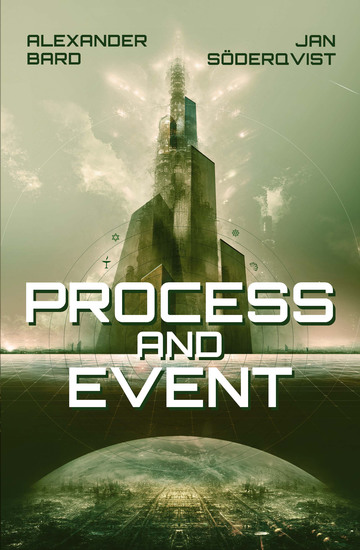
Process and Event - cover

Process and Event

Alexander Bard, Jan Söderqvist

Publisher: Aniara

  • 0
  • 0
  • 0

Summary

We have to improve our thinking. We must think in terms of motion and change, and we must abandon all childish dreams of a reality more real than the real one.  

If, for example, we play with the idea that the Process called History leads to the Event called God, we have to understand what that means. Namely: that God is something we humans create because we have that need not something that created the world or us humans (or anything else).  

This God of the new era does not yet exist, but the current technological revolutions mean that the moment of creation is near. Good news, you might say, but thereby Man reduces himself to a historical parenthesis, at least if we are to believe cyberphilosophers Alexander Bard and Jan Söderqvist. And we are closer to the age of the gods than you think.  

Join in a breathtaking expedition that takes us from the infancy of religions in the form of magic and superstition via Persian mystics and iconoclasts to the age of enlightenment, modernity and artificial intelligence. Bard & Söderqvist carry out a necessary and radical rewriting of the history of Western ideas and explain why Man's search for the divine inevitably leads us to a Messiah machine with an agenda of its own.  

Process and Event rounds off a quarter of a century of systematic thinking and concludes the internationally acclaimed Narratology trilogy. It sets every imaginable form of erudition in motion and is exactly as entertaining and provocative as only a book by Bard & Söderqvist can be.
Available since: 08/16/2024.
Print length: 1060 pages.

Other books that might interest you

  • Washington Is Burning - Corruption and Lies in The Age of Trump - cover

    Washington Is Burning -...

    Andrew Cockburn

    • 0
    • 0
    • 0
    A DEVASTATING ACCOUNT OF AMERICAN MILITARY FOLLY AND POLITICAL DYSFUNCTION BY THE WASHINGTON EDITOR OF HARPER'S MAGAZINEWashington Is Burning reveals the inner workings of Trump's Washington—a grotesque carnival of corruption. Andrew Cockburn sets fire to US pieties, focusing on the spectacular greed at the heart of the nation's political system.Graft and self-interest have long typified both Democratic and Republican administrations. Cockburn charts the connections between the American military bureaucracy and the defense industry, which have created a senseless drive for ever-greater spending on arms. After the failed adventures of Afghanistan and Iraq, the Pentagon now seeks fresh rewards through inflating the threat from China and Iran, deploying time-tested techniques to boost the budget, including the invocation of supposedly superior enemy weapons development.The American empire has reached a watershed. With Trump back in the White House, Washington Is Burning is a must-listen account of unedifying practices in the US capital.
    Show book
  • CBT and DBT - Practical Dialectical and Behavioral Therapy Techniques to Reduce Anxiety and Depression - cover

    CBT and DBT - Practical...

    Julia Haart

    • 0
    • 0
    • 0
    Anxiety isn’t just in your head. Depression doesn’t go away with “just thinking positive.” And willpower alone won’t stop the emotional rollercoaster. 
    If you’re exhausted by spiraling thoughts, emotional crashes, or that numb, empty fog you can’t shake—it’s not because you’re broken. 
    You’ve just never been taught how to deal with your mind in a way that actually works. 
    This audiobook gives you that exact skillset. It doesn’t preach. It doesn’t fluff. 
    It delivers clear, proven strategies from two of psychology’s most powerful tools: CBT (Cognitive Behavioral Therapy) and DBT (Dialectical Behavioral Therapy). 
    What’s inside? 
    •	The real reason your thoughts feel out of control—and what to do the moment anxiety strikes 
    •	How to rewrite internal narratives that fuel depression, without faking positivity 
    •	Why certain emotions spiral—and how to stop them mid-cycle using DBT 
    •	CBT journaling prompts that help you decode your triggers and track real change 
    •	“Worst-case scenario” exercises that make fear lose its grip 
    •	The STOP technique for handling emotionally charged moments without exploding or imploding 
    •	Tools to reduce overthinking, perfectionism, people-pleasing and self-doubt 
    •	How to build an internal toolkit you can use in real time—at work, in relationships, or during panic 
    •	Simple daily mindfulness drills that don’t feel forced or spiritual 
    •	How to finally stop mistaking your feelings for factsYou’ve done hard things before. This time, do them with a guide that knows exactly what you’re up against—and how to help.
    Show book
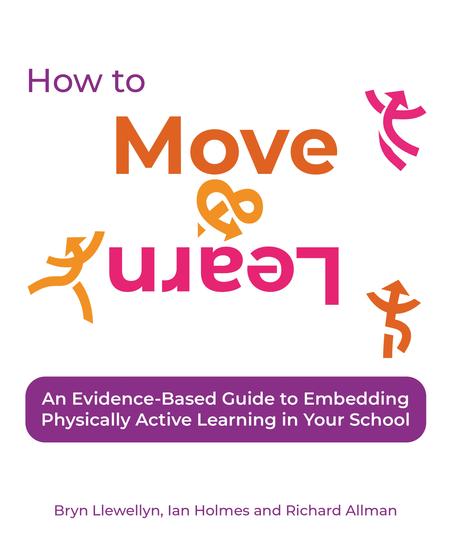
  • How to Move & Learn - An evidence-based guide to embedding physically active learning in your school - cover

    How to Move & Learn - An...

    Bryn Llewellyn, Ian Holmes,...

    • 0
    • 0
    • 0
    Foreword by Dr Andy Daly-Smith.
    We already know that increased physical activity and a reduction in the sedentary time spent sitting at desks have wide-ranging benefits (including to brain function), so what if there were also evidence that using movement in the learning process improves outcomes for children? What if we could then map out ways to support teachers in adapting their practice to make this a reality?
    In How to Move & Learn Bryn Llewellyn, Ian Holmes and Richard Allman do just that - sharing the latest research from around the world and providing teachers with the means and motivation to identify opportunities to integrate movement purposefully into the teaching and learning process.
    The links between health and education are paramount, and this book explores these connections and presents a wealth of ideas, activities and resources to help teachers unlock the potential of the school and outdoor environments for learning across all curriculum subjects.
    Suitable for all primary school teachers and leaders.
    Show book
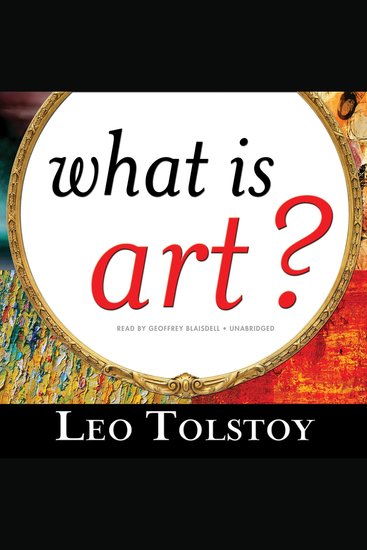
  • What Is Art? - cover

    What Is Art?

    Leo Tolstoy

    • 0
    • 0
    • 0
    What Is Art? is the result of fifteen years’ reflection on the nature and purpose of art. 
    Tolstoy claims that all good art is related to the authentic life of the broader community and that the aesthetic value of a work of art is not independent of its moral content. The book is noteworthy not only for its famous iconoclasm and compelling attacks on the aestheticist notion of “art for art’s sake” but even more for its wit, its lucid and beautiful prose, and its sincere expression of the deepest social conscience. 
    Tolstoy is an author critics typically rank alongside Shakespeare and Homer. A sustained consideration of the cultural import of art by someone who was himself an artist of the highest stature will always remain relevant and fascinating to anyone interested in the place of art and literature in society.
    Show book
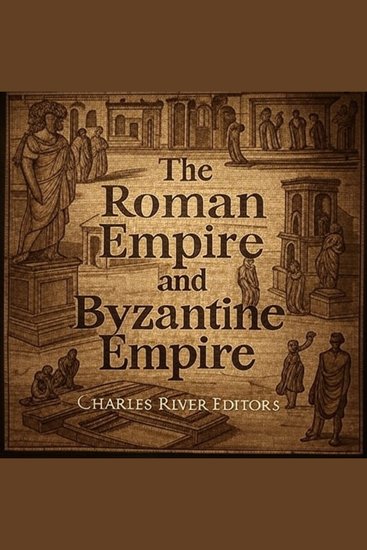
  • The Roman Empire and Byzantine Empire - The History and Legacy of Europe’s Most Important Empire and Its Successor - cover

    The Roman Empire and Byzantine...

    Charles River Editors

    • 0
    • 0
    • 0
    For the people of the ancient Mediterranean and beyond, the city of Rome had been a symbol of power for centuries, and entering the early 5th century CE, the Eternal City hadn’t been taken by an enemy force since the Gauls had done it about 800 years earlier, an unheard of period of tranquility in a world wracked with almost constant warfare. 
    Thus, when the Visigoths, whom the Romans considered uncultured and inferior, took the city of Rome and sacked it in 410, the world was stunned. It made theologians of the newly Christianized empire question God’s plan on Earth, and it encouraged many leading Romans to look east to Constantinople for their future. Indeed, the Western Roman Empire would completely collapse in the late 5th century, less than 70 years after the Visigoths sacked Rome, and just how it went from being a superpower to a poorly led, weak, and vulnerable shadow of its former self has preoccupied historians for centuries. 
    To this day, it remains difficult to trace just when the decline began, but it’s fair to say that the sack of Rome was the result of a number of factors that had been coalescing for many years. In the end, the fall of the Roman Empire was not a tale of cataclysmic events that shattered the sprawling power, but the culmination of centuries of internal dissent and decay, combined with growing external threats that led to gradual decline and eventually to the empire’s final destruction.  
    In terms of geopolitics, perhaps the most seminal event of the Middle Ages was the successful Ottoman siege of Constantinople in 1453. The city had been an imperial capital as far back as the 4th century, when Constantine the Great shifted the power center of the Roman Empire there, effectively establishing two almost equally powerful halves of antiquity’s greatest empire. Constantinople would continue to serve as the capital of the Byzantine Empire even after the Western half of the Roman Empire collapsed.
    Show book
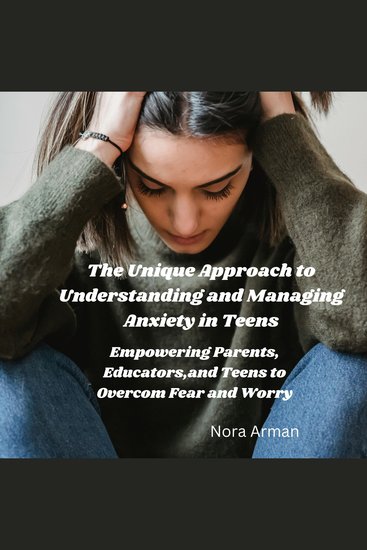
  • The Unique Approach to Understanding and Managing Anxiety in Teens - Empowering Parents Educators and Teens to overcome Fear and Worry - cover

    The Unique Approach to...

    Nora Arman

    • 0
    • 0
    • 0
    The Unique Approach to Understanding and Managing Anxiety in Teens 
    Empowering Parents, Educators, and Teens to Overcome Fear and Worry. 
    Your anxiety doesn't define you. This guide offers essential tools to help you break free from stress or support someone else. According to the CDC, anxiety among teenagers is increasing, and feeling this way is nothing to be ashamed of. 
    Whether you're a teen, parent, or teacher, anxiety can complicate life. You might worry about fitting in or handling expectations, leading to a cycle of fear and stress. Adolescents face unique pressures from school, social dynamics, and social media, all of which can exacerbate anxiety. 
    Understanding the root causes of anxiety and using practical strategies is critical to overcoming it. This guide offers: Signs and triggers of anxiety.Coping strategies for the digital age. Tips for discussing anxiety openly. Techniques from Cognitive Behavioral Therapy (CBT).Ways diet and exercise can help.Strategies for managing school-related stress. Tools to build resilience and navigate relationships. 
    Remember, you are not alone in your struggle with anxiety. This guide aims to support you on your journey to overcoming it.
    Show book