Join us on a literary world trip!
Add this book to bookshelf
Grey
Write a new comment Default profile 50px
Grey
Subscribe to read the full book or read the first pages for free!
All characters reduced
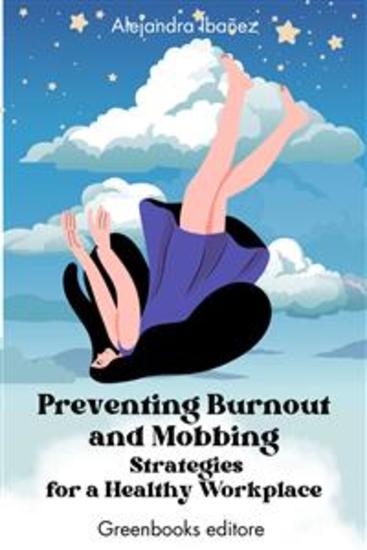
Preventing Burnout and Mobbing - Strategies for a Healthy Workplace - cover

Preventing Burnout and Mobbing - Strategies for a Healthy Workplace

Alejandra Ibañez

Publisher: Greenbooks Editore

  • 0
  • 0
  • 0

Summary

"Preventing Burnout and Mobbing: Strategies for a Healthy Workplace" is a book that explores the connections between burnout and workplace bullying, commonly known as mobbing. The book delves into the causes, symptoms, and consequences of these two phenomena, and provides practical advice and solutions for dealing with them. It covers a range of topics, including the impact of burnout and mobbing on mental and physical health, the role of organizational culture in preventing and addressing these issues, and the legal and ethical considerations involved. The book draws on research and case studies from a variety of fields, including psychology, sociology, and organizational behavior, to offer a comprehensive and informative guide for anyone experiencing burnout or mobbing, or for those who work in a management or HR role and want to prevent and address these issues in the workplace.
Available since: 05/08/2023.

Other books that might interest you

  • Ferdinand Magellan: A short biography - 5 Minutes: Short on time - long on info! - cover

    Ferdinand Magellan: A short...

    5 Minutes, 5 Minute Biographies,...

    • 0
    • 0
    • 0
    Ferdinand Magellan, adventurer and discoverer: Life and work in a short biography! Everything you need to know, brief and concise. Infotainment, education and entertainment at its best!
    Show book
  • Social Media Safety for Kids - Protecting Young Minds in the Digital Age - cover

    Social Media Safety for Kids -...

    Dale Mclaughlin

    • 0
    • 0
    • 0
    This audiobook is narrated by an AI Voice.   
    Your child’s first smartphone shouldn’t mean their first heartbreak. 
    In Social Media Safety for Kids, Dale McLaughlin gives parents a clear, calm roadmap to guide children through today’s online world. 
    Learn how to set healthy screen limits, talk about privacy and digital footprints, handle cyberbullying, and teach kids to think before they click. Packed with short, practical lessons, this audiobook helps you raise confident, kind, and informed digital citizens who can enjoy technology without being consumed by it.
    Show book
  • Learning Our Names - Asian American Christians on Identity Relationships and Vocation - cover

    Learning Our Names - Asian...

    La Thao, Linson Daniel, David de...

    • 0
    • 0
    • 0
    What's your name? 


    Asian Americans know the pain of being called names that deny our humanity. We may toggle back and forth between different names as a survival strategy. But it's a challenge to discern what names reflect our true identities as Asian Americans and as Christians. In an era when Asians face ongoing discrimination and marginalization, it can be hard to live into God's calling for our lives. 


    Asian American Christians need to hear and own our diverse stories beyond the cultural expectations of the model minority or perpetual foreigner. A team from East Asian, Southeast Asian, and South Asian backgrounds explores what it means to learn our names and be seen by God. They encourage us to know our history, telling diverse stories of the Asian diaspora in America who have been shaped and misshaped by migration, culture, and faith. As we live in the multiple tensions of being Asian American Christians, we can discover who we are and what God may have in store for us and our communities.
    Show book
  • End of the Civil War The: The History of the Battles and Events that Destroyed the Confederacy and Finished the War Between the States - cover

    End of the Civil War The: The...

    Editors Charles River

    • 0
    • 0
    • 0
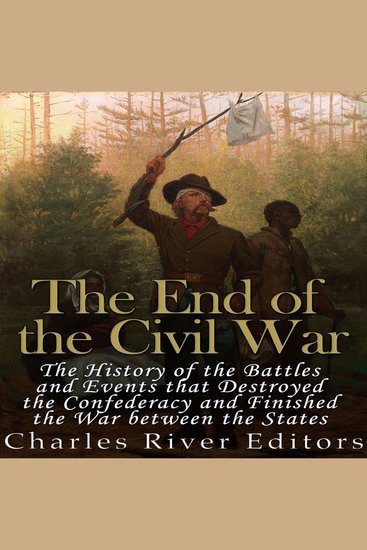
    Americans have long been fascinated by the Civil War, marveling at the size of the battles, the leadership of the generals, and the courage of the soldiers. Since the war's start over 150 years ago, the battles have been subjected to endless debate among historians and the generals themselves. The Civil War was the deadliest conflict in American history, and had the two sides realized it would take 4 years and inflict over a million casualties, it might not have been fought. Since it did, however, historians and history buffs alike have been studying and analyzing the biggest battles ever since. 
    By the close of 1864, Abraham Lincoln had been reelected, the Union army had taken Nashville from General Hood, and Sherman had concluded his total war, “slash-and-burn” march of destruction to Savannah, Georgia, offering it as a Christmas present to Lincoln. Nevertheless, with everything seemingly falling to pieces, the South still held out hope of some sort of miracle, and Davis even attempted to send a peace delegation to meet with Lincoln in the early months of 1865. To most observers, the South was clearly reaching its end, but Davis had no intention of quitting the war. Even while he was fleeing, he attempted to order Confederate generals in the field to keep fighting. On April 9, 1865, Lee formally surrendered his weary army to Grant at Appomattox. Appomattox is frequently cited as the end of the Civil War, but there still remained several Confederate armies across the country, mostly under the command of General Joseph E. Johnston, the same commander who arrived with reinforcements by rail during the First Battle of Bull Run and gave the South hope with victory in the first major battle. 
    On April 26, 1865, Johnston defied Davis’s orders and surrendered all of his forces to General Sherman, and over the next month, the remaining Confederate forces would surrender or quit.
    Show book
  • Worrying Is Optional - Break the Cycle of Anxiety and Rumination That Keeps You Stuck - cover

    Worrying Is Optional - Break the...

    LCSW Ben Eckstein, PhD Lisa W....

    • 0
    • 0
    • 0
    We live in an increasingly uncertain world, and if you struggle with worry, you aren't alone. You should also know that there's nothing wrong with worry. Worry happens to all of us—and it can even be helpful at times. But excessive worrying—the kind that keeps us up at night, interferes with our thinking during the day, and hijacks our ability to make decisions—is a big problem. The good news is that, while worry is inevitable, worrying is completely optional. This book will show you how to break free from the unhelpful thinking habits that keep you stuck in a loop of rumination and anxiety. 


    With help from this guide, you'll learn to build your own customizable, anti-worrying toolbox using skills and strategies from metacognitive therapy, acceptance and commitment therapy (ACT), and cognitive behavioral therapy (CBT). You'll discover the science behind why you worry, and how to put the brakes on unhelpful rumination and anxious thoughts—before they kick your worry and anxiety into high gear. 


    There's no one-size-fits-all treatment, but by assembling an arsenal of tools, skills, and strategies, excessive worry can be managed. This book will help you get started now. 


    Contains mature themes.
    Show book
  • Ireland - Historical Background and Interesting Facts - cover

    Ireland - Historical Background...

    Kelly Mass

    • 0
    • 0
    • 0
    This is a combo of two titles, which are about the following topics: 
    The Partition of Ireland: The Federal government of the U.K. of Great Britain and Ireland segmented Ireland into 2 independent polities: Northern Ireland and Southern Ireland. The government of Ireland Act 1920 was handed down May third, 1921. Both parts were to stay inside the UK, and the Act included arrangements for supreme reunification. 
    Northern Ireland was established with a devolved federal government and stayed a part of the U.K. Most occupants of Southern Ireland didn't recognize the self-proclaimed Irish Republic, choosing to recognize the larger Northern Ireland. The area of Southern Ireland withdrew from the U.K. and ended up being the Irish Free State, which is today the Republic of Ireland, following the Anglo-Irish Treaty. 
    The Irish Potato Famine: The year 1847, at times called "Black '47," was the absolute worst year of the period. Around 1 million people died and over a million left the nation throughout the Great Cravings, triggering the nation's population to come by 20% to 25%, with certain cities coming by as much as 67 percent between 1841 and 1851. And between the years 1845 and 1855, about 2.1 million people were leaving Ireland, primarily aboard package ships but also on steamboats and barks. This actually made it one of the biggest mass migrations from a single isle in all of history. 
    Let’s explore this tragic event in history, and let’s see what led up to this, what happened afterwards, and how historians look at it now.
    Show book