Join us on a literary world trip!
Add this book to bookshelf
Grey
Write a new comment Default profile 50px
Grey
Subscribe to read the full book or read the first pages for free!
All characters reduced
Moonchild - A Tale of Magick and Mystical Warfare - cover

Moonchild - A Tale of Magick and Mystical Warfare

Aleister Crowley, Zenith Crescent Moon Press

Publisher: Zenith Crescent Moon Press

  • 0
  • 0
  • 0

Summary

๐ŸŒ™ Enter the enigmatic world of Aleister Crowley's Moonchild, a gripping tale of magickal battles, mystical rituals, and cosmic intrigue. Set against the backdrop of pre-World War I Europe, this novel follows the journey of Lisa la Giuffria, a young woman caught in a magickal war between white magicians and black magicians ๐Ÿ”ฎ.

โœจ With themes of occultism, spiritual warfare, and human ambition, Crowley's narrative explores the creation of the Moonchildโ€”a being imbued with ethereal power. The story is rich with philosophical musings, thrilling twists, and vivid depictions of magickal practices ๐ŸŒŸ.

๐Ÿ“š First published in 1929, Moonchild remains a cornerstone of occult literature, offering readers a fascinating glimpse into Crowley's esoteric worldview. Perfect for fans of mystical fiction, ceremonial magick, and supernatural drama ๐Ÿ’–.

๐ŸŽ Don't miss this captivating journey into the realms of magick and mystery. Click "Buy Now" and immerse yourself in Crowley's magickal masterpiece today! ๐ŸŒŒ
Available since: 03/28/2025.
Print length: 272 pages.

Other books that might interest you

  • The Ranger Force - Darby's Rangers in World War II - cover

    The Ranger Force - Darby's...

    Robert Black

    • 0
    • 0
    • 0
    One of the most famous units of World War II and all of military history. First Americans to see active combat in the European theater. Expands on events described in Rick Atkinson's An Army at Dawn and The Day of Battle.
    Show book
  • How is One to Be Entirely Free of Fear? - Malibu 1970 - Small Group Discussion 8 - cover

    How is One to Be Entirely Free...

    Jiddu Krishnamurti

    • 0
    • 0
    • 0
    What do we mean by fear? Fear of what? There are various types of fear and we need not analyse every type. But we can see that fear comes into being when our comprehension of relationship is not complete. Relationship is not only between people but between ourselves and nature, between ourselves and property, between ourselves and ideas; as long as that relationship is not fully understood, there must be fear. Life is relationship. To be is to be related and without relationship there is no life. Nothing can exist in isolation; so long as the mind is seeking isolation, there must be fear. Fear is not an abstraction; it exists only in relation to something.
    Show book
  • Islands - Searching for truth on the shoreline - cover

    Islands - Searching for truth on...

    Mark Aston

    • 0
    • 0
    • 0
    "A spellbinding serial voyage in which encounters with islands across time are gathered, displayed and reburnished. Memoir becomes morality, as the oldest human myths challenge present neglect and political malfunction." โ€“ Iain Sinclair
    "Illuminating, incisive and beautifully written." โ€“ Kirsty Young
    "From ancient Crete to modern Canvey, this is a fascinating voyage around island identity, exploring isolation and imagination through a wealth of stories from around the world." โ€“ Martha Kearney
    "A timely and original exploration of the liminalities of islands and the waters that envelop them: by turns beguiling, enchanting and ultimately affirming." โ€“ Sir Anthony Seldon
    "This is a huge theme which Mark Easton pursues with vigorous and beautifully clear prose. His archipelagic fascination is contagious. Read this and the maps in your mind will never be quite the same again." โ€“ Peter Hennessy
    ***
    No man is an island, wrote John Donne. BBC Home Editor Mark Easton argues the opposite: that we are all islands, and it is upon the contradictory shoreline where isolation meets connectedness, where 'us' meets 'them', that we find out who we truly are.
    Suggesting that a continental bias has blinded us, Easton chronicles a sweep of 250 million years of island history: from Pangaea (the supercontinent mother of all islands) to the first intrepid islanders pointing their canoes over the horizon, from exploration to occupation, exploitation to liberation, a hopeful journey to paradise and a chastening reminder of our planet's fragility.
    But that is only half of this mesmerising book: aided by the muse he names Pangaea, Easton also interweaves reflections on what he calls 'the psychological islands that form the great archipelago of humankind'. Taking readers on an enchanting adventure, he illustrates how understanding islands and island syndrome might help humanity get closer to the truth about itself.
    Brave, intelligent and haunting, Islands is a deep dive into geography, myth, literature, politics and philosophy that reveals nothing less than a map of the human heart.
    Show book
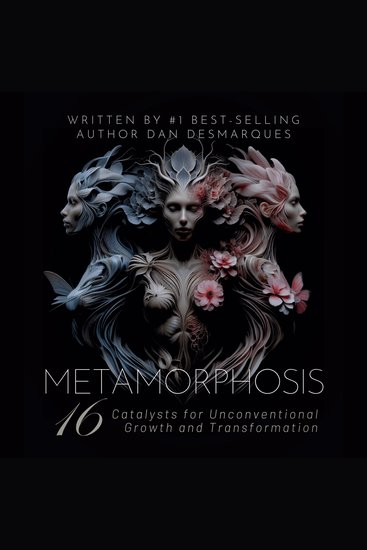
  • Metamorphosis - 16 Catalysts for Unconventional Growth and Transformation - cover

    Metamorphosis - 16 Catalysts for...

    Dan Desmarques

    • 0
    • 0
    • 0
    In this groundbreaking book, Metamorphosis: 16 Catalysts for Unconventional Growth and Transformation, explore the transformative power of mastering chaos and embracing change. Discover how navigating life's uncertainties can lead to unprecedented personal growth and inner transformation.  
    With a focus on unconventional growth, this book offers a roadmap for navigating life's challenges with skill and grace. Explore the concept of metamorphosis as a catalyst for profound change. Embark on a journey of empowerment as you embrace change, take risks, and cultivate a mindset of abundance and possibility.  
    Let this book be your guide to creating a life of purpose, joy, and fulfillment. "Metamorphosis: 16 Catalysts for Unconventional Growth and Transformation is a must-read for anyone who wants to elevate their mindset, navigate chaos with ease, and embark on a path of unconventional growth.
    Show book
  • A New Capitalism - Creating A Just Economy That Works for All - cover

    A New Capitalism - Creating A...

    Frank Altman

    • 0
    • 0
    • 0
    Invest With Social Responsibility, It Can Be A Tool For GoodIn 1977, two years after I graduated from Brown University, college students around the country launched a movement against Apartheid. Their campaign focused on divestment: convincingAmerican corporations to sell shares of companies doing business with South Africa's Apartheid government. The foundation of their argument was moral and straightforward, that no one should profit from a system that brutally oppresses people. By the mid-1980s, the divestment campaign became made pariahs of the companies still willing to transact with the Apartheid regime. Reflecting on the movement, in 2010 Archbishop Desmond Tutu wrote, โ€œWe could not have achieved our freedom and just peace without the help of people around the world, who through the use of non-violent means, such as boycotts and divestment, encouraged their governments and other corporate actors to reverse decades-long support for the Apartheid regime.โ€Socially responsible investing is rooted in the recognition that money, because it holds power in peopleโ€™s imaginations, can be a tool for accomplishing good.
    Show book
  • Riding Jane Crow - African American Women on the American Railroad - cover

    Riding Jane Crow - African...

    Miriam Thaggert

    • 0
    • 0
    • 0
    Miriam Thaggert illuminates the stories of African American women as passengers and as workers on the nineteenth- and early-twentieth-century railroad. As Jim Crow laws became more prevalent and forced Black Americans to "ride Jim Crow" on the rails, the train compartment became a contested space of leisure and work. Riding Jane Crow examines four instances of Black female railroad travel: the travel narratives of Black female intellectuals such as Anna Julia Cooper and Mary Church Terrell; Black middle-class women who sued to ride in first class "ladies' cars"; Black women railroad food vendors; and Black maids on Pullman trains. Thaggert argues that the railroad represented a technological advancement that was entwined with African American attempts to secure social progress. Black women's experiences on or near the railroad illustrate how American technological progress has often meant their ejection or displacement; thus, it is the Black woman who most fully measures the success of American freedom and privilege, or "progress," through her travel experiences.
    Show book