Join us on a literary world trip!
Add this book to bookshelf
Grey
Write a new comment Default profile 50px
Grey
Subscribe to read the full book or read the first pages for free!
All characters reduced
The Secret Advisor - cover

The Secret Advisor

Aldivan Torres

Publisher: Teixeira Torres Aldivan

  • 0
  • 0
  • 0

Summary

The Secret Advisor reveals and analyzes important conflicts in the human mind.  What is true happiness?  How to build our journey towards our goals?  What is really worth in life?  The story of the Divine is certainly a great example of how to face life's obstacles always with hope and determination.  The book inspires great dreamers to fight for their dreams and have a lighter outlook on life.  Whatever happens, remember that our dreams are possible. 
Available since: 09/01/2025.
Print length: 128 pages.

Other books that might interest you

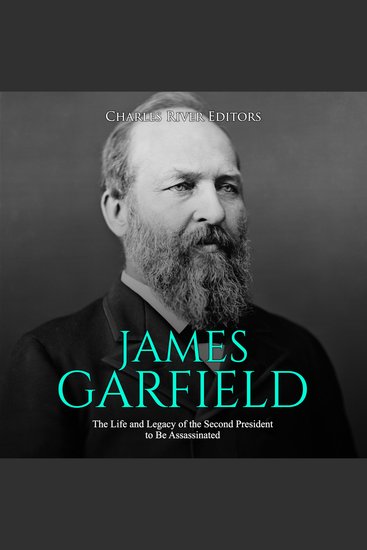
  • James Garfield: The Life and Legacy of the Second President to Be Assassinated - cover

    James Garfield: The Life and...

    Charles River Editors

    • 0
    • 0
    • 0
    He was the only sitting member of the House of Representatives elected President to date, but he served only about half a year in the office. He was the second president in less than 20 years felled by an assassin’s bullet. Yet James A. Garfield, a man little known outside his own party before his “dark-horse” nomination by the Republican Party in 1880, was significant in a number of ways. Garfield’s short term marked the first entrance of a “reformist” strain into the presidency that sought to root out corruption and political favoritism in government. Much of what we know as the modern federal bureaucracy has its roots in Garfield’s advocacy of a professional civil service to fill most positions in the government, rather than filling those positions through political patronage, the “spoils system” that went back to the administration of Andrew Jackson. He did not live to see his proposed reforms enshrined in law, but Garfield’s contribution to the history of the United States should not be underestimated. 
    In 1880, Garfield ran as a Republican for president, and one of his supporters was a man named Charles Guiteau, who wrote and circulated a speech called “Garfield vs. Hancock” that aimed to rally support for the Republican candidate. Though few knew it, Guiteau’s family had already deemed him insane and attempted to keep him committed in an asylum, only to have him manage an escape from confinement. 
    Garfield went on to narrowly edge Winfield Scott Hancock in the election, and Guiteau, harboring delusions of grandeur, believed he had helped tip the scales in Garfield’s favor. As such, he believed that he was entitled to a post in Garfield’s nascent administration, perhaps even an ambassadorship, and he continued to rack up debts while operating under the assumption that he would soon have the government salary to pay them back. 
    Show book
  • The Altar of the Dead - A spiritual and philosophical fable about life death and love - cover

    The Altar of the Dead - A...

    Henry James

    • 0
    • 0
    • 0
    Henry James was born 15th April 1843 in New York City. 
     
    His youth was spent travelling with his family receiving what was an "extraordinarily haphazard and promiscuous" education as they journeyed through London, Paris, Geneva, Boulogne-sur-Mer and Newport, Rhode Island, according to the father's current interests and publishing ventures. James studied primarily with tutors and only briefly attended schools.    
     
    Undoubtedly the quality of his writing has ensured his name is enshrined in the American literary tradition.  
     
    James was a committed Anglophile and spent most of his adult life as an expatriate in Europe.  Many of his novels juxtapose the Old World with the New World. Classics such as ‘The Portrait of a Lady’, ‘Daisy Miller’ and ‘The Ambassadors’, display the entanglement between American and European cultures and mentalities. They highlight the differences between the two worlds through following the experiences of American expatriates in Europe.  
     
    A prolific author he was able to easily move across genres to create vivid and totally real worlds and situations and to offer sophisticated observations of human relations as well as realistic, social criticism. 
    As a critic James was unafraid to venture into reviews and essays of those other literary giants around him.  These together with his short stories and, of course, classic novels, make Henry James an author to be not only admired but read, and read often.  
     
    In 1915 Henry James became a British citizen. 
     
    On 28th February 1916, at the age of 72, Henry James died in Chelsea, London. 
     
    He was nominated for the Nobel Prize in Literature in 1911, 1912 and 1916. He never won. 
     
    In this story James examines the effect that the death of a dearly loved person has on a man’s life.  How he copes, how he grieves and how he attempts to move forward.
    Show book
  • The Child's Book of American Biography - cover

    The Child's Book of American...

    Mary Stoyell Stimpson

    • 0
    • 0
    • 0
    "The Child's Book of American Biography, compiled by Mary Stoyell Stimpson, is a wonderful collection that introduces young readers to notable figures who have shaped American history. Let's explore this enlightening work:    Title and Contents:  The full title of this book is "The Child's Book of American Biography: Selections from the Old and New Testaments."  It features concise biographies of remarkable individuals who have contributed to the fabric of America.  Here are some of the notable figures covered in the book:  George Washington  William Penn  John Paul Jones  John Singleton Copley  Benjamin Franklin  Louis Agassiz  Dorothea Lynde Dix  Ulysses Simpson Grant  Clara Barton  Abraham Lincoln  Robert Edward Lee  John James Audubon  Robert Fulton  George Peabody  Daniel Webster  Augustus St. Gaudens  Henry David Thoreau  Louisa May Alcott  Samuel Finley Breese Morse  William Hickling Prescott  Phillips Brooks  Samuel Clemens (Mark Twain)  Joe Jefferson  Henry Wadsworth Longfellow  James McNeill Whistler  Ralph Waldo Emerson  Jane Addams  Luther Burbank  Edward Alexander MacDowell  Thomas Alva Edison "
    Show book
  • The Combat Zone - Murder Race and Boston's Struggle for Justice - cover

    The Combat Zone - Murder Race...

    Jan Brogan

    • 0
    • 0
    • 0
    At the end of the 1976 football season, more than forty Harvard athletes went to Boston's Combat Zone to celebrate. In the city's adult entertainment district, drugs and prostitution ran rampant, violent crime was commonplace, and corrupt police turned the other way. At the end of the night, Italian American star athlete Andy Puopolo, raised in the city's North End, was murdered in a stabbing. Three African American men were accused of the crime. His murder made national news and led to the eventual demise of the city's red-light district. 


    Starting with this brutal murder, The Combat Zone tells the story of the Puopolo family's struggle with both a devastating loss and a criminal justice system that produced two trials with opposing verdicts, all within the context of a racially divided Boston. Brogan traces the contentious relationship between Boston's segregated neighborhoods during the busing crisis; shines a light on a court system that allowed lawyers to strike potential jurors based purely on their racial or ethnic identity; and lays bare the deep-seated corruption within the police department and throughout the Combat Zone. What emerges is a fascinating snapshot of the city at a transitional moment in its recent past.
    Show book
  • A Diagnosis of Death - From their pens to your ears genius in every story - cover

    A Diagnosis of Death - From...

    Ambrose Bierce

    • 0
    • 0
    • 0
    Ambrose Gwinnett Bierce was born on 24th June 1842 at Horse Cave Creek in Meigs County, Ohio. His parents were poor but they introduced him to literature at an early age, instilling in him a deep appreciation of books, the written word and the elegance of language.  
    Growing up in Koscuisko County, Indiana poverty and religion were defining features of his childhood, and he would later describe his parents as “unwashed savages” and fanatically religious, showing him little affection but always quick to punish. He came to resent religion, and his introduction to literature appears to be their only positive effect. 
    At age 15 Bierce left home to become a printer’s devil, mixing ink and fetching type at The Northern Indian, a small Ohio paper. Falsely accused of theft he returned to his farm and spent time sending out work in the hopes of being published. 
    His Uncle Lucius advised he be sent to the Kentucky Military Institute. A year later he was commissioned as an Officer.  As the Civil War started Bierce enlisted in the 9th Indiana Infantry Regiment.  
    In April 1862 Bierce fought at the Battle of Shiloh, an experience which, though terrifying, became the source of several short stories. Two years later he sustained a serious head wound and was off duty for several months. He was discharged in early 1865.  
    A later expedition to inspect military outposts across the Great Plains took him all the way to San Francisco. He remained there to become involved with publishing and editing and to marry, Mary Ellen on Christmas Day 1871.  They had a child, Day, the following year.  
    In 1872 the family moved to England for 3 years where he wrote for Fun magazine. His son, Leigh, was born, and first book, ‘The Fiend’s Delight’, was published.  
    They returned to San Francisco and to work for a number of papers where he gained admiration for his crime reporting. In 1887 he began a column at the William Randolph Hearst’s San Francisco Examiner.  
    Bierce’s marriage fell apart when he discovered compromising letters to his wife from a secret admirer. The following year, 1889 his son Day committed suicide, depressed by romantic rejection. 
    In 1891 Bierce wrote and published the collection of 26 short stories which included ‘An Occurrence at Owl Creek Bridge’.  Success and further works including poetry followed.  
    Bierce with Hearst’s resources helped uncover a financial plot by a railroad to turn 130 million dollars of loans into a handout. Confronted by the railroad and asked to name his price Bierce answered “my price is $130 million dollars. If, when you are ready to pay, I happen to be out of town, you may hand it over to my friend, the Treasurer of the United States”.  
    He now began his first foray as a fabulist, publishing ‘Fantastic Fables’ in 1899.  But tragedy again struck two years later when his second son Leigh died of pneumonia relating to his alcoholism.  
    He continued to write short stories and poetry and also published ‘The Devil’s Dictionary’.  
    At the age of 71, in 1913 Bierce departed from Washington, D.C., for a tour of the battlefields where he had fought during the civil war. At the city of Chihuahua he wrote his last known communication, a letter to a friend. It’s closing words were “as to me, I leave here tomorrow for an unknown destination,” Ambrose Bierce then vanished without trace.
    Show book

  • Henry Beeching - Professor Poet Priest - cover

    Henry Beeching - Professor Poet...

    Peter Fanning

    • 0
    • 0
    • 0
    Henry Beeching (1859–1919), Dean of Norwich, was the quintessential Man of Letters. A popular preacher and active for the cause of reform in the Church, he was also a poet, eminent scholar and a widely read journalist. Seen through the spectrum of national issues and challenges, Peter Fanning highlights Beeching’s wide appeal both as a Christian thinker, literary scholar and a humourist. Many of the most celebrated scholars, poets and clergy were friends and correspondents; amongst them was the enduring relationship with his uncle, the poet Robert Bridges. Above all, Henry Beeching was a literary scholar and lover of Shakespeare who married this passion to a love of God.
    
     
    A contemporary journalist wrote that Henry Beeching was “widely known as a poet, preacher and professor. Many men are content to make a reputation in any one of these department. Mr Beeching has made a mark in each.” It is the breadth of his interests and achievements that is unusual. This first full-length biography covers Beeching's character and his many interests and achievements, from the satirical and scandalous “Balliol epigrams” to sermons during the First World War and the creation of the Memorial Chapel at Norwich Cathedral.
    Show book