Join us on a literary world trip!
Add this book to bookshelf
Grey
Write a new comment Default profile 50px
Grey
Subscribe to read the full book or read the first pages for free!
All characters reduced
Digital Rights Movement - cover

Digital Rights Movement

Aisha Khan

Translator A AI

Publisher: Publifye

  • 0
  • 0
  • 0

Summary

"Digital Rights Movement" explores the multifaceted efforts of individuals and organizations to safeguard fundamental rights in the digital age. It delves into the evolution of privacy advocacy, the fight for information access, and the role of civil liberties organizations in shaping internet governance. The book highlights how increasing surveillance technologies and data collection practices underscore the critical importance of online privacy.Furthermore, it emphasizes that ensuring equitable access to information is vital for fostering democratic participation and innovation. The book asserts that digital rights activism has been instrumental in shaping the internet and mitigating potential harms to individual liberties. It examines landmark cases, legislative battles over data protection, and open-source movements.By analyzing the interconnectedness of privacy, information access, and civil liberties, "Digital Rights Movement" provides a holistic view of digital rights activism. The book progresses by first introducing key concepts and historical context. It then analyzes privacy advocacy, examines information access campaigns, and studies online civil liberties organizations. The analysis uses legal cases, advocacy campaigns, and data breaches. It concludes by assessing the impact on internet governance, surveillance limitations, and data protection frameworks. This book offers insights for policymakers, activists, and citizens seeking to understand and engage with the challenges of digital rights in our modern world.
Available since: 05/02/2025.
Print length: 83 pages.

Other books that might interest you

  • Arthashastra - cover

    Arthashastra

    Kautilya

    • 0
    • 0
    • 0
    Arthashastra by Kautilya (also known as Chanakya) is one of the most important and influential works on political strategy, governance, and economic administration from the ancient world. Written more than two thousand years ago in ancient India, this remarkable treatise offers a detailed guide to statecraft, leadership, diplomacy, and the management of a powerful and stable kingdom.
    
    Kautilya, the renowned scholar and advisor to Chandragupta Maurya, composed this work as a practical manual for rulers and administrators. Drawing on his deep understanding of politics, economics, law, and military organization, he presents a comprehensive framework for governing a prosperous and secure state.
    
    The text explores the duties and responsibilities of a ruler, emphasizing discipline, wisdom, and strategic thinking. According to Kautilya, a successful leader must balance authority with intelligence and foresight while ensuring the welfare and stability of the kingdom. The work provides detailed guidance on how a ruler should manage administration, maintain law and order, and protect the interests of the state.
    
    One of the most remarkable aspects of Arthashastra is its systematic analysis of political strategy and diplomacy. Kautilya explains how alliances, negotiations, and intelligence gathering can influence the balance of power between kingdoms. He also discusses the role of espionage and information networks as tools for maintaining security and preventing threats.
    
    In addition to political and military matters, the book also addresses economic policy, taxation, trade, agriculture, public works, and the regulation of markets. These sections reveal a sophisticated understanding of how economic strength contributes to the stability and prosperity of a state.
    
    The work also outlines legal systems and judicial procedures, emphasizing fairness, accountability, and effective governance. Through these detailed discussions, Kautilya presents a vision of a well-organized state guided by careful planning and strategic leadership.
    
    Although written in ancient times, many of the ideas presented in Arthashastra remain relevant to modern discussions about politics, leadership, and public administration. Its insights into power, diplomacy, and governance have drawn comparisons to other influential works on political strategy throughout history.
    
    Rich in practical wisdom and historical significance, Arthashastra stands as a foundational text of political thought. It offers readers a fascinating glimpse into the sophisticated ideas of ancient Indian statecraft and remains a timeless study of leadership, strategy, and the art of governing a nation.
    Show book
  • The Prince (Hero Classics) - cover

    The Prince (Hero Classics)

    Niccolò Machiavelli

    • 0
    • 0
    • 0
    Part of the Hero Classics series 
    “Everyone sees what you appear to be, few experience what you really are.” 
    The Prince is generally labelled as a cynical and overly pragmatic account of gaining and retaining political power. It is a significant deviation from the righteous meditations of Plato and Aristotle, which emphasise the goodness of human nature. Living in a harsh political climate, Machiavelli devised a more practical and true-to-life guide for leaders who cannot possibly be always good and just. For instance, he talks among other things about the importance to inflict pain all at once but distribute the rewards available gradually and in limited amounts. Besides, the idea that ‘the ends justify the means’ had never been featured in literature so prominently and openly before. Far-fetched at first glance, Machiavelli’s insights after some analysis starts making practical sense when every state and society need to maintain one thing – stability. 
    Although not idealistic, the text is undeniably valid as we can easily track the Prince’s features in the best and the worst political leaders of the previous century who are united by the amount of power they were able to exerts – from political heroes such as Churchill and JFK to fascist and communist dictators. In the modern world, The Prince is a viable manual of conduct more than ever with the intense demand for competitiveness not only in the political but equally in business and other spheres. 
    The text is also famous for being written in the vernacular rather than in classical Latin. What might surprise modern readers is that, actually, this peculiarity halted the text’s dissemination across Europe as most translations were still done from Latin. The text nevertheless has reached its audience and become one of the most recognizable and accessible reads on politics and leadership. 
    The Hero Classics series:MeditationsThe ProphetA Room of One’s OwnIncidents in the Life of a Slave GirlThe Art of WarThe Life of Charlotte BronteThe RepublicThe PrinceNarrative of the Life of Frederick Douglass, an American SlaveUtopia
    Show book
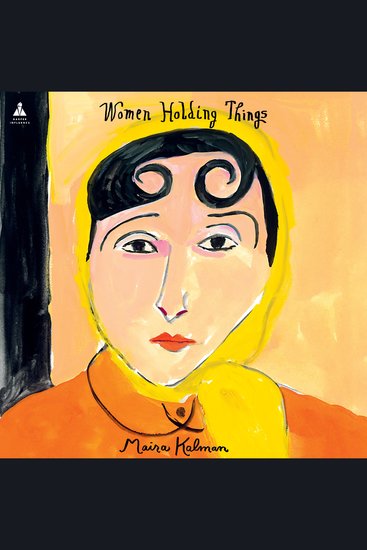
  • Women Holding Things - cover

    Women Holding Things

    Maira Kalman

    • 0
    • 0
    • 0
    From the critically acclaimed artist, designer, and author of the bestsellers The Principles of Uncertainty and My Favorite Things comes a wondrous collection of words that is a moving meditation on the beauty and complexity of women’s lives and roles, revealed in the things they hold. 
    “What do women hold? The home and the family. And the children and the food. The friendships. The work. The work of the world. And the work of being human. The memories. And the troubles. And the sorrows and the triumphs. And the love.” 
    In the spring of 2021, Maira and Alex Kalman created a small, limited-edition booklet “Women Holding Things,” which featured select recent paintings by Maira, accompanied by her insightful and deeply personal commentary. The booklet quickly sold out. Now, the Kalmans have expanded that original publication into this extraordinary compendium. 
    Women Holding Things includes thoughtful and intimate anecdotes, recollections, and ruminations about portraits of women, both ordinary and famous, including Virginia Woolf, Sally Hemings, Hortense Cezanne, Gertrude Stein, as well as Kalman’s family members and other real-life people. These women hold a range of objects, from the mundane—balloons, a cup, a whisk, a chicken, a hat—to the abstract—dreams and disappointments, sorrow and regret, joy and love. 
    Kalman considers the many things that fit physically and metaphorically between women’s hands: We see a woman hold a book, hold shears, hold children, hold a grudge, hold up, hold her own. In telling their stories, Kalman lays bare the essence of women’s lives—their tenacity, courage, vulnerability, hope, and pain. Ultimately, she reveals that many of the things we hold dear—as well as those that burden or haunt us—remain constant and connect us from generation to generation. 
    Here, too, are mentions of a few men holding things, such as Rainer Maria Rilke and Anton Chekhov, as well as objects holding other objects that invite us to ponder their intimate relationships to one another. 
    Women Holding Things explores the significance of the objects we carry—in our hands, hearts, and minds—and speaks to, and for, all of us. Maira Kalman’s unique work is a celebration of life, of the act and the art of living, offering an original way of examining and understanding all that is important in our world—and ultimately within ourselves.
    Show book
  • Frequently Asked White Questions - cover

    Frequently Asked White Questions

    Ajay Parasram, Alex Khasnabish

    • 0
    • 0
    • 0
    Are you a white person with questions about how race affects different situations, but you feel awkward, shy, or afraid to ask the people of colour in your life? Are you a racialized person who is tired of answering the same questions over and over? This book is for you: a basic guide for people learning about racial privilege. In Frequently Asked White Questions, Alex Khasnabish and Ajay Parasram answer ten of the most common questions asked of them by people seeking to understand how race structures our every day. Drawing from their lived experiences as well as live sessions of their monthly YouTube series Safe Space for White Questions, the authors offer concise, accessible answers to questions such as, “Is it possible to be racist against white people?” or “Shouldn’t everyone be treated equally?” With humour and compassion, this book offers relatable advice and a practical entry point into conversations about race.
    Show book
  • Why Is Nobody Buying My Book? - The Transformative Power Through A Dual Journey of Healing for Readers and Authors - cover

    Why Is Nobody Buying My Book? -...

    Kay Jay

    • 0
    • 0
    • 0
    Why Is Nobody Buying My Book? 
    Are you an author pouring your heart into your craft, only to be met with silence? You’ve written, edited, and published, but where are the readers? If you’ve ever asked yourself, “Why isn’t my book selling?” you’re not alone—and this book holds the answers. 
    Why Is Nobody Buying My Book? It isn’t just a guide; it’s a roadmap for indie authors navigating the competitive and often overwhelming self-publishing world. Whether you’re struggling with pricing, marketing, or connecting emotionally with readers, this book equips you with the tools and strategies to stand out and succeed. 
    This book isn’t just a collection of strategies—it’s also my story. When I wrote my first book, Diary of Cliches, I believed I had something meaningful to share. What I didn’t anticipate was the crushing reality of low sales and self-doubt. I spent sleepless nights questioning my pricing, rewriting my book description, and wondering if my voice was ever meant to be heard. 
    And then it hit me. Writing isn’t just about the story you tell—it’s about how that story connects with your audience. Through trial error, and countless lessons, I discovered what truly resonates with readers. These lessons not only changed the trajectory of my books but transformed how I viewed my journey as an author. 
    Why Does Nobody Buy My Book? Takes you behind the scenes of that journey while giving you actionable insights, practical tools, and creative strategies to navigate the challenges of self-publishing. From shifting your mindset about money to crafting emotionally resonant stories, this book will help you not only sell books but create a lasting impact.
    Show book
  • Britain’s Secret Defences - Civilian Saboteurs Spies and Assassins During the Second World War - cover

    Britain’s Secret Defences -...

    Andrew Chatterton

    • 0
    • 0
    • 0
    The first full history of the highly trained and ruthless civilian volunteers secretly trained across Britain to be deployed in the case of a German invasion.The narrative surrounding Britain’s anti-invasion forces has often centered on ‘Dad’s Army’-like characters running around with pitchforks, on unpreparedness and sense of inevitability of invasion and defeat. The truth, however, is very different.  Top-secret, highly trained and ruthless civilian volunteers were being recruited as early as the summer of 1940. Had the Germans attempted an invasion they would have been countered by saboteurs and guerrilla fighters emerging from secret bunkers, and monitored by swathes of spies and observers who would have passed details on via runners, wireless operators and ATS women in disguised bunkers.  Alongside these secret forces, the Home Guard were also setting up their own ‘guerrilla groups’, and SIS (MI6) were setting up post-occupation groups of civilians – including teenagers – to act as sabotage cells, wireless operators, and assassins had the Nazis taken control of the country.  The civilians involved in these groups understood the need for absolute secrecy and their commitment to keeping quiet meant that most went to their grave without ever telling anyone of their role, not even their closest family members. There has been no official and little public recognition of what these dedicated men and women were willing to do for their country in its hour of need, and after over 80 years of silence the time has come to highlight their remarkable role.
    Show book