Join us on a literary world trip!
Add this book to bookshelf
Grey
Write a new comment Default profile 50px
Grey
Subscribe to read the full book or read the first pages for free!
All characters reduced
Technical Writing - cover

Technical Writing

Aiden Feynman

Publisher: Publifye

  • 0
  • 0
  • 0

Summary

"Technical Writing: Mastering the Art of Clear Communication" explores the crucial role of effective documentation in the digital age. This comprehensive guide bridges the gap between complex technical knowledge and accessible information, emphasizing the importance of clear communication in facilitating technological progress.

 
The book covers three main areas:1. Fundamentals of technical writing2. Advanced techniques for clarity3. The evolving landscape of digital documentation

 
What sets this book apart is its practical approach, combining theoretical foundations with hands-on exercises and real-world examples. It draws on research from cognitive science, linguistics, and user experience studies to support its central argument that effective technical writing creates a bridge between complex ideas and user understanding.

 
The book progresses logically, starting with basic principles and moving to advanced topics like information architecture and usability testing. It also explores emerging trends such as augmented reality manuals and AI-assisted writing tools.

 
By addressing both traditional print manuals and cutting-edge digital documentation, "Technical Writing" offers valuable insights for novice writers and experienced professionals alike. Its interdisciplinary approach, connecting technical writing to fields like cognitive psychology and information design, provides readers with a fresh perspective on this essential aspect of technology journalism and innovation.
Available since: 10/15/2024.
Print length: 207 pages.


Other books that might interest you

  • Fishermen and the Dragon The: Book Summary & Anaysis - cover

    Fishermen and the Dragon The:...

    Alexander Pike

    • 0
    • 0
    • 0
    This content is an independent and unofficial summary created for informational and educational purposes only. It is not affiliated with, authorized, approved, licensed, or endorsed by the original author or publisher. All rights to the original work belong to its respective copyright holders. This summary is not intended to substitute the original book, but to offer a concise overview and interpretation of its main ideas.


    A coastal town divided. A community in exile. A fight for justice that shook the Gulf.
     
    The Fishermen and the Dragon is a powerful, real-life thriller that blends civil rights, environmental crime, and cultural collision into one unforgettable narrative. Set in the fishing towns of Texas in the 1970s and 80s, it tells the true story of Vietnamese refugees fleeing war—only to face hostility, racism, and violence from the Ku Klux Klan and petrochemical giants.
     
    But this is more than a story of conflict. It’s a story of courage. Of immigrants and locals uniting against pollution, intimidation, and injustice. Of communities transforming pain into purpose and resistance into renewal.
     
    Through deeply human storytelling and gripping investigative detail, this audiobook explores what happens when ordinary people refuse to stay silent—choosing instead to lead, protect, and rise together.
     
    If you believe that real leadership begins at the grassroots, that legacy is forged in resilience, and that justice is a fight worth waging, this is a story you’ll never forget.
     
    The dragon was real. So were the heroes who faced it.
    Show book
  • A Tiger among Us - A Story of Valor in Vietnam's A Shau Valley - cover

    A Tiger among Us - A Story of...

    Bennie G. Adkins, Katie Lamar...

    • 0
    • 0
    • 0
    Foreword by Chuck Hagel, former Secretary of Defense and Senator from NebraskaAdaptable. Cunning. Ferocious. Fearless. The Indochinese tiger is just one of the formidable predators roaming Vietnam's jungle. In 1966 a small band of US Special Forces soldiers--most especially Bennie Adkins--spent four grueling days facing down the "tiger" among them.While the rain and mist of an early March moved over the valley, then-Sergeant First Class Bennie Adkins and sixteen other Green Berets found themselves holed up in an undermanned and unfortified position at Camp A Shau, a small training and reconnaissance camp located right next to the infamous Ho Chi Minh Trail, North Vietnam's major supply route. And with the rain came the North Vietnamese Army in force.Surrounded 10-to-1, the Green Berets endured constant mortar and rifle fire, direct assaults, treasonous allies, and volatile jungle weather. But there was one among them who battled ferociously, like a tiger, and when they finally evacuated, he carried the wounded to safety. Forty-eight years later, Command Sergeant Major Bennie Adkins's valor was recognized when he received this nation's highest military award, the Medal of Honor.Filled with the sights, smells, and sounds of a raging battle fought in the middle of a tropical forest, A Tiger among Us is a riveting tale of bravery, valor, skill, and resilience.
    Show book
  • Sundaland and Doggerland: The History and Mysteries of the Sunken Landmasses in Asia and Europe - cover

    Sundaland and Doggerland: The...

    Editors Charles River

    • 0
    • 0
    • 0
    By the time the Pleistocene Epoch ended around 12,000 years ago, Homo sapiens had become one of the most significant species on the planet. 	It was also near the end of that period of time that modern humans began to gradually populate what would become Europe, Asia, and the Americas, eventually becoming the inheritors of the Paleolithic era and the only human species to make it into the Neolithic era. 	The cold Pleistocene temperatures lowered water levels across the planet, exposing land that was not there before or after the period. At the same time, significant regions of the planet were very different during the Pleistocene, including Southeast Asia, particularly the modern islands of Bali, Borneo, Sumatra, and the Malay Peninsula, roughly equivalent to parts of Indonesia, Malaysia, and Thailand. This region, which modern scholars refer to as Sunda or Sundaland, was unique because all of it was connected by land, meaning today’s islands were once part of a contiguous subcontinent, and in terms of the people, flora, and fauna, it was very different than it is today.  
    Among the most significant water displacement phenomena in the Western world was Doggerland on the northern European continent. The notable inundation occurred in both a steady and eruptive fashion covering a vast stretch of former tundra, a land bridge between today’s British Isles and the European continent. The event brought about the modern English Channel and an expanded North Sea, and unlike the early supercontinents, the inundation of Doggerland took place after the appearance of people. Incrementally submerged since roughly 18,000 years ago as the climate warmed, the patch of sea between Britain and Europe is the subject of much recent scientific scrutiny. 
    Show book
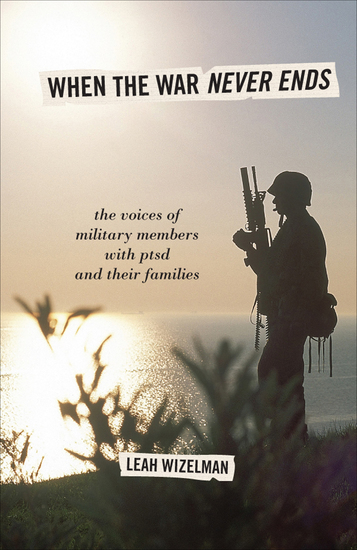
  • When the War Never Ends - The Voices of Military Members with PTSD and Their Families - cover

    When the War Never Ends - The...

    Leah Wizelman

    • 0
    • 0
    • 0
    Veterans with PTSD speak: “Anyone wanting to understand what it is to have a ‘flashback’ will learn more from these firsthand accounts than from any textbook.” ―The British Journal of Psychiatry   The chances of service members developing PTSD after military-related traumas is, according to a U.S. study, at least thirty percent. The effects can be devastating, ranging from distressing flashbacks to nightmares, sleep disorders, physical symptoms, irritability, aggressions, and memory and concentration problems. These symptoms often cause severe impairment in all areas of life and may lead to despair and hopelessness. PTSD is neither a localized nor a temporary problem.    Here, Leah Wizelman relates the true stories of service members from different service branches and ranks from the United States, Canada, Australia, and Germany, who were participants in various wars (Vietnam, Gulf War, Iraq, Afghanistan, Grenada) and peace missions (Kosovo, Bosnia, Croatia, Cambodia, Somalia, Cyprus, Haiti). They talk openly about their lives after trauma and share their fates with the reader. Spouses of affected military members also tell their stories. They talk about the challenges loved ones face when living with a partner with PTSD, how it affects their children, and how they manage to cope.    As these stories show all too vividly, military-related PTSD has not been dealt with effectively or with enough empathy or sympathy. Those affected by PTSD will realize that they are not alone in their suffering—and others will gain insight into the realities of this challenging disorder.   “I highly recommend this volume to all who seek to understand combat-related PTSD.” —Kathryn M. Magruder, MPH., PhD, Department of Psychiatry & Behavioral Sciences, Military Science Division, Medical University of South Carolina
    Show book
  • Why Not Better and Cheaper? - Healthcare and Innovation - cover

    Why Not Better and Cheaper? -...

    James B. Rebitzer, Robert S....

    • 0
    • 0
    • 0
    An engaging account of innovation in healthcare and why the results fall short for patients and society. 


    The evolution of the cell phones we carry in our pockets demonstrates that quality can increase while prices fall. Why doesn't healthcare also get better and cheaper? 


    In Why Not Better and Cheaper?, James B. Rebitzer and Robert S. Rebitzer offer an answer to this question. Bringing together research on incentives, social norms, and market competition, they argue that the healthcare system generates the wrong kinds of innovation. It is too easy to profit from low-value innovations and too hard to profit from innovations that reduce the costs of care. The result is a healthcare system that is profusely innovative yet remarkably ineffective in discovering ways to deliver increased value at lower cost. 


    Why Not Better and Cheaper? sheds new light on the trajectory of innovation in healthcare, and how to point innovation in a better direction.
    Show book
  • How to embrace academic failure - Building a career with meaning integrity and honesty - cover

    How to embrace academic failure...

    Tara Brabazon

    • 0
    • 0
    • 0
    This book explores current attitudes towards failure in academia. Tara Brabazon argues that success and failures are rarely linked and instead failure can be harnessed as both a diagnostic and a literacy to improve research integrity, authenticity, accountability and consciousness. 
    Brabazon demonstrates how instances of failure can facilitate an awareness of asymmetrical power dynamics and injustice in academic life. How To Embrace Academic Failure illustrates how to create personal, professional and organizational change as a result of failure. It offers practical strategies for using failure to enhance academic careers and improve research ethics and teaching. Brabazon concludes by presenting an idealised academic future where a culture of failure provides transparency, rigour, ethical leadership and followership. 
    This insightful book is a vital resource for students and scholars of higher education management, business leadership and the sociology of education. Academics in critical university studies and early career researchers will also benefit from Brabazon's novel perspective on the post-pandemic, claustropolitan university.
    Show book