Join us on a literary world trip!
Add this book to bookshelf
Grey
Write a new comment Default profile 50px
Grey
Subscribe to read the full book or read the first pages for free!
All characters reduced
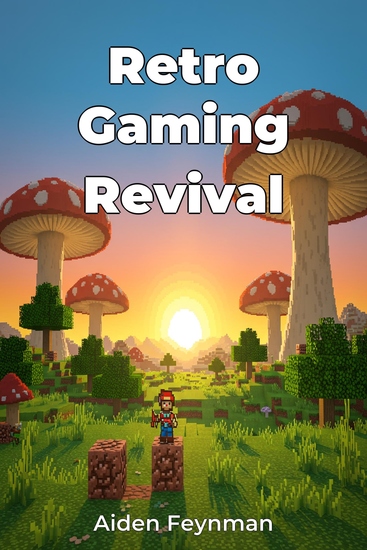
Retro Gaming Revival - cover

Retro Gaming Revival

Aiden Feynman

Translator A AI

Publisher: Publifye

  • 0
  • 0
  • 0

Summary

Retro Gaming Revival explores the captivating resurgence of classic video games, examining why pixelated graphics and chiptune soundtracks appeal to new generations. The book delves into the nostalgia fueling this trend, as well as the sophisticated engineering behind modern remakes. It highlights how understanding the retro gaming revival offers insights into consumer behavior and the economics of nostalgia, revealing the long-term impact of early technological innovations. Did you know that some developers are reimagining classic titles, carefully balancing honoring the original design with incorporating modern gaming conventions?

 
The book progresses by first defining "retro" games and outlining major platforms and genres. It then analyzes the psychological factors driving the demand for retro content and examines the methods used to preserve and emulate older games. Finally, it investigates how contemporary developers are reimagining classic titles, exploring the balance between honoring the original design and incorporating modern gaming conventions.

 
The text adopts an informative yet engaging tone, blending academic rigor with a style accessible to both casual gamers and serious scholars interested in game history.
Available since: 03/31/2025.
Print length: 62 pages.

Other books that might interest you

  • Native American History: An Enthralling Overview of the Cherokee Chickasaw Choctaw Creek and Seminole Tribes along with the Trail of Tears - cover

    Native American History: An...

    Billy Wellman

    • 0
    • 0
    • 0
    Two manuscripts in one audiobook:Native American Tribes: An Enthralling Guide to the Cherokee, Chickasaw, Choctaw, Creek, and SeminoleTrail of Tears: An Enthralling Guide to the Choctaw and Chickasaw Removal, the Seminole Wars, Creek Dissolution, and Forced Relocation of the Cherokee Tribe 
    In the first part of this audiobook, you’ll know:The Five Civilized Tribes: Cherokee, Muscogee (Creek), Seminole, Choctaw, and ChickasawThe role of disease in the European colonization of AmericaGreat Native American fighters like Tecumseh, Crazy Horse, and Black HawkGreat Native American leaders like Pushmataha, Chief John Ross, and Blue JacketWhat role Andrew Jackson played in the Indian Removal ActThe reality of Native Americans who owned slavesThe real story behind the Trail of TearsGreat battles like Fallen Timbers, Tippecanoe, Little Bighorn, and St. Clair's DefeatMassacres at Sand Creek and Wounded Knee and the devastation at Prospect BluffHow the Native Americans used and were used by the Americans, British, and Spanish in the southeastern United States 
    In the second part of this audiobook, you will discover:Why tribes developed various forms of ChristianityThe reasons behind chiefs signing treaties to give away native landsGeorge Washington’s views on the Native AmericansThe Five Civilized Tribes and how they differed from each otherHow the average person viewed Native Americans in the 19th centuryDavey Crockett’s opinion on the relocation of Native AmericansThe Indian Removal Act of 1830 and how it impacted the Trail of TearsAnd so much more! 
    Scroll up and click the “add to cart” button to learn more about Native American History!
    Show book
  • Unicorns: Mythology & Legends - cover

    Unicorns: Mythology & Legends

    Niina Niskanen

    • 0
    • 0
    • 0
    Unicorns are made of dreams and enchantments. They are some of the most beloved mythical beings and very common motifs that we still come across today. In this book, we will go through the history of unicorns from ancient times to the medieval time period and renaissance. 
    A lot of people believed that a unicorn was an actual animal. It is possible that the legend of the unicorn was born from rhinos, deer, antelopes or roe deer and other animals with antlers. We will also be discussing the symbolism behind horns and antlers, and the different meanings and interpretations that unicorns horn has been given. You will learn about the domestic lives of the unicorns. Where they live, what they eat and who creates the unicorns. 
    Unicorns are often connected to spirituality and magic. In this book, you will also find out about the Christian symbolism behind unicorns and why we can still today find unicorn imagery in churches around Europe. There are many mentions of unicorns in the Bible as well. Step into a journey to learn about unicorns in ancient civilizations such as Greece and Persia. What unicorns are symbolised in Greek and Roman mythology? You will also learn about unicorns in Asian cultures and how they can take many kinds of shapes and forms. 
    In medieval times unicorns symbolized purity and in medieval bestiaries, the unicorn was a commonly depicted animal but more than that, during these times unicorns became the symbol of courtly love and this is why we find him woven into many medieval tapestries. 
    Show book
  • eBook - cover

    eBook

    Georgine Parker

    • 0
    • 0
    • 0
    eBook: The Ultimate Guide on eBook Creation, Learn Effective Tricks and Useful Tips On How To Write, Publish and Market Your eBooksBeing an author of a book has never been easier as it was today. Gone were the days when you had to look for literary agents or publishing houses who would be willing to publish your book. Nowadays, you can do your own publishing. But don't just write anything for the sake of publishing. Remember that there are many like you who's thinking of publishing in Amazon and the competition is tough. You have to make sure your eBook will shine and that it is enough for buyers to think it is worth their money. You can use your own quirks and sense of honor to let your work stand out and make buyers notice it. This audiobook will teach you about the step by step process when it comes to creating and publishing your eBook. You will learn about what you need to prepare when writing an eBook. It will give you advice on the common mistakes you need to avoid when writing and publishing your book. You will also learn useful tips on how to market and promote your book. This audiobook will teach you about the following topics and many others:- What You Need to Know if You're Writing an eBook- How to Write Quality eBook That Sells- Biggest Mistakes When Writing an eBook- 3 Key Ways to Promote Your eBook- Tips to Help Research to Write Your Book- Tips to Write Your First Draft- Editing Mistakes You Need to Avoid- How to Create Strong Cover For Your Book- Tips for Publishing Your Book- 3 Stages of Launching Your Book- How to Use Social Media to Market Your eBookSo if you have an idea for a book that you were hesitant to write because you thought it would be difficult to put it out there, now is the time to write it and you will be able to publish it in no time.If you're interested in writing an eBook and want to learn more on how you can write, publish  and market your eBook, scroll up and click "add to cart" now.
    Show book
  • Habit Forming - Drug Addiction in America 1776-1914 - cover

    Habit Forming - Drug Addiction...

    Elizabeth Kelly Gray

    • 0
    • 0
    • 0
    Habitual drug use in the United States is at least as old as the nation itself. Habit Forming traces the history of unregulated drug use and dependency before 1914, when the Harrison Narcotic Tax Act limited sales of opiates and cocaine under US law. Many Americans used opiates and other drugs medically and became addicted. Some tried Hasheesh Candy, injected morphine, or visited opium dens, but neither use nor addiction was linked to crime, due to the dearth of restrictive laws. After the Civil War, American presses published extensively about domestic addiction. Later in the nineteenth century, many used cocaine and heroin as medicine. As addiction became a major public health issue, commentators typically sympathized with white, middle-class drug users, while criticizing such use by poor or working-class people and people of color. When habituation was associated with middle-class morphine users, few advocated for restricted drug access. By the 1910s, as use was increasingly associated with poor young men, support for regulations increased. In outlawing users' access to habit-forming drugs at the national level, a public health problem became a larger legal and social problem, one with an enduring influence on American drug laws and their enforcement.
    Show book
  • No Place Like Nome - The Bering Street Seen Through Its Most Storied City - cover

    No Place Like Nome - The Bering...

    Michael Engelhard

    • 0
    • 0
    • 0
    Beyond Sled Dogs and Gold 


    Somewhere between myths and hard facts you find Nome, poised also between yesterday and tomorrow. Drawing on his background in anthropology and an equal passion for history, Michael Engelhard surveys the seam that links two neighboring continents through the lens of one pivotal city. The region's legacy of millennia shines on pages enriched by this writer's recollections—from mammoths to Cold War monuments, from a spa turned orphanage, to cyclist miners and shaman hoards. Meet the explorers and adventurers, reindeer herders and hustlers, the dancers, drummers, dreamers, warriors, walrus-tusk carvers, and whalers, clergy, foragers, and photographers who shaped a place of conflicting visions as thoroughly as it shaped them.
    Show book
  • Israel-Palestine - Federation or Apartheid? - cover

    Israel-Palestine - Federation or...

    Shlomo Sand

    • 0
    • 0
    • 0
    What kind of political structure might one day enable Israelis and Palestinians to overcome the seemingly interminable cycle of violence and live in peace with one another? For many years, politicians and citizens have called for a two-state solution—two independent states, Israel and Palestine, coexisting side by side. This was Shlomo Sand's view too, but as more settlements were built in the occupied West Bank and millions of Palestinians were forced to live in a situation of de facto apartheid, deprived of their basic civil rights and political freedoms, he came to the conclusion that the two-state solution had become an empty formula that no one seriously intended to implement. 


    It was in this context that Sand sought to find an alternative way out of the Israeli-Palestinian imbroglio. He discovered that some Zionists and other Jewish intellectuals had rejected the idea of an exclusive Jewish state and had supported moves to create a binational federation. They believed that only egalitarian integration within the framework of a common state would ensure that Israel could be a safe haven for all of its inhabitants. While the chances of realizing this egalitarian vision may seem remote in the current hostile context, it may well be that a binational state in which Israelis and Palestinians are treated as equals is the only realistic solution in the end.
    Show book