Rejoignez-nous pour un voyage dans le monde des livres!
Ajouter ce livre à l'électronique
Grey
Ecrivez un nouveau commentaire Default profile 50px
Grey
Abonnez-vous pour lire le livre complet ou lisez les premières pages gratuitement!
All characters reduced
Nanomaterials in Aviation - cover

Nanomaterials in Aviation

Aiden Feynman

Traducteur A AI

Maison d'édition: Publifye

  • 0
  • 0
  • 0

Synopsis

Nanomaterials in Aviation explores how nanotechnology is transforming aerospace engineering, potentially revolutionizing aircraft design and performance. The book investigates the use of nano-engineered coatings to improve fuel efficiency and the application of nanocomposites to create lighter, stronger aircraft components. One intriguing fact is that nanomaterials can significantly reduce an aircraft's weight, leading to substantial fuel savings and reduced emissions. Another key area discussed is enhancing the structural integrity of aircraft using these advanced materials. This book provides a structured journey through the evolution of nanomaterials in aviation, starting with fundamental principles and progressing to specific applications. It addresses challenges such as scaling up production and regulatory considerations. By presenting a vision for sustainable aviation through nanotechnology, Nanomaterials in Aviation offers valuable insights for aerospace engineers, materials scientists, and policymakers interested in the future of flight.
Disponible depuis: 04/03/2025.
Longueur d'impression: 77 pages.

D'autres livres qui pourraient vous intéresser

  • Testing in Software Development for Beginners - A Practical Guide to Ensuring Quality and Reliability in Your Software Projects - cover

    Testing in Software Development...

    Ben Rizer

    • 0
    • 0
    • 0
    "Testing in Software Development for Beginners" is the ultimate guide for anyone new to the world of software development and quality assurance. Designed for beginners, this comprehensive book demystifies the crucial role of testing in the software development lifecycle, providing readers with the foundational knowledge and practical skills they need to ensure the quality, reliability, and performance of their software projects. 
    The book covers essential topics, including the different types of testing (manual and automated), an overview of the software development lifecycle (SDLC), and the importance of testing at each phase of development. You'll explore the fundamentals of unit testing, integration testing, system testing, and user acceptance testing (UAT), as well as non-functional testing such as performance, security, and usability testing. 
    With clear explanations, real-world examples, and easy-to-follow tutorials, this book will introduce you to manual testing techniques, the basics of writing test cases, and the key concepts behind automation testing. Learn about popular tools like Selenium, JUnit, and TestNG, and discover when to use automation in your testing strategy. 
    This book will equip you with the knowledge and best practices to confidently begin your journey in software testing. 
    Start your journey to becoming a proficient software tester and ensure the quality and success of your software projects with "Testing in Software Development for Beginners." 
     
    Voir livre
  • Circular Health - Empowering the One Health Revolution - cover

    Circular Health - Empowering the...

    Ilaria Capua, Louise O. Fresco

    • 0
    • 0
    • 0
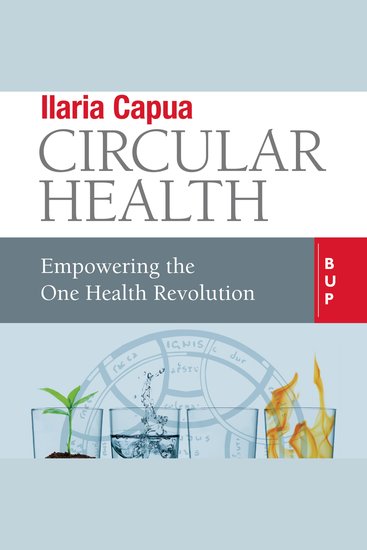
    The COVID-19 pandemic has demonstrated our fragility as a species. Humanity was attacked by a previously unknown virus that spread very rapidly, thanks to a speed of population mobility never before seen in human history. It succeeded in creating the complete upset of the global socio-economic system. Such an event gives us an important stimulus to re-evaluate health in the context of a circular system that encompasses humans and the environment in which we live. The key challenge we face is the discovery of novel paths to crisis resolution. Can we abandon the often cherished, but now rather obsolete, tendency to specialize in a restricted subject area? Can we re-discover the ability to become permeable to ideas that reach us from other disciplines and embrace a thinking-out-of-the-box approach? This book encourages the reader to consider this challenge via the telling of stories, both great and small. Stories that, although sometimes overlooked, have defi ned the course of our history and thus open the door to a new pathway of progress. In some ways, COVID-19 may have shown the direction nature expects us to take. Ilaria Capua suggests to us that, today more than ever, we are the responsible actors in the circle of life, guardians of our planet and defenders of its health. As one entity of circular nature.
    Voir livre
  • Not What the Doctor Ordered - Liberating Caregivers and Empowering Consumers for Successful Health Reform - cover

    Not What the Doctor Ordered -...

    Jeffrey C. Bauer

    • 0
    • 0
    • 0
    This twenty-fifth anniversary edition completely updates the powerful insights and policy recommendations of Not What the Doctor Ordered, first published in 1993 by renowned healthcare futurist and medical economist the author. It presents specific solutions to serious problems of cost, quality, access, and outcomes by allowing all Americans to purchase services directly from caregivers who provide an expanding array of medical services at least as well as physicians—at lower cost. 
     
    Focusing on new realities of the twenty-first century, the author shows not only why giving consumers the right to choose advanced practitioners is the top priority for improving our overpriced, underperforming medical care delivery system, but also how to make the necessary changes. As he clearly and concisely explains from medical and economic perspectives, the key is eliminating physicians' monopoly powers over advanced practice nurses, clinical pharmacists, physical therapists, clinical psychologists, and other advanced practice (AP) health professionals who now rival physicians in scientific knowledge and caregiving skills within well-defined scopes of practice regulated by state governments.
    Voir livre
  • Think Less Sleep More - From Panic & Perfectionism to Stress-Free Sleep - cover

    Think Less Sleep More - From...

    Stephanie Romiszewski

    • 0
    • 0
    • 0
    A smart and sometimes counterintuitive (who cares when you go to bed?) guide that will solve readers’ sleep anxiety once and for all!  If there’s anything worse that not getting sleep, it’s lying awake with a scare-face staring at the ceiling worrying about it. Here’s Romiszewski’s—a sleep physiologist and founder of the UK’s Sleepyhead Clinics  —  promise: “This book is your guide to liberating yourself from the endless cycle of sleep anxiety and obsession. By the end, you’ll have regained control – not through perfection, but by letting go of the need to constantly manage your sleep. Sleep will start working for you, not as something to fear or fix, but as your natural ally. And best of all, it will no longer dominate your thoughts.”THINK LESS, SLEEP MORE is a sensible take on sleep with some counterintuitive twists to current accepted dogma, such as that we all need more sleep and that segmented sleep  —  aka waking up in the middle of the night  —  is a killer. It’s a health and wellness sigh-of-relief book: there are some readjustments to make, both mental and physical, but a key takeaway is that whatever you’re doing now is probably better than you think.Among other counterintuitive insights, Romiszewski reveals:--The importance of a consistent wake-time rather than a rigid bedtime--How to trust your body’s natural sleep drive and rhythms--That ‘bad’ nights neither ruin the next day, nor, necessarily, your health, and that variability is normal--That sleep isn’t fragile—it’s adaptable, resilient, and smarter than any hack you could throw at it--The myth of 8 hours--The power of lightFor an audience who found Matthew Walker’s “Why We Sleep” a bit daunting, Romiszewski’s is the sensible, seasoned, calming voice you want to think of a 3AM.
    Voir livre
  • The Wolf - cover

    The Wolf

    Mike Blake

    • 0
    • 0
    • 0
    The Wolf poem :: was inspired by William Blake's - 'The Tyger'. 
    It has the same regular form & meter as The Tyger. 
    With tempo and stanza (of the quatrain type), and is about one single animal in the natural world. 
    Where it differs from William Blake's poem is that the Poem Tyger has more religious connotations, not surprising for the times in which it was written. 
    Whereas 'The Wolf' written by myself, has more of Natures influences. 
    It's also about the possible demise totally of the Wolf through man, and a warning of this. 
    As we take care of The Wolf and other similiar 'top predator' animals, 
    so we automatically take care of the natural habitat that they live in - something that is increasing in peoples consciousness today. 
    To see more Poems by the same Author please follow the link below: 
    https://www.amazon.com/-/e/B00SG40RM8 
    **If you enjoy reading this Poem, can you Please leave your feedback, many thanks. 
    To contact the Author: Please add me Mike Miko on Facebook & then message me, thanks. https://www.facebook.com/mike.cco1 I will then contact the Author your behalf. or on 
    Twitter: miko_1_dollar ~ Tumblr : ccobes ~ 
    Instagram: Wild.Poetry.Webs / wild_poetrys 
    TikTok: @Wild_Poetrys 
    FB: https://www.facebook.com/New.Poets.Corner/
    Voir livre
  • Mastering Computer Vision with PyTorch 20 - Discover Design and Build Cutting-Edge High Performance Computer Vision Solutions with PyTorch 20 and Deep Learning Techniques - cover

    Mastering Computer Vision with...

    M. Arshad Siddiqui

    • 0
    • 0
    • 0
    Unleashing the Power of Computer Vision with PyTorch 2.0.
    Book DescriptionIn an era where Computer Vision has rapidly transformed industries like healthcare and autonomous systems, PyTorch 2.0 has become the leading framework for high-performance AI solutions. [Mastering Computer Vision with PyTorch 2.0] bridges the gap between theory and application, guiding readers through PyTorch essentials while equipping them to solve real-world challenges.
    Starting with PyTorch’s evolution and unique features, the book introduces foundational concepts like tensors, computational graphs, and neural networks. It progresses to advanced topics such as Convolutional Neural Networks (CNNs), transfer learning, and data augmentation. Hands-on chapters focus on building models, optimizing performance, and visualizing architectures. Specialized areas include efficient training with PyTorch Lightning, deploying models on edge devices, and making models production-ready.
    Explore cutting-edge applications, from object detection models like YOLO and Faster R-CNN to image classification architectures like ResNet and Inception. By the end, readers will be confident in implementing scalable AI solutions, staying ahead in this rapidly evolving field. Whether you're a student, AI enthusiast, or professional, this book empowers you to harness the power of PyTorch 2.0 for Computer Vision.
    Table of Contents1. Diving into PyTorch 2.02. PyTorch Basics3. Transitioning from PyTorch 1.x to PyTorch 2.04. Venturing into Artificial Neural Networks5. Diving Deep into Convolutional Neural Networks (CNNs)6. Data Augmentation and Preprocessing for Vision Tasks7. Exploring Transfer Learning with PyTorch8. Advanced Image Classification Models9. Object Detection Models10. Tips and Tricks to Improve Model Performance11. Efficient Training with PyTorch Lightning12. Model Deployment and Production-Ready Considerations       Index
    Voir livre