¡Acompáñanos a viajar por el mundo de los libros!
Añadir este libro a la estantería
Grey
Escribe un nuevo comentario Default profile 50px
Grey
Suscríbete para leer el libro completo o lee las primeras páginas gratis.
All characters reduced
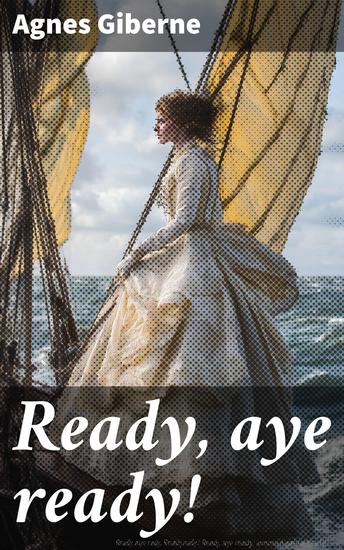
Ready aye ready! - cover

Ready aye ready!

Agnes Giberne

Editorial: Good Press

  • 0
  • 0
  • 0

Sinopsis

In "Ready, aye ready!", Agnes Giberne crafts a compelling narrative that intertwines the themes of adventure and moral fortitude, set against the backdrop of the Victorian era's fascination with exploration and the sea. Utilizing a vivid and engaging prose style, Giberne imbues her characters with vitality, navigating complex relationships and societal expectations while plunging them into perilous maritime circumstances. The novel not only entertains but also serves as a reflection on duty, courage, and the human spirit's resilience in the face of adversity, embodying the hallmark characteristics of late 19th-century literature. Agnes Giberne was an innovative writer who emerged amidst the cultural shifts of her time, strongly influenced by her childhood experiences and a penchant for scientific inquiry. Her deep knowledge of astronomy and natural history, coupled with a keen understanding of her protagonists' internal struggles, propelled her to write stories that resonate with both adventure and philosophical introspection. Giberne's life experiences, including her travels and her roles as a teacher and writer, inform the rich tapestry of her storytelling and her enduring belief in the potential for personal bravery and moral integrity. "Ready, aye ready!" is a must-read for enthusiasts of adventure fiction, as well as those who appreciate character-driven narratives that evoke the complexities of human emotions. Giberne's eloquent prose and relatable themes create an enduring allure for modern readers seeking inspiration in tales of courage and friendship amidst the vastness of the ocean.
Disponible desde: 02/03/2025.
Longitud de impresión: 120 páginas.


Otros libros que te pueden interesar

  • Before the Law - From their pens to your ears genius in every story - cover

    Before the Law - From their pens...

    Franz Kafka

    • 0
    • 0
    • 0
    Franz Kafka was born on 3rd July 1883 in Prague, then in Bohemia, the eldest of 6, into a middle-class Jewish family. 
    Life for the young Kafka and his passion for literature was often made an ordeal by his over-bearing and domineering entrepreneur of a father.   
    In 1889 Kafka was sent to the Deutsche Knabenschule, an elementary school in Prague. His father would only allow him to be educated in German-speaking schools and even went so far as to limit visits to the synagogue to four a year. 
    In 1901 he graduated from the classics-oriented Altstädter Gymnasium. Kafka did well there and across a large range of subjects.  He now enrolled at the Charles Ferdinand University, to study chemistry, but quickly switched to law for which he obtained his degree in June 1906 and then performed the mandatory year of unpaid service as clerk at the civil and criminal courts. 
    A job at an Italian insurance company left him little time to write and after a year he took another job with the Worker's Accident Insurance Institute for the Kingdom of Bohemia where he stayed until ill health led to his resignation in 1922. 
    Although he saw work as a means to pay the bills and to allow him time to write, he received several promotions and was noted as a good employee. 
    By 1917 Kafka was suffering from tuberculosis, which required frequent periods of convalescence. Interspersed with this, were several intense affairs before he settled in Berlin with Dora Diamant, a 25-year-old kindergarten teacher who herself having left the ghetto now influenced Kafka's interest in the book of Jewish law, the Talmud. 
     
     
    Kafka’s on-going health was littered with problems. Apart from TB there were several other ailments, including migraines, insomnia, boils, depression, all usually brought on by excessive stresses and strains. He attempted to counteract all of this by naturopathic treatments, a vegetarian diet and consuming large quantities of unpasteurized milk. 
    His tuberculosis still worsened. He returned to Prague, where he died on 3rd June 1924. He was 40.
    Ver libro
  • Christmas Eve - cover

    Christmas Eve

    Nikolai Gogol

    • 0
    • 0
    • 0
    "Christmas Eve"  is the first story in the second volume of the collection Evenings on a Farm Near Dikanka by Nikolai Gogol.
    The story opens with a description of the winter scenery of Dikanka, Ukraine, a witch flying across the night sky and the devil stealing the moon and hiding it in his pocket, first playing with it in the sky, which no one in the village notices. Since it is the night before Christmas, the devil is free to roam around and torment people as he pleases, so he decides to find a way to get back at the village blacksmith, Vakula, because he paints religious art in the church...
    The story is set in on Christmas Eve in the small Ukranian town of Dikanka. Since it's the night before Christmas, the devil is allowed to roam free in town. He steals the moon, which at first no one notices. Then he sets out to ruin the love interest of Vakula, the town blacksmith, who is hopelessly in love with the beautiful Oksana. The devil has a vendetta against Vakula because he also moonlights as an icon painter who had created mocking pictures of the devil. The devil finds an ally in Vakula's mother (a witch) who wants to marry Oksana's father. She fears that if her son marries Oksana, her love chances will be ruined.
    Ver libro
  • Uncle's Dream - cover

    Uncle's Dream

    Fyodor Dostoyevsky

    • 0
    • 0
    • 0
    "Uncle's Dream" explores themes of ambition, deception, and the consequences of manipulating others for personal gain. Dostoyevsky skilfully weaves a tale that showcases the complexities of human nature and the unpredictability of life's outcomes. Through Mariya and Zinaida's experiences, the novella delves into the desires, dreams, and sacrifices people make in their pursuit of a better future. Read in English, unabridged.
    Ver libro
  • The Mabinogion - cover

    The Mabinogion

    Anonymous

    • 0
    • 0
    • 0
    Sample a moment of magic realism from the Red Book of Hergest:On one side of the river he saw a flock of white sheep, and on the other a flock of black sheep. And whenever one of the white sheep bleated, one of the black sheep would cross over, and become white; and when one of the black sheep bleated, one of the white sheep would cross over, and become black.Before passing on to the Mabinogion proper, Lady Charlotte Guest devotes Volume I of her compilation of medieval Welsh tales to three brief romances of Arthur’s Court. The centrepiece is the story of Peredur, the Dumb Youth – known elsewhere as Perceval, Parzifal, the Holy Fool, et al.This is the violent world of satin-clad knights and their clashing encounters, peremptory slayings of giants and cave-dwelling monsters – a world where love is as sudden and final as death. (Introduction by Martin Geeson)
    Ver libro
  • Supernatural Horror in Literature - cover

    Supernatural Horror in Literature

    H. P. Lovecraft

    • 0
    • 0
    • 0
    "The oldest and strongest emotion of mankind is fear, and the oldest and strongest kind of fear is fear of the unknown."
    
    Delve into the mind of the master of cosmic horror as he traces the dark lineage of the supernatural tale. In this comprehensive essay, H.P. Lovecraft explores the evolution of fear in fiction—from the primal folklore of the ancients to the sophisticated "Weird Fiction" of the early 20th century. Lovecraft doesn't just list books; he defines the very "atmosphere" required to create true horror, championing works that evoke a "dread of outer unknown forces." For writers, scholars, and fans of the macabre, this is the essential roadmap to the shadows.
    
    The Four Pillars of Terror: Lovecraft identifies the authors he considers the "Modern Masters," providing deep analysis of their techniques:
    
    Arthur Machen: The master of hidden, ancient evils lurking beneath modern England.
    
    Algernon Blackwood: The genius of "Nature Horror" and the expanded human consciousness.
    
    Lord Dunsany: The creator of crystalline, alien dreamworlds.
    
    M.R. James: The architect of the subtle, scholarly ghost story.
    
    A Critical Masterclass: Lovecraft's essay is famous for its glowing tribute to Edgar Allan Poe, whom he credits with reinventing horror as a psychological reality. He also rediscovers "lost" classics like The House on the Borderland and The Yellow Sign, cementing the "Cthulhu Mythos" precursor works into the literary canon.
    
    
    Unlock the secrets of the dark. Purchase "Supernatural Horror in Literature" today and see through the eyes of Lovecraft.
    Ver libro
  • Cranford - Discover a masterpiece of Classic Literature Step into a quaint English village ruled by fiercely independent women navigating scandal society and poverty with elegant economy and razor-sharp wit - cover

    Cranford - Discover a...

    Elizabeth Gaskell

    • 0
    • 0
    • 0
    In a town where gentlemen are mysteriously absent and appearances are everything, the ladies rule supreme. 
    Welcome to the charming, gossip-fueled English village of Cranford, where the community is proudly dominated by its "Amazons"—unmarried, fiercely independent women who strictly adhere to complex social codes. Miss Deborah Jenkyns, Miss Matty, and their circle practice "elegant economy" to hide their dwindling fortunes, trading wealth for relentless gentility. But when the gruff, unapologetically poor Captain Brown moves to town, the delicate ecosystem is thrown into delightful chaos. 
    From tragic secrets and devastating accidents to lost loves and the scandalous arrival of an eccentric brother, the women of Cranford must rely on their enduring friendships to survive an ever-changing modern world.Why You Will Love This: 
    Fans of Jane Austen and cozy Classic Literature will be utterly charmed by this character-driven masterpiece. Weaving themes of female solidarity, class anxiety, and quaint village life, this timeless audiobook brilliantly balances satirical wit with poignant tenderness. It is a stunning portrait of Victorian resilience that feels incredibly modern in its humor.About the Author: 
    Elizabeth Gaskell (1810–1865) was a luminary of Victorian literature, celebrated for her vivid, empathetic portrayals of the working class and domestic provincial life. Mentored by Charles Dickens, her keen sociological observations and heartfelt narratives continue to captivate generations.
    Ver libro