Unisciti a noi in un viaggio nel mondo dei libri!
Aggiungi questo libro allo scaffale
Grey
Scrivi un nuovo commento Default profile 50px
Grey
Iscriviti per leggere l'intero libro o leggi le prime pagine gratuitamente!
All characters reduced
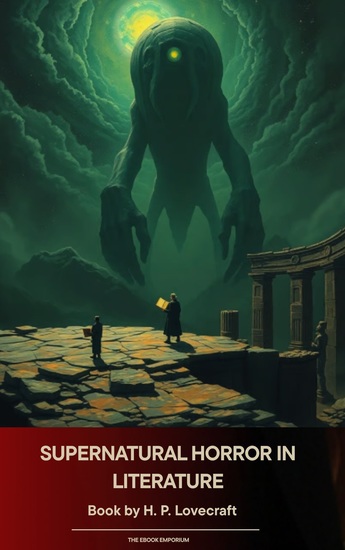
Supernatural Horror in Literature - cover

Supernatural Horror in Literature

H. P. Lovecraft

Casa editrice: The Ebook Emporium

  • 0
  • 0
  • 0

Sinossi

"The oldest and strongest emotion of mankind is fear, and the oldest and strongest kind of fear is fear of the unknown."

Delve into the mind of the master of cosmic horror as he traces the dark lineage of the supernatural tale. In this comprehensive essay, H.P. Lovecraft explores the evolution of fear in fiction—from the primal folklore of the ancients to the sophisticated "Weird Fiction" of the early 20th century. Lovecraft doesn't just list books; he defines the very "atmosphere" required to create true horror, championing works that evoke a "dread of outer unknown forces." For writers, scholars, and fans of the macabre, this is the essential roadmap to the shadows.

The Four Pillars of Terror: Lovecraft identifies the authors he considers the "Modern Masters," providing deep analysis of their techniques:

Arthur Machen: The master of hidden, ancient evils lurking beneath modern England.

Algernon Blackwood: The genius of "Nature Horror" and the expanded human consciousness.

Lord Dunsany: The creator of crystalline, alien dreamworlds.

M.R. James: The architect of the subtle, scholarly ghost story.

A Critical Masterclass: Lovecraft's essay is famous for its glowing tribute to Edgar Allan Poe, whom he credits with reinventing horror as a psychological reality. He also rediscovers "lost" classics like The House on the Borderland and The Yellow Sign, cementing the "Cthulhu Mythos" precursor works into the literary canon.


Unlock the secrets of the dark. Purchase "Supernatural Horror in Literature" today and see through the eyes of Lovecraft.
Disponibile da: 09/01/2026.
Lunghezza di stampa: 105 pagine.

Altri libri che potrebbero interessarti

  • A Nervous Breakdown - cover

    A Nervous Breakdown

    Anton Chekhov

    • 0
    • 0
    • 0
    In A Nervous Breakdown, Vasilyev feeling distressed after his visit to few brothels for the first time. Guilt, disgust and shame and of that little voices debating inside his mind that lead him to a symptom of a nervous breakdown. A quirky storytelling, quite distressing but entertaining.
    Mostra libro
  • Great State The (Unabridged) - cover

    Great State The (Unabridged)

    H. G. Wells

    • 0
    • 0
    • 0
    Herbert George Wells (21 September 1866 - 13 August 1946) was an English writer. Prolific in many genres, he wrote dozens of novels, short stories, and works of social commentary, history, satire, biography and autobiography. His work also included two books on recreational war games. Wells is now best remembered for his science fiction novels and is often called the "father of science fiction", along with Jules Verne and the publisher Hugo Gernsback.
    THE GREAT STATE: For many years now I have taken a part in the discussion of Socialism. During that time Socialism has become a more and more ambiguous term.
    Mostra libro
  • The Legend of Sleepy Hollow - cover

    The Legend of Sleepy Hollow

    Washington Irving

    • 0
    • 0
    • 0
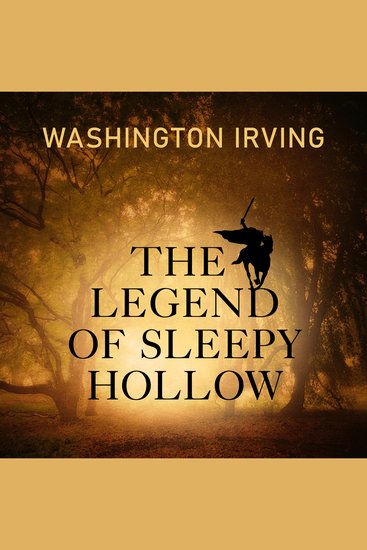
    In a quiet valley where time moves a little slower and shadows fall a little longer, a tale has been whispered for generations. Washington Irving's The Legend of Sleepy Hollow captures the strange charm of a world perched between dream and folklore—where superstition lingers, and the night rides on a restless horse.
    This classic story blends gentle satire, eerie beauty, and a touch of the uncanny. It doesn't just haunt—it hums like a memory just out of reach.
    Mostra libro
  • After London - cover

    After London

    Richard Jefferies

    • 0
    • 0
    • 0
    Jefferies' novel can be seen as an early example of "post-apocalyptic fiction." After some sudden and unspecified catastrophe has depopulated England, the countryside reverts to nature, and the few survivors to a quasi-medieval way of life.The first part of the book, "The Relapse into Barbarism", is the account by some later historian of the fall of civilisation and its consequences, with a loving description of nature reclaiming England. The second part, "Wild England", is an adventure set many years later in the wild landscape and society.The book is not without its flaws (notably the abrupt and unsatisfying ending) but is redeemed by the quality of the writing, particularly the unnervingly prophetic descriptions of the post-apocalyptic city and countryside
    Mostra libro
  • Invisible Cities - cover

    Invisible Cities

    Anonimo

    • 0
    • 0
    • 0
    “Cities, like dreams, are made of desires and fears, even if the thread of their discourse is secret, their rules are absurd, their perspectives deceitful, and everything conceals something else.” — from Invisible Cities In a garden sit the aged Kublai Khan and the young Marco Polo — Mongol emperor and Venetian traveler. Kublai Khan has sensed the end of his empire coming soon. Marco Polo diverts his host with stories of the cities he has seen in his travels around the empire: cities and memory, cities and desire, cities and designs, cities and the dead, cities and the sky, trading cities, hidden cities. As Marco Polo unspools his tales, the emperor detects these fantastic places are more than they appear. “Invisible Cities changed the way we read and what is possible in the balance between poetry and prose . . . The book I would choose as pillow and plate, alone on a desert island.” — Jeanette Winterson
    Mostra libro
  • Troilus and Cressida - cover

    Troilus and Cressida

    William Shakespeare

    • 0
    • 0
    • 0
    Troilus and Cressida is a tragedy by William Shakespeare, believed to have been written in 1602. It was described by Frederick S. Boas as one of Shakespeare's problem plays. The play ends on a very bleak note with the death of the noble Trojan Hector and destruction of the love between Troilus and Cressida. The work has in recent years "stimulated exceptionally lively critical debate".
    Throughout the play, the tone lurches wildly between bawdy comedy and tragic gloom, and readers and theatre-goers have frequently found it difficult to understand how one is meant to respond to the characters. Several characteristic elements of the play (the most notable being its constant questioning of intrinsic values such as hierarchy, honour and love) have often been viewed as distinctly "modern". 
    Among the most significant works William Shakespeare: Hamlet, Othello, King Lear, Macbeth, Orpheus, Romeo and Juliet, Julius Caesar, Troilus and Cressida, The Tempest, Venus and Adonis, Antony and Cleopatra, Measure for Measure, The Winter's Tale and many more.
    Mostra libro