Join us on a literary world trip!
Add this book to bookshelf
Grey
Write a new comment Default profile 50px
Grey
Subscribe to read the full book or read the first pages for free!
All characters reduced
The Mysterious Affair at Styles - cover

The Mysterious Affair at Styles

Agatha Christie

Publisher: E-Kitap Projesi & Cheapest Books

  • 0
  • 1
  • 0

Summary

The Mysterious Affair at Styles is a detective novel by British writer Agatha Christie. It was written in the middle of the First World War, in 1916, and in the United States in 1920 and in the United Kingdom in 1921. Styles was Christie's first published novel. It introduced Hercule Poirot, Inspector (later, Chief Inspector) Japp, and Arthur Hastings. Poirot, a Belgian refugee of the Great War, is settling in England near the home of Emily Inglethorp, who helped him to his new life. His friend Hastings arrives as a guest at her home. When the woman is killed, Poirot uses his detective skills to solve the mystery.

The book includes maps of the house, the murder scene, and a drawing of a fragment of a will. The true first publication of the novel was as a weekly serial in The Times, including the maps of the house and other illustrations included in the book. This novel was one of the first ten books published by Penguin Books when it began in 1935. This first mystery novel by Agatha Christie was well received by reviewers. An analysis in 1990 was positive about the plot, considered the novel one of the few by Christie that is well-anchored in time and place, a story that knows it describes the end of an era, and mentions that the plot is clever. Christie had not mastered cleverness in her first novel, as "too many clues tend to cancel each other out"; this was judged a difficulty "which Conan Doyle never satisfactorily overcame, but which Christie would."

One morning at Styles Court, an Essex country manor, its household wake to the discovery that the owner, elderly Emily Inglethorp, has died. She had been poisoned with strychnine. Arthur Hastings, a soldier from the Western Front staying there as a guest on his sick leave, ventures out to the nearby village of Styles St. Mary, to enlist help from his friend staying there - Hercule Poirot. Poirot learns that Emily was a woman of wealth - upon the death of her previous husband, Mr. Cavendish, she inherited from him both the manor and a large portion of his income. Her household includes: her husband Alfred Inglethorp, a younger man she recently married; her stepsons (from her first husband's previous marriage) John and Lawrence Cavendish; John's wife Mary Cavendish; Cynthia Murdoch, the daughter of a deceased friend of the family; and Evelyn Howard, Emily's companion.

Poirot learns that per Emily's will, John is the vested remainderman of the manor - he inherits the property from her, per his father's will. However, the money she inherited would be distributed according to her own will, which she changed at least once per year; her most recent will favours Alfred, who will inherit her fortune. On the day of the murder, Emily had been arguing with someone, suspected to be either Alfred or John. She had been quite distressed after this, and apparently made a new will - no one can find any evidence that it exists. Alfred left the manor early that evening, and stayed overnight in the village. Meanwhile, Emily ate little at dinner and retired early to her room, taking her document case with her; when her body was found, the case had been forced open and a document removed. Nobody can explain how or when the poison was administered to her.
Available since: 12/17/2023.
Print length: 300 pages.
Other books that might interest you

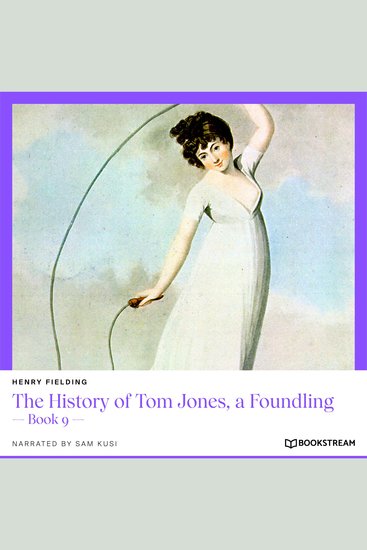
  • History of Tom Jones a Foundling The - Book 9 (Unabridged) - cover

    History of Tom Jones a Foundling...

    Henry Fielding

    • 0
    • 0
    • 0
    A foundling of mysterious parentage brought up by Mr. Allworthy on his country estate, Tom Jones is deeply in love with the seemingly unattainable Sophia Western, the beautiful daughter of the neighboring squire though he sometimes succumbs to the charms of the local girls. When Tom is banished to make his own fortune and Sophia follows him to London to escape an arranged marriage, the adventure begins. A vivid Hogarthian panorama of eighteenth-century life, spiced with danger and intrigue, bawdy exuberance and good-natured authorial interjections, Tom Jones is one of the greatest and most ambitious comic novels in English literature.
    BOOK 9: Among other good uses for which I have thought proper to institute these several introductory chapters, I have considered them as a kind of mark or stamp, which may hereafter enable a very indifferent reader to distinguish what is true and genuine in this historic kind of writing, from what is false and counterfeit. Indeed, it seems likely that some such mark may shortly become necessary, since the favourable reception which two or three authors have lately procured for their works of this nature from the public, will probably serve as an encouragement to many others to undertake the like.
    Show book
  • Rudin - cover

    Rudin

    Ivan Turgenev

    • 0
    • 0
    • 0
    "Rudin" by Ivan Turgenev is a captivating and introspective novel that explores the complexities of human nature, love, and intellectual ideals in 19th-century Russia. Through the compelling character of Dmitry Rudin, Turgenev presents a profound examination of the clash between lofty ideals and the realities of life. With its lyrical prose and profound exploration of the human condition, "Rudin" serves as a timeless reflection on the complexities of human nature and the eternal quest for personal fulfillment. Turgenev's masterful storytelling and astute social commentary make this novel a compelling and thought-provoking work that continues to resonate with readers today.
    Show book
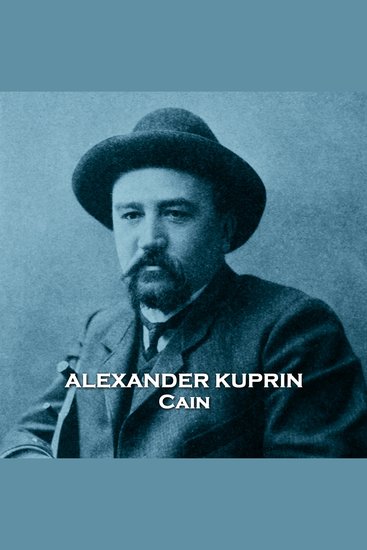
  • Cain - From their pens to your ears genius in every story - cover

    Cain - From their pens to your...

    Alexander Kuprin

    • 0
    • 0
    • 0
    Alexander Kuprin was born in Narovchat, Penza in Russia on 7th September 1870. 
    At 3 his Father died and he and mother moved to Moscow. By 10 he was enrolled at the Second Moscow Military High School and there his interest in literature began. The Alexander Military Academy followed and two years later he was a sub-lieutenant and posted to an Infantry Regiment for a further four years. 
    Despite his duties he was a now a keen writer and published his first short story at this time. His military duties also garnered him experiences for his breakthrough work ‘The Duel’.  Leaving the military he left for Kiev to work for local newspapers.  He continued to publish both stories and novels and by 1901 he was in St Petersburg becoming part of a group that included Chekhov, Ivan Bunin, Maxim Gorky and Leonid Andreyev.  
    In the years that followed further controversial works and acclaim followed.  His comments on the regime meant he was also put under secret police surveillance.   
    As World War I erupted, Kuprin opened a military hospital but was then given command of an infantry company in Finland. He was soon discharged on grounds of ill health.  
    The October Revolution saw him praise Lenin, but he warned that the Bolsheviks threatened Russian culture and might cause further widespread suffering to the peasants.  As Civil War raged he took his family to Helsinki and then on to Paris. 
    Exile saw his talents decline further and his succumbing to alcoholism. He became lonely and withdrawn. The family's poverty increased his malaise.   
    In May 1937, the Kuprin’s returned to Moscow.  He now saw his work published but wrote almost nothing new.  In 1938 his health rapidly deteriorated.  Already suffering from a kidney problems and sclerosis, he had now developed cancer of the oesophagus.  
    Alexander Kuprin died on 25th August 1938.
    Show book
  • The Sea Wolf - cover

    The Sea Wolf

    Jack London

    • 0
    • 0
    • 0
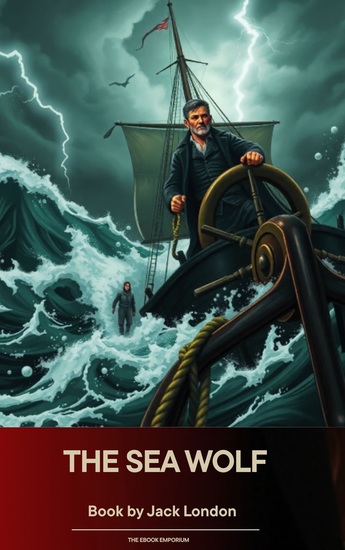
    "He was a magnificent pyre of flesh... but there was no soul in the light of his eyes."
    
    Humphrey Van Weyden, a soft, bookish literary critic, is a passenger on a ferry that sinks in the fog of San Francisco Bay. He is rescued by the Ghost, a seal-hunting schooner bound for Japan. But his savior is no hero. Wolf Larsen, the captain of the Ghost, is a man of immense physical strength and terrifying intelligence who views human life as "cheap" and "a ferment." Forced into grueling labor, Humphrey must adapt to Larsen's world of violence or perish. The novel becomes a deadly psychological game as the "Sissy" Van Weyden attempts to maintain his humanity while being molded by the "Sea-Wolf."
    
    The Superhuman vs. The Scholar: Wolf Larsen is one of literature's most formidable antagonists. A self-taught philosopher who reads Spencer and Nietzsche, he believes only in the reality of the flesh. The arrival of the captive poetess Maud Brewster shifts the stakes, turning the Ghost into a floating laboratory where the three characters clash over the existence of the soul and the meaning of love.
    
    A Struggle for Dominance: London's vivid prose captures the visceral reality of life at sea—the gutting of seals, the roar of the storms, and the constant threat of mutiny. As Wolf Larsen's body begins to fail him due to mysterious headaches, the power dynamic shifts, leading to a climactic struggle for survival on a deserted island.
    
    Face the wolf of the sea. Purchase "The Sea-Wolf" today and test your own strength of will.
    Show book
  • The Last Man - cover

    The Last Man

    Mary Shelley

    • 0
    • 0
    • 0
    "The Last Man" is a novel written by Mary Shelley, the author best known for "Frankenstein." Published in 1826, "The Last Man" is a work of science fiction and is considered one of the earliest examples of post-apocalyptic literature. The novel is set in the late 21st century and narrated by a character named Lionel Verney. It tells the story of a devastating global pandemic that wipes out most of the world's population. Lionel, seemingly the last surviving human, recounts the events leading up to the downfall of civilization and his experiences as the titular last man.
    Show book
  • The Wonderful Wizard of Oz - A soothing reading for relaxation and sleep - cover

    The Wonderful Wizard of Oz - A...

    L. Frank Baum

    • 0
    • 0
    • 0
    Listen to the classic novel, The Wonderful Wizard of Oz, as you drift off to sleep. This book has been edited, narrated, and produced especially to help you fall asleep. 
    Narrated by Elizabeth Grace for Slumber Studios. 
    Do you find yourself struggling to fall asleep? Perhaps you have insomnia or a racing mind after a long day. No matter what is keeping you up at night, soothing audio stories are one of the most effective ways to help you fall asleep and stay asleep. And that's exactly what we do at Slumber Studios. 
    So close your eyes, relax, and let the soothing voice of Elizabeth Grace guide you into the magical and whimsical Land of Oz, as Dorothy and her dog Toto try to find their way back home to Kansas. 
    Allow your mind wander and get lost in the colorful and surreal landscape of this classic story. Join Dorothy's adventures as she is swept away in a cyclone, makes some very interesting friends, overcomes powerful witches, and follows the yellow brick road to meet with the Wizard of Oz, and much more. 
    Our audiobooks are expertly crafted to help you relax and drift off to sleep. Each episode is designed to instill calm, with a slower pace and soothing background music, ensuring that you will be lulled into a peaceful slumber. 
    So if you're looking for a way to unwind after a long day, you've come to the right place. 
    Simply press play, lay down in bed, and let Elizabeth's calming voice transport you into a world of dreams. You'll wake up feeling refreshed and recharged in the morning.
    Show book