Join us on a literary world trip!
Add this book to bookshelf
Grey
Write a new comment Default profile 50px
Grey
Subscribe to read the full book or read the first pages for free!
All characters reduced
The Agamemnon of Aeschylus - Translated into English Rhyming Verse with Explanatory Notes - cover

The Agamemnon of Aeschylus - Translated into English Rhyming Verse with Explanatory Notes

Aeschylus Aeschylus

Translator Gilbert Murray

Publisher: DigiCat

  • 0
  • 0
  • 0

Summary

In 'The Agamemnon,' Aeschylus masterfully weaves a poignant tapestry of fate, revenge, and divine justice that serves as the cornerstone of Greek tragedy. The play is characterized by its rich poetic structure, employing complex language and profound imagery to explore the psychological torment of its characters, particularly Agamemnon's homecoming from the Trojan War and the subsequent tragic events that ensue. Set against the backdrop of a fractured family and a cursed lineage, the narrative unfolds with a blend of dramatic irony and foreboding, encapsulated in themes of power dynamics and the inescapability of fate, reflective of the socio-political tensions of Aeschylus's time. Aeschylus, often hailed as the father of tragedy, emerged in a period when theatrical performance was growing in complexity and social relevance. His experiences as a soldier and his deep engagement with the religious rituals of Athens informed his exploration of moral and ethical dilemmas in 'The Agamemnon.' His work not only innovated dramatic structure but also engaged with the metaphysical questions of justice and divine order—topics that were particularly pertinent in the aftermath of the Persian Wars. 'The Agamemnon' is essential reading for anyone interested in the roots of Western literature and the complexities of human emotion. Its timeless themes resonate with contemporary audiences, inviting reflection on individual agency and societal constraints. This tragedy is not just a play but an exploration of humanity itself, making it an indispensable addition to any literary canon.
Available since: 09/15/2022.
Print length: 54 pages.

Other books that might interest you

  • Timeless Terrors Vol 1 - Volume One Classic Horror Collection Narrated by Horror Author Jonathan Dunne - cover

    Timeless Terrors Vol 1 - Volume...

    Various Authors

    • 0
    • 0
    • 0
    Enter a world where fear is eternal. Timeless Terrors: Volume One gathers ten masterworks of Gothic and classic horror, each a dark journey into the uncanny and the macabre. Witness the nightmarish transformation of The Metamorphosis, the creeping dread of The Yellow Wallpaper, the sinister power of The Monkey’s Paw, and the chilling vengeance of The Cask of Amontillado. These stories, haunting readers for over a century, now come alive through the masterful narration of Amazon bestselling horror author Jonathan Dunne. 
    This omnibus includes: 
    The Metamorphosis, The Outsider, Tell-Tale Sign, The Yellow Wallpaper, The Oval Portrait, The Monkey’s Paw, The Cask of Amontillado, Dracula’s Guest, Dagon, and The Damned Thing. 
    Immerse yourself in tales of terror that defy time—where every shadow hides a secret, every silence whispers a warning, and every page is a journey into the unknown.
    Show book
  • The First Men in the Moon - cover

    The First Men in the Moon

    H. G. Wells

    • 0
    • 0
    • 0
    Published in 1901, The First Men in the Moon is one of the earliest science-fiction novels in the English language. An impecunious businessman, Bedford, retreats to the Kent coast where he meets the archetypal absent-minded scientist, Dr Cavor, who is on the point of producing a gravity-defying material. His experiments prove successful, making possible one of man’s oldest dreams: a journey to the moon. The two men embark on this fantastic voyage – Bedford motivated by the prospect of wealth, and Cavor by the thirst for knowledge. However, when they arrive, they find a world of freezing nights and sweltering days, and signs of a threatening alien presence, from which they may never escape.The novel invites obvious comparisons with its predecessor, Jules Verne’s From the Earth to the Moon, though Wells’s approach markedly differs from that of his French counterpart, with Wells being more concerned by the adventure on the moon, even at the expense of scientific plausibility.
    Show book
  • Tono-Bungay (Unabridged) - cover

    Tono-Bungay (Unabridged)

    H. G. Wells

    • 0
    • 0
    • 0
    Presented as a miraculous cure-all, Tono-Bungay is in fact nothing other than a pleasant-tasting liquid with no positive effects. Nonetheless, when the young George Ponderevo is employed by his uncle Edward to help market this ineffective medicine, he finds his life overwhelmed by its sudden success. Soon the worthless substance is turned into a formidable fortune as society becomes convinced of the merits of Tono-Bungay through a combination of skilled advertising and public credulity.
    -Includes a newly established text, a full biographical essay on Wells, a list of further reading, and detailed notes
    -Edward Mendelson's introduction explores the many ways in which Tono-Bungay satirizes the fictions and delusions that shape modern life
    Show book
  • Notes from the Underground - cover

    Notes from the Underground

    Fyodor Dostoevsky

    • 0
    • 0
    • 0
    Dostoevsky's novella " Notes from the Underground" is part embittered monologue and part brief descriptions of anecdotes from the anonymous writer's life. As the author himself states: 
    "The author of the diary and the diary itself are, of course, imaginary. Nevertheless it is clear that such persons as the writer of these notes not only may, but positively must, exist in our society, when we consider the circumstances in the midst of which our society is formed." 
    The Russia of the mid 19th century was a period in which the society was awash with a myriad of philosophical ideas as it became increasingly influenced by the West. The writer instinctively reacts against Utopian ideals and sees in himself the proof that such a philosophy is doomed.   
    Head Stories Audio presents "Notes from the Underground" by Fyodor Dostoevsky, narrated by Simon Hester. With original music.
    Show book
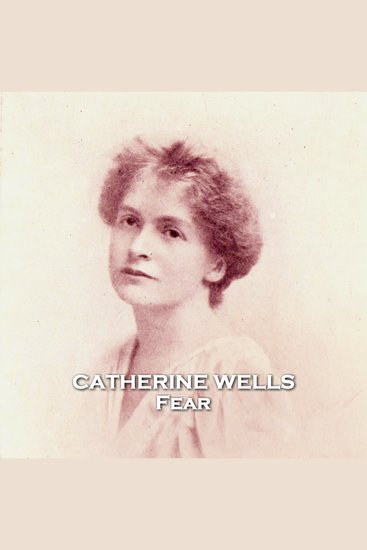
  • Fear - From their pens to your ears genius in every story - cover

    Fear - From their pens to your...

    Catherine Wells

    • 0
    • 0
    • 0
    Little information survives on Catherine’s life. 
    She was born Amy Catherine Robbins in 1872. 
    In about 1892 she was a student in a biology cramming class where the teacher was H G Wells.  Though married he was quickly attracted to his student and within a short time they were living together in Woking, Surrey.  He then divorced his first wife and married Catherine in October 1895 at St Pancras register office. 
    In the early years they were poor to the point that they could not afford to start a family.  When they did they had two children; Philip in 1901 and Frank two years later. 
    For much of her life she seemed to pursue other interests, being a mother, a gardener, running much of her husband’s business affairs and this seemed to leave little time for her own literary pursuits.  She published little during her lifetime apart from a few poems and some short stories.  Indeed her prodigiously talented husband even referred to her as ‘Jane’ and soon all around her did too, her writing life seemingly in another personality far, far away.   
    By the mid 20’s she was ill with cancer and succumbed to its advance in 1927. 
    Wells, although wayward and promiscuous during much of the marriage, now attempted to put his wife’s literary merits into book form and published ‘The Book of Catherine Wells’, a collection of short stories and poems.
    Show book
  • The Picture of Dorian Gray - cover

    The Picture of Dorian Gray

    Oscar Wilde

    • 0
    • 0
    • 0
    The Picture of Dorian Gray is Oscar Wilde's only novel and one of the most provocative masterpieces of classic literature. First published in 1890, this haunting and philosophical work explores the dark consequences of vanity, moral corruption, and the pursuit of pleasure, offering a powerful meditation on beauty, identity, and the soul.
    
    The novel tells the story of Dorian Gray, a young man of extraordinary beauty whose portrait ages and records the marks of his sins while he himself remains outwardly youthful and unblemished. Influenced by the charismatic and cynical Lord Henry Wotton, Dorian embraces a life devoted to sensation and self-indulgence, gradually descending into moral decay. As his actions grow increasingly cruel and destructive, the hidden portrait becomes a terrifying mirror of his inner self.
    
    Through elegant prose and brilliant wit, Wilde challenges Victorian ideas of morality, art, and respectability. The novel raises enduring questions about the nature of good and evil, the cost of aestheticism, and whether a life devoted solely to pleasure can escape accountability. Rich in symbolism and philosophical insight, the story balances Gothic elements with sharp social satire.
    
    The Picture of Dorian Gray shocked contemporary audiences with its bold themes, yet it has endured as a timeless exploration of human desire and ethical responsibility. Its memorable characters, haunting imagery, and epigrammatic dialogue continue to captivate readers and inspire debate.
    
    A cornerstone of English literature, The Picture of Dorian Gray is essential reading for lovers of classic fiction, psychological drama, and philosophical novels. It is a compelling and unsettling tale that reminds readers that beauty without conscience leads inevitably to ruin.
    Show book