Join us on a literary world trip!
Add this book to bookshelf
Grey
Write a new comment Default profile 50px
Grey
Subscribe to read the full book or read the first pages for free!
All characters reduced
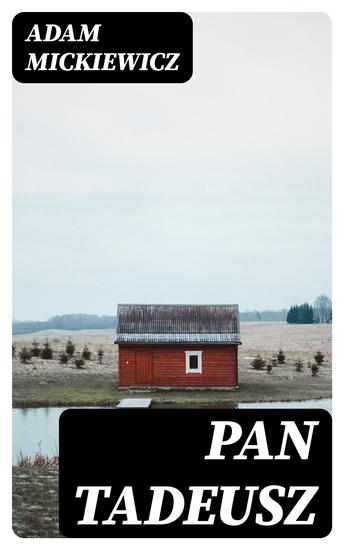
Pan Tadeusz - Or the Last Foray in Lithuania; a Story of Life Among Polish Gentlefolk in the Years 1811 and 1812 - cover

Pan Tadeusz - Or the Last Foray in Lithuania; a Story of Life Among Polish Gentlefolk in the Years 1811 and 1812

Adam Mickiewicz

Translator George Rapall Noyes

Publisher: DigiCat

  • 0
  • 0
  • 0

Summary

"Pan Tadeusz," Adam Mickiewicz's magnum opus, is an epic poem that captures the essence of Polish identity and the political landscape of the early 19th century. Composed in the national language and set in the historical backdrop of the Napoleonic era, the poem intertwines personal lives with grand themes of patriotism and social stratification. Through its richly detailed narrative and vivid imagery, Mickiewicz employs a Romantic literary style that evokes emotion and reflects on the struggle for national independence, employing a sophisticated use of tetrameter and the narrative ballad form. Adam Mickiewicz, a central figure in Polish Romanticism, significantly influenced the literary and cultural consciousness of Poland. His experiences in exile after the November Uprising, along with his interactions with various revolutionary movements, fueled his passion for his homeland and the quest for freedom. These autobiographical elements resonate deeply within "Pan Tadeusz," showcasing his commitment to Polish traditions and ideals while also revealing the universal struggle against oppression. This seminal work is a must-read for scholars and enthusiasts of Polish literature and Romantic poetry alike. "Pan Tadeusz" not only serves as a historical document of Poland's turbulent past but also as a celebration of humanity's enduring aspirations for liberty and camaraderie. Readers will find themselves immersed in a world rich with romance, conflict, and cultural significance.
Available since: 09/16/2022.
Print length: 282 pages.
Other books that might interest you

  • O Beautiful Dust - Walking the Wilderness Toward Common Prayer - cover

    O Beautiful Dust - Walking the...

    RW Walker

    • 0
    • 0
    • 0
    Can we pray together anymore? 
    In this collection of prayers for Lent, RW Walker explores what difference traditional, queer, and Christ-centred common prayer might make in a chaotic and divided world, a wilderness that seems so filled with death and despair. May these prayers fan a flame of hope in our hearts as we walk the wilderness journey of Jesus—together.
    Show book
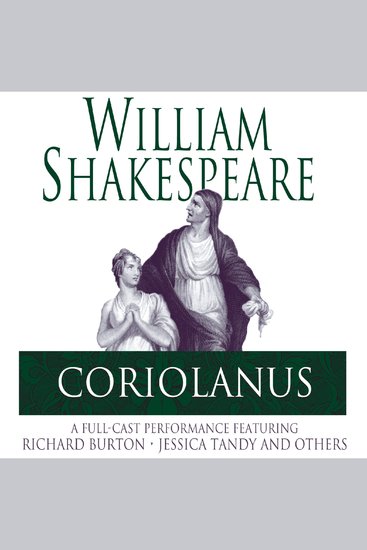
  • Coriolanus - cover

    Coriolanus

    William Shakespeare

    • 0
    • 0
    • 0
    A classic performance of one of the Bard's classics. 
    Raised to the heights of power in recognition of his bravery against the Volscian army, Caius Marcius Coriolanus, finds himself betrayed by Brutus and Sicinius. Exiled from Rome and seeking vengeance, Coriolanus allies himself with the Aufidius, a general in the Volscian army. But, as Coriolanus discovers with tragic consequences, treachery begets treachery.
    Show book
  • Born in the USA - Exploring America in Poems - The New York State Poets - A celebration of American poetry - cover

    Born in the USA - Exploring...

    Emma Lazarus, Alan Seeger,...

    • 0
    • 0
    • 0
    Poetry. A form of words that seems so elegantly simple in one verse and so cleverly complex in another.  Each poet has a particular style, an individual and unique way with words and yet each of us seems to recognise the path and destination of where the verses lead, even if sometimes the full comprehension may be a little beyond us. 
     
    Through the centuries every culture has produced verse to symbolize and to describe everything from everyday life, natural wonders, the human condition and even in its more hubristic moments, the crushing triumph of an enemy. 
     
    In the volumes of this series we take a look through the prism of individual regions of the United States through the centuries and decades. 
     
    The United States may be many things: the world’s policeman, a bully, a shameless purveyor of mass market culture but it also, in its better moments, a standard bearer for truth, transparency, equality and the more positive qualities of democracy. 
     
    Little wonder that’s its poets are rightly acknowledged as wonders of their art.  Leading lights in the fight against slavery and for equality, even if the rest of the Nation is finding it problematic to catch up.   
     
    New York state is more often overshadowed by its energetic and overwhelming five boroughs of its namesake city.  But among its other cities, towns and countryside is a veritable who’s who of classic poets including Walt Whitman, Edith Wharton, Alan Seeger, Herman Melville and Philip Freneau.  Their words and verse record and reveal a wide range of topics and subjects as they focus their poetic talents on the State of their birth.
    Show book
  • Ave Maria - A dramatic monologue poem written from the perspective of Christopher Columbus - cover

    Ave Maria - A dramatic monologue...

    Hart Crane

    • 0
    • 0
    • 0
    Harold Hart Crane was born on the 21st July 1899 in Garrettsville, Ohio. 
    Crane was drawn to literature at an early age, becoming a voracious reader and pursuing self-education rather than attach himself to a more formal college education, although he did attend East High School in 1913.  His developing love of poetry was nurtured with the works of the English Romantics and the French Symbolists, as well as near contemporary American poets. 
    Much of his youth was spent shuttling between Cleveland and New York as his parents’ marriage descended into continuing conflict before they separated with Crane still in his teens.  Shortly after Crane attempted to enlist in the U S Military but was rejected for being a minor. 
    His first published poem also came in 1917 with ‘C33’ and its reference to the cell number that Oscar Wilde was incarcerated in. 
    Crane now centred more of his time in New York and immersed himself in the vibrant artistic scene of Greenwich Village.  Alongside this he dabbled in various jobs to support himself, including copywriting and work in a munitions factory, as he continued to develop his ambitions for a poetic career.   
    His early work was already being noticed for its lush and rich use of words and by the time ‘White Buildings’ was published in 1926 he was being critically acclaimed. 
    Despite this success his personal life was troubled.  It was both nourishing his work and fuelling complex patterns of despair as he sought to establish his identity.  In a time when homosexuality was openly condemned his openly gay attitude sat uneasily as he pursued relationships that were both intense and emotionally fraught. 
    His acclaimed work ‘The Bridge’ in 1930 was both ambitious and a foundation stone for new American poetry.  Against this his battles with depression and alcoholism were being lost. 
    Hart Crane died on the 27th April 1932 by jumping from the deck of a steamship into the Gulf of Mexico upon his return to the United States from Mexico.  He was 32.
    Show book
  • Divine Madness - A Dark Poetry Collection - cover

    Divine Madness - A Dark Poetry...

    Rena Aliston

    • 0
    • 0
    • 0
    I am divine, 
    sitting upon my throne, 
    time’s pedestal, 
    waiting – baiting. 
    My venomous tales 
    tear at life’s seams, 
    desecrating freedom. 
    Your illusions awaken. 
    Your eyes grace my design. 
    I am madness. 
    Journey into the shadows of the soul, where darkness and light intertwine in a dance of raw emotion and profound revelation. Divine Madness: A Dark Poetry Collection beckons you into the depths of the human psyche, inviting you to explore the turbulent landscapes of the mind and embrace the haunting allure of poetic madness.
    Show book
  • Born in England – Exploring English Poetry - Cambridge University - A celebration of English poems - cover

    Born in England – Exploring...

    William Wordsworth, John Dryden,...

    • 0
    • 0
    • 0
    Poetry. A form of words that seems so elegantly simple in one verse and so cleverly complex in another.  Each poet has a particular style, an individual and unique way with words and yet each of us seems to recognise the path and destination of where the verses lead, even if sometimes the full comprehension may be a little beyond us. 
     
    Through the centuries every culture has produced verse to symbolize and to describe everything from everyday life, natural wonders, the human condition and even in its more hubristic moments, the crushing triumph of an enemy. 
     
    In the volumes of this series, we take a look at poetry through the prism of individual regions of England, or sometimes more quaintly known as ‘Albion’, or ‘Blighty’, through the centuries of its gloried history. 
     
    England, despite its perception of reserve and under-statement has, in reality, strode the global stage at various time in many things, both good and bad, from Empire to long distance running. Here our focus in on its literature.  Famed for its fiction and dramas, it is equally admired for its plethora of gifted poets and the dazzling verse which has added so much to its artistic legacy.  These classic poets are wonders of their age and of their art.  Genius is written in their names. 
     
    In this volume we explore the poets of Cambridge.  A small city, with its famed university, with an enviable historical grandeur and roll-call of poets who dazzle, humble and inspire us all in ways that only a poet can.  Our poets include Christopher Marlowe, Lord Byron, Rupert Brooke, Alfred Lord Tennyson, John Donne and the talents of very many others.
    Show book