Join us on a literary world trip!
Add this book to bookshelf
Grey
Write a new comment Default profile 50px
Grey
Subscribe to read the full book or read the first pages for free!
All characters reduced
On the Sublime - cover

On the Sublime

active 1st century Longinus

Translator H. L. Havell

Publisher: DigiCat

  • 0
  • 0
  • 0

Summary

On the Sublime is a foundational text in literary criticism, attributed to the 1st-century philosopher Longinus. This treatise explores the nature of aesthetic expression, articulating what constitutes the sublime in literature and oratory. Longinus dissects various examples from classical texts, employing a rhetorical style rich in examples and persuasive techniques, while advocating for the emotional impact that great works can evoke. His analysis not only emphasizes elevated language and grandeur but also delves into the psychological and philosophical underpinnings of how artists can transcend mere representation to touch on profound truths, situating the work within the broader context of Hellenistic thought on beauty and rhetoric. Longinus's insights are shaped by his experiences as a scholar in a Hellenistic milieu, where the appreciation of art and rhetoric was paramount. As a critic, he navigated the tensions between emotional response and technical excellence, a lens through which he examined both contemporary and historical works. His profound understanding of the capabilities of language reflects a lifetime immersed in the contemplation of art and its effect on human sensibility, providing a framework that resonates throughout subsequent centuries of literary analysis. For those interested in the enduring legacy of literary theory, On the Sublime is an essential read. Longinus not only defines the sublime but also inspires writers and critics alike to strive for greatness in their expressive endeavors. This text serves as both a historical document and an invaluable guide for anyone seeking to comprehend the profound depths of beauty in literature.
Available since: 05/28/2022.
Print length: 74 pages.

Other books that might interest you

  • Buddhist Aids To Daily Conduct - cover

    Buddhist Aids To Daily Conduct

    Edward Greenly

    • 0
    • 0
    • 0
    This is an audiobook of Bodhi Leaves No. 6 by Edward Greenly, 'Buddhist Aids To Daily Conduct' found in the Pariyatti Edition of Collected Bodhi Leaves Vol. I, narrated by Christa Michel. 
     
    Excerpt: 
    ...The first thing to be observed is that Buddhism does not make what we may perhaps call a “frontal attack” upon evil. There is in it no “commandment,” no “thou shalt” or “thou shalt not,” but merely an “it is good to” or “it is not good to:” and that always for the reason “such and such a thing helps or hinders sorrow’s ceasing.” 
     
    Again, the system being not faith but knowledge, evil is, in its eyes, not “wickedness,” but a “not-understanding,” a mental blindness, a failure to see things as they really are. The remedy, then, evidently, must be “right understanding,” sane and unclouded mental vision, a coming to see things as they really are....
    Show book
  • Fingering Her Lesbian Boss - Lesbian 1st Time Sex - cover

    Fingering Her Lesbian Boss -...

    Conner Hayden

    • 0
    • 3
    • 0
    Stacey finds herself becoming attracted to her new employer and fantasizes about having some fun with her. The chance finally arrives when the woman comes home from a night out a little drunk and lets the girl use her as a horny sex toy. 
    This story contains sex scenes and is suitable for adults only. All characters are fictional and are 18 years or older.
    Show book
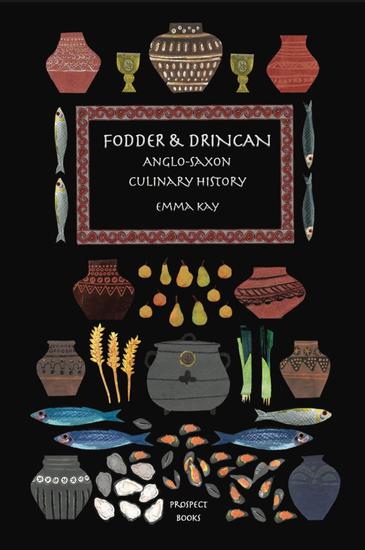
  • Fodder & Drincan - Anglo-Saxon Culinary History - cover

    Fodder & Drincan - Anglo-Saxon...

    Emma Kay

    • 0
    • 0
    • 0
    The book is an entertaining historical account of Anglo-Saxon cooking, covering the centuries from 400 to 1066 CE.The author gives us evidence based information from historical artefacts and plants, showing what our early ancestors had at their disposal.
    Show book
  • The Greatest Civilizations of Ancient Mesopotamia - cover

    The Greatest Civilizations of...

    Editors Charles River

    • 0
    • 0
    • 0
    Long before Alexandria was a city and even before Memphis and Babylon had attained greatness, the ancient Mesopotamian city of Ur stood foremost among ancient Near Eastern cities. Today, the greatness and cultural influence of Ur has been largely forgotten by most people, partially because its monuments have not stood the test of time the way other ancient culture’s monuments have. For instance, the monuments of Egypt were made of stone while those of Ur and most other Mesopotamian cities were made of mud brick and as will be discussed in this report, mud-brick may be an easier material to work with than stone but it also decays much quicker. The same is true to a certain extent for the written documents that were produced at Ur. No site better represents the importance of the Sumerians than the city of Uruk. Between the fourth and the third millennium BCE, Uruk was one of several city-states in the land of Sumer. 
    As Hittite power grew during the Old Kingdom, the royal city of Hattusa became more important and even wealthier. From his citadel overlooking Hattusa, Hattusili I launched the first major Hittite attacks into the Near East, first conquering the cities between Hattusa and the Mediterranean.  
    Although the Biblical accounts of the Assyrians are among the most interesting and are often corroborated with other historical sources, the Assyrians were much more than just the enemies of the Israelites and brutal thugs. Among all the cities that thrived in the ancient Near East, few can match the opulence and ostentatiousness of Nineveh, the capital of the Assyrian Empire for much of the seventh century BCE. During that time it became known for its mighty citadels, grand palaces, beautiful gardens, and even its zoos. In fact, the beauty of Nineveh, especially its gardens, impressed later writers so much that they assigned its gardens as one of the original Seven Wonders of the World.
    Show book
  • A Rare Recording of US Army Corporal Leander Herron Recalling An Indian Attack in 1868 - cover

    A Rare Recording of US Army...

    Leander T. "Lee" Herron

    • 0
    • 0
    • 0
    Leander T. "Lee" Herron (December 29, 1846 - April 5, 1937) was a Corporal in the United States Army who, on September 2, 1868, while detailed as mail courier from Fort Larned to Fort Dodge in Kansas, voluntarily went to the assistance of a party of 4 enlisted men who had been attacked by 50 Indians, and remained with them until the party was relieved. Fifty-one years after his heroic actions, Herron received the Medal of Honor, the nation's highest medal for valor. In this audio recording, Herron recalls the heroic event.
    Show book
  • Operation Mockingbird: The Controversial History of the CIA’s Efforts to Manipulate American Media Outlets - cover

    Operation Mockingbird: The...

    Editors Charles River

    • 0
    • 0
    • 0
    Freedom of the press isn’t just a fundamental right in America but a key part of the democratic process. When the United States secured its independence against Britain in the War of Independence in 1783, there was no certainty about what the new country would look like in terms of national governance. In 1787, delegates from the various states convened in Philadelphia to draft a constitution that would define this. 
    Freedom of the press became one of the core principles of democracy in the United States. People could only place their votes in an informed way if the press was free to provide information about politicians and their actions. Politicians must also know that their actions were accountable through a press that informed voters honestly and accurately. 
    Up to the 1960s, most Americans were confident they had access to a truly free press, but then series of revelations emerged that suggested the Central Intelligence Agency (CIA) had been subverting journalists in the US and elsewhere through the use of bribery, blackmail, and covert operations. By the late 1970s, this alleged CIA plan had a name: Operation Mockingbird.  
    Many people were understandably horrified at the notion that the federal government had attempted to operate counter to the First Amendment through one of its intelligence agencies, and Operation Mockingbird was widely discussed. These debates continue to the present day, including whether there actually was a covert CIA operation named Mockingbird, whether the operation truly sought to subvert the press in the US and elsewhere, and whether the operation really ended by 1976, as the CIA claimed. As such, nearly 50 years later, Operation Mockingbird remains a controversial topic. 
    Show book