Join us on a literary world trip!
Add this book to bookshelf
Grey
Write a new comment Default profile 50px
Grey
Subscribe to read the full book or read the first pages for free!
All characters reduced
Principles of Pharmaceutical Biotechnology - cover

Principles of Pharmaceutical Biotechnology

Abhinav Talwar

Publisher: Educohack Press

  • 0
  • 0
  • 0

Summary

"Principles of Pharmaceutical Biotechnology" delves into the world of biopharmaceuticals, medicinal products derived from living organisms. We provide a comprehensive overview, explaining the science behind biopharmaceuticals and their production. Topics include protein engineering, gene cloning, and purification, with complex concepts clarified through examples.
Readers will learn about the latest advancements in this field, including gene editing and next-generation sequencing, and explore real-world examples of how biopharmaceuticals are transforming healthcare.
We also address the complexities, covering regulations, ethical considerations, and challenges surrounding biopharmaceuticals. Insights into drug approval processes and the ethical aspects of gene editing are provided.
This book is a valuable resource for students and healthcare professionals, offering a strong foundation in the science and exploring the future of this transformative field.
Available since: 02/20/2025.
Print length: 299 pages.
Other books that might interest you

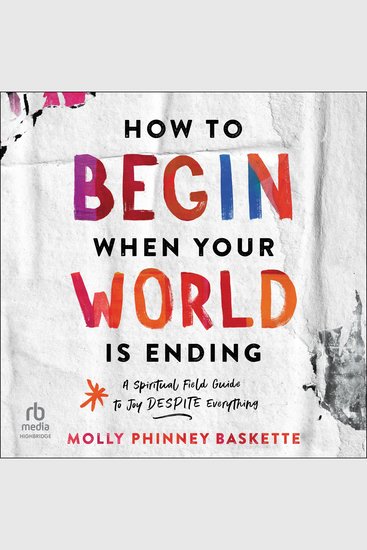
  • How to Begin When Your World Is Ending - A Spiritual Field Guide to Joy Despite Everything - cover

    How to Begin When Your World Is...

    Molly Phinney Baskette

    • 0
    • 0
    • 0
    As a progressive parish minister, Molly Baskette has been a companion during the most vulnerable and unsettled periods of many people's lives. She has also had a front row seat to remarkable human transformation, as many of the ruptures her people lived through turned out to be the way that God got in. But when she was diagnosed with an aggressive cancer at age thirty-nine, with two small children, her theology of and relationship to God was tested more profoundly than ever. 


    Instead of becoming despondent, though, she engaged with her faith more deeply—seizing the opportunity to test the seaworthiness of the faith she had been practicing and preaching. In How to Begin When Your World Is Ending, Baskette shares the questions that confronted her along the way like: Is it true that prayer changes things? Does God care whether we live or die—and is there a damn thing God can do about it anyway? How can vulnerability, counterintuitively, be a strength? And the million-dollar question: is there life after death, and just what might it be like? 


    Weaving together her own story and the stories of those she encountered in her life of faith, Baskette mines joy from all the hardest parts of being human. In doing so she reminds us that whatever you are going through, someone has been there before you, and found meaning in the madness.
    Show book
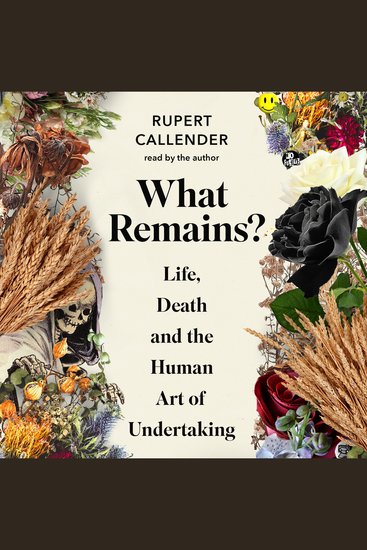
  • What Remains? - Life Death and the Human Art of Undertaking - cover

    What Remains? - Life Death and...

    Rupert Callender

    • 0
    • 0
    • 0
    When he became an undertaker, Rupert Callender undertook to deal with the dead for the sake of the living. This book is his brilliant, unforgettable story—the life and work of the world’s ?rst punk undertaker—but it's also about ordinary, everyday humanity and our capacity to face death with courage and compassion, to say goodbye to the people we love in our own way. In becoming the world’s first “punk undertaker” and establishing the Green Funeral Company in Devon, UK, Ru Callender and his partner Claire challenged the stilted, structured world of the funeral industry—fusing what he had learned from his own deeply personal experiences with death with the surprising and profound answers and raw emotion he discovered in rave culture and ritual magick. From his unresolved grief for his parents and his cultural ancestors to political and religious non-conformists, social outlaws, experimental pioneers, and acid-house culture, Ru Callender has taken to a “DIY” ethos to help people navigate grief. He has carried coffins across windswept beaches, sat in pubs with caskets on beer-stained tables, helped children fire flaming arrows into their father’s funeral pyre, turned occult rituals into performance art, and, with the band members of KLF, is building the People’s Pyramid of bony bricks in Liverpool. What Remains? is a profound, deeply moving, and politically charged book that will change the way listeners think about life, death, and the all-important end-of–life experience.
    Show book
  • Let's Talk About Drugs - cover

    Let's Talk About Drugs

    Trey Ramsey

    • 0
    • 0
    • 0
    Let's Talk About Drugs: The Essential Drug Talk Guide For Parents. Discover How to Have a Meaningful Conversation About Drugs and Addiction with Your KidsAs a parent, you want the best for your kids. That is the reason why when drugs are involved, you should be very careful in discussing this, especially the risks associated with them. No parent, family or child is immune to the effects of a drug. Several kids may end up in trouble even if they are the best and have made some efforts to avoid drugs. In fact, even some who were provided with proper guidance from their parents end up abusing drugs for various reasons.Drugs will always be a sensitive and difficult topic to discuss and you need to make enough preparations before talking about it with your kids. If you’re not sure where or how to start, this audiobook will help you and teach you how to broach this subject with your children.This audiobook will cover the following topics:- Drug Basics- Pick The Right Time and Have The Right Attitude- Be Creative In Explaining The Risks- Explain The Advantages of Being Drug and Alcohol Free- Make Sure You Are A Good Role Model- The Dangers In Not Having the Drug Talk- And many more!Parents are role models for children to the point that they greatly influence child’s behavior and other aspects of their lives. If you want to learn more, scroll up and click “add to cart” now!
    Show book
  • Symbolism of the Tarot - Philosophy of Occultism in Pictures and Numbers - cover

    Symbolism of the Tarot -...

    P. D. Ouspensky

    • 0
    • 0
    • 0
    Brought to you by Altrusian Grace Media. 
    Along with Aleister Crowley, Madame Blavatsky, and George Gurdjieff, P. D. Ouspensky (1878-1947) was one of the most important and influential figures in the occult movement of the 20th century. 
    His book on the tarot has remained practically unknown since its initial publication in Russia in 1913. Yet, it is an important work presenting a general introduction and Ouspensky’s insights on the 22 cards of the Greater Arcana. The cards are presented in pairs, each completing the sense of another. Twenty-two cards from the Waite set, described by Ouspensky. 
    P. D. Ouspensky was a Russian mathematician and esotericist known for his expositions of the early work of the Greek-Armenian teacher of esoteric doctrine George Gurdjieff, whom he met in Moscow in 1915. He was associated with the ideas and practices originating with Gurdjieff from then on. He shared the (Gurdjieff) "system" for 25 years in England and the United States, having separated from Gurdjieff in 1924 personally, for reasons he explains in the last chapter of his book In Search of the Miraculous.  
    All in all, Ouspensky studied the Gurdjieff system directly under Gurdjieff's own supervision for a period of 10 years, from 1915 to 1924. His book In Search of the Miraculous is a recounting of what he learned from Gurdjieff during those years.  
    While lecturing in London in 1924, he announced that he would continue independently the way he had begun in 1921. Some, including his close pupil Rodney Collin, say that he finally gave up the system in 1947, just before his death, but his own recorded words on the subject (A Record of Meetings, published posthumously) do not clearly endorse this judgement, nor does Ouspensky's emphasis on "you must make a new beginning" after confessing "I've left the system".
    Show book
  • Summary & Analysis - The Last House On Needless Street - cover

    Summary & Analysis - The Last...

    Golden Books Publishing

    • 0
    • 0
    • 0
    SUMMARY & ANALYSIS 
      
    THE LAST HOUSE ON NEEDLESS STREET 
    BASED ON THE BOOK BY CATRIONA WARD 
      
    SUMMARY WRITTEN BY: GOLDEN BOOKS PUBLISHING 
      
    CONTENT 
    Introduction to Mileva Marić and Her Academic Aspirations 
    Early Friendships and Intellectual Pursuits 
    The Development of a Romantic Relationship 
    Summer Break and a Difficult Decision 
    Heidelberg and a Return to Zürich 
    Collaboration and Conflict 
    Lake Como and a Turning Point 
    Pregnancy, Separation and Loss 
    Marriage and Scientific Recognition 
    General Analysis 
      
    ABOUT THE ORIGINAL BOOK 
    The Last House on Needless Street by Catriona Ward is a chilling psychological thriller that plunges into the depths of trauma, identity, and the blurred lines between reality and delusion. The novel centers around Ted Bannerman, a reclusive man living in a dilapidated house with his enigmatic cat, Olivia. When Dee, a determined woman obsessed with finding her missing sister, Lulu, sets her sights on Ted, a dangerous game of cat and mouse ensues. As Dee delves deeper into Ted's life, she uncovers unsettling secrets and disturbing clues that hint at a sinister truth lurking beneath his seemingly harmless facade. The novel's atmospheric setting, with its shadowy woods and haunting imagery, enhances the sense of unease and amplifies the themes of isolation and the enduring power of the past.
    Show book
  • Conquer Your Bad Habits - Secrets to Long-Lasting Change - cover

    Conquer Your Bad Habits -...

    MD Amen

    • 0
    • 0
    • 0
    Habits, whether good or bad, run our lives. What if there's a simple, practical way to get rid of the bad ones and replace them with healthy ones?
    
    If you find yourself habitually overeating, overspending, procrastinating, getting distracted, interrupting, people-pleasing, wasting time, automatically saying no, or drinking too much alcohol, neuropsychiatrist and best-selling author Daniel Amen, MD, has encouraging news for you: Your brain does what you train it to do. So even if you've trained your brain to normalize unhealthy behavior, you can also train it to turn bad habits into good ones in order to experience more joy and contentment.
    
    
    In Conquer Your Bad Habits, Dr. Amen combines approachable neuroscience and years of clinical research as he reveals:
    
    - the six most important brain systems that run your life
    - the five basic steps to conquering your unhealthy habits and setting new goals
    - how to overcome ten common bad habits
    - what to do when bad habits become addictions
    There's no better time than now to let Dr. Amen show you how to retrain your brain and eliminate your negative behaviors once and for all—so you can live a happier, healthier life.
    Show book