


Join us on a literary world trip!
Add this book to bookshelf
Grey
Write a new comment Default profile 50px
Grey
Subscribe to read the full book or read the first pages for free!
All characters reduced
The Apparent Meaninglessness of Life - A Journey Through Existential Inquiry and Cosmic Indifference - cover

The Apparent Meaninglessness of Life - A Journey Through Existential Inquiry and Cosmic Indifference

Abdellatif Elhomani

Publisher: Spines

  • 0
  • 0
  • 0

Summary

In this thought-provoking exploration of meaning, readers are led through the confluence of existentialism and science, challenging the pursuit of purpose against cosmic indifference. The text draws from philosophical giants and evolutionary theory to inspire resilience and individual destiny. It serves as a guide for navigating life’s uncertainties and celebrates the human spirit's capacity to find harmony within the cosmos's vast expanse, urging us to forge our own path with authenticity and creative rebellion.
Available since: 07/07/2025.
Print length: 188 pages.

Other books that might interest you

  • Modernization and Reform - Den Xiaoping's Legacy - cover

    Modernization and Reform - Den...

    Jun Liu

    • 0
    • 0
    • 0
    Deng Xiaoping’s rise to power is a tale marked by perseverance, political acumen, and the ability to navigate the turbulent political landscape of 20th-century China. Born in 1904 in the Sichuan province, Deng’s early life was shaped by his education in France, where he studied at the University of Paris. His exposure to Marxist ideas during this time laid the foundation for his later role in the Chinese Communist Party. Upon his return to China, Deng became an important figure in the party’s early years, rising through the ranks as a trusted leader. 
    Deng’s political career began during the Second Sino-Japanese War, where he served in key military roles, building his reputation as a capable leader. However, it was during the Chinese Civil War that Deng truly began to cement his place in the party hierarchy. His involvement in the revolution and his leadership of various military campaigns helped to solidify his standing as a rising star in the Communist Party. Despite the chaos and upheaval surrounding the war, Deng’s strategic thinking and leadership made him an indispensable figure in the fight against both the Japanese and later the Nationalists. 
    After the establishment of the People’s Republic of China in 1949, Deng continued to rise through the ranks of the Communist Party, serving in various influential positions. However, his career was not without its setbacks. During the Cultural Revolution, a political movement led by Mao Zedong, Deng fell out of favor and was purged from his positions of power. He was sent to work on a farm, and his political influence was effectively diminished. Yet, despite these challenges, Deng’s political resilience would eventually lead to his return to power.
    Show book
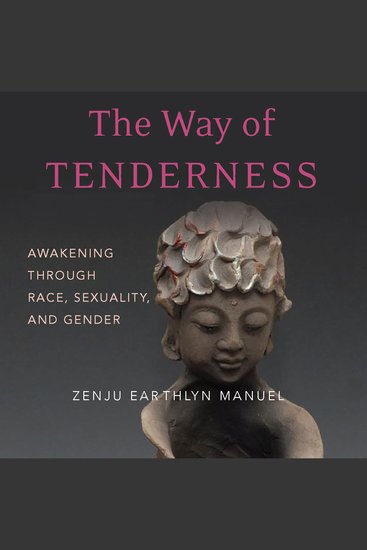
  • The Way of Tenderness - Awakening through Race Sexuality and Gender - cover

    The Way of Tenderness -...

    Zenju Earthlyn Manuel

    • 0
    • 0
    • 0
    In The Way of Tenderness, Zen priest Zenju Earthlyn Manuel brings Buddhist philosophies of emptiness and appearance to bear on race, sexuality, and gender, using wisdom forged through personal experience and practice to rethink problems of identity and privilege.  
    Manuel brings her own experiences as a lesbian black woman into conversation with Buddhism to square our ultimately empty nature with superficial perspectives of everyday life. Her hard-won insights reveal that dry wisdom alone is not sufficient to heal the wounds of the marginalized; an effective practice must embrace the tenderness found where conventional reality and emptiness intersect. Only warmth and compassion can cure hatred and heal the damage it wreaks within us.  
    This is a book that will teach us all.
    Show book
  • Summary of Shomari Wills’s Black Fortunes - cover

    Summary of Shomari Wills’s Black...

    Falcon Press

    • 0
    • 0
    • 0
    Buy now to get the main key ideas from Shomari Wills’s Black Fortunes 
      
    Journalist Shomari Wills’s great-great-uncle, John Mott Drew, was a millionaire. His father had been a slave, and his story made Shomari realize that African Americans’ early achievements are often little known. At the time, it was revolutionary for an African American to become rich. In Black Fortunes (2018), Shomari tells the success stories of America’s first black millionaires, including Mary Ellen Pleasant, Robert Reed Church, O.W. Gurley, Hannah Elias, Annie Turnbo Malone, and Madam C.J. Walker. They were often attacked and demonized for their race and achievements, but this did not stop them from securing their legacy. They built towns, cultures, and helped change the course of history for black people. 
     
    Show book
  • Pandemic Panic - How Canadian Government Responses to COVID-19 Changed Civil Liberties Forever - cover

    Pandemic Panic - How Canadian...

    Joanna Baron, Christine Van Geyn

    • 0
    • 1
    • 0
    In October 2022, the economist Emily Oster wrote a plea for a “pandemic amnesty.” After detailing various ill-conceived public health policies throughout the pandemic, Oster concluded that “The standard saying is that those who forget history are doomed to repeat it. But dwelling on the mistakes of history can lead to a repetitive doom loop as well.” She reasoned that many admittedly poor, public health decisions were made in an information vacuum and that the salubrious thing to do going forward would be to forgive and forget.
    		 
    Oster was concerned about the fraying social fabric because of polarizing online discourse and urged the need to move forward. However, our anecdotal experience has shown a second common response to pandemic mishaps—going blank entirely on what occurred during the pandemic. We have observed a phenomenon of the surreal, sometimes inane, often unprecedented and unusual public health measures taken over the roughly three-year pandemic period being a “memory hole,” where the mind completely fogs over. Many times in the course of writing this book, we have messaged one another upon unearthing one public policy absurdity upon another: the City of Toronto taping off cherry blossoms, Quebec requiring unvaccinated people to be chaperoned in plexiglass carts through the essential aisles of big-box stores.
    		 
    We are not psychologists, but no doubt there is an evolutionary benefit to allowing a collective trauma to dissolve into the slip-stream: it is unproductive to dwell on how we got by and how our government coped in real-time. Our memories are warped, first, by the “primacy effect” our tendency to remember “firsts” exemplified by people universally naming George Washington when asked to recall former U.S. presidents. Most people have a crystal clear memory of the moment their plague year started in earnest; for us and many others; it was March 11, 2020, the day the NBA suspended games for the rest of the season.
    Show book
  • Naples - Historical Data and Intriguing Facts - cover

    Naples - Historical Data and...

    Kelly Mass

    • 0
    • 0
    • 0
    Naples (or, in Italian, Napoli) is the local capital of Campania and Italy's third-largest city, after Rome and Milan, with a population of 967,069 people living within the city's administrative limits since 2017. With a population of 3,115,320 people, its province-level town is Italy's third-most inhabited urbane city, and its city periods for around twenty miles outside the city walls. 
    Naples, established by Greeks in the first millennium BC, is just one of the world's oldest constantly occupied cities. 
    On the isle of Megaride, a district, referred to as Parthenope, was established in the ninth century BC. It was re-founded as Neápolis in the sixth century BC. 
    Naples has a long history, all the way dating back to Roman times, the outbreak of the Vesuvius, and much more. Let’s learn more about this fascinating city’s history.
    Show book
  • Socrates Meets Kierkegaard - The Father of Philosophy Cross-Examines the Father of Christian Existentialism - cover

    Socrates Meets Kierkegaard - The...

    Peter Kreeft

    • 0
    • 0
    • 0
    In the Socrates Meets series, Peter Kreeft revives the classic method of bringing philosophy to life through dialogue. In eight innovative volumes, he uncovers the principles, assumptions, and sometimes dangerous conclusions of some of history’s most influential minds.  Each dialogue imagines a purgatory where we can listen in on conversations between Socrates and the great thinkers who, centuries later, picked up the philosopher’s torch. Each conversation investigates one of the philosopher’s key works, a short, readable classic that raises central questions both for philosophy and for life. In this volume, Socrates cross-examines Søren Kierkegaard, the father of Christian existentialism and author of Philosophical Fragments, exploring imagination, truth, faith, love, and Jesus Christ.
    Show book
