Join us on a literary world trip!
Add this book to bookshelf
Grey
Write a new comment Default profile 50px
Grey
Subscribe to read the full book or read the first pages for free!
All characters reduced
Peru in the Guano Age - Being a Short Account of a Recent Visit to the Guano Deposits - cover

Peru in the Guano Age - Being a Short Account of a Recent Visit to the Guano Deposits

A. J. Duffield

Publisher: Good Press

  • 0
  • 0
  • 0

Summary

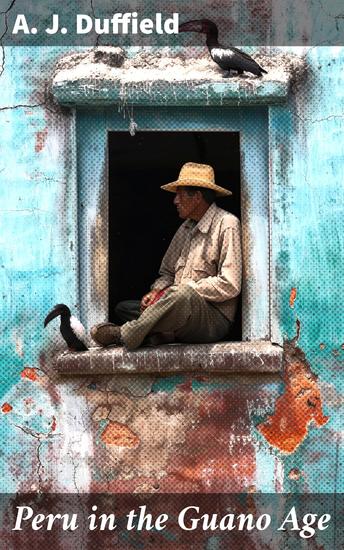
In "Peru in the Guano Age," A. J. Duffield intricately explores the socio-economic and environmental implications of Peru'Äôs guano trade during the 19th century, a period marked by global agricultural demand and colonial exploitation. Employing a rich, descriptive literary style, Duffield combines historical analysis with vivid narrative techniques, immersing readers in the cultural and political milieu of the era. Through meticulous research, the book sheds light on how the guano boom transformed Peru's national identity, economy, and landscape, positioning it within the broader context of imperialism and resource extraction. A. J. Duffield, an accomplished historian with a focus on Latin American studies, brings a wealth of knowledge to this work. His academic journey has fostered a deep understanding of the interplay between environment and economy, drawing on extensive field research in Peru and previously published articles examining resource economies. Duffield's passion for uncovering historical narratives and their contemporary relevance is evident, as he seeks to engage with the lessons of the past in light of modern environmental challenges. This book is highly recommended for scholars, students, and anyone interested in environmental history, colonial studies, and Peruvian culture. Duffield's engaging prose, combined with rigorous scholarship, makes "Peru in the Guano Age" a compelling read that invites reflection on historical precedents to current global issues, enriching our understanding of sustainability and socio-economic dynamics.
Available since: 10/12/2023.
Print length: 82 pages.

Other books that might interest you

  • Middle East in World War I The: The History and Legacy of the Biggest Campaigns in the Great War’s Forgotten Theater - cover

    Middle East in World War I The:...

    Editors Charles River

    • 0
    • 0
    • 0
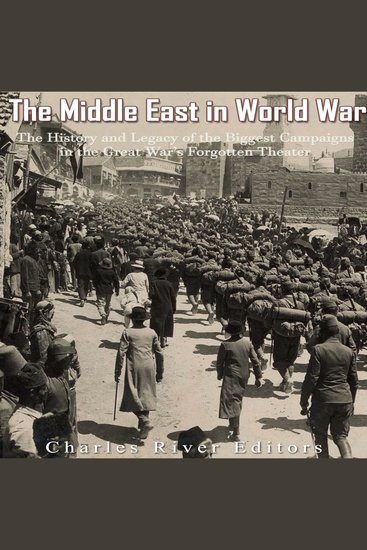
    World War I, also known in its time as the “Great War” or the “War to End all Wars”, was an unprecedented holocaust in terms of its sheer scale. Fought by men who hailed from all corners of the globe, it saw millions of soldiers do battle in brutal assaults of attrition which dragged on for months with little to no respite. Tens of millions of artillery shells and untold hundreds of millions of rifle and machine gun bullets were fired in a conflict that demonstrated man’s capacity to kill each other on a heretofore unprecedented scale, and as always, such a war brought about technological innovation at a rate that made the boom of the Industrial Revolution seem stagnant.  
    	Most books and documentaries about the First World War focus on the carnage of the Western Front, where Germany faced off against France, the British Empire, and their allies in a grueling slugfest that wasted millions of lives. The shattered landscape of the trenches has become symbolic of the war as a whole, and it is this experience that everyone associates with World War I, but that front was not the only experience. There was the more mobile Eastern Front, as well as mountain warfare in the Alps and scattered fighting in Africa and the Far East. 
    	Then there was the Middle Eastern Front, fought across the Levant and Mesopotamia, which captured the imagination of the European public. There, the British and their allies fought the Ottoman Turkish Empire under harsh desert conditions hundreds of miles from home, struggling for possession of places most people only knew from the Bible and the Koran.
    Show book
  • Heart of Darkness - cover

    Heart of Darkness

    Joseph Conrad

    • 0
    • 0
    • 0
    "The mind of man is capable of anything—because everything is in it, all the past as well as all the future."
    
    Charles Marlow, a seafaring wanderer, takes a job as a steamboat captain for a Belgian trading company in the African interior. His mission: to find and retrieve Kurtz, a legendary ivory agent who has reportedly gone mad and established himself as a god-like figure among the local tribes. As Marlow steams deeper into the "lurk of the jungle," the physical journey becomes a psychological odyssey. He discovers that the true "darkness" lies not in the wilderness, but in the hearts of the "civilized" men who seek to conquer it.
    
    A Masterpiece of Modernism: Conrad's prose is thick with atmosphere and moral ambiguity. He strips away the romanticism of Victorian adventure to reveal the hollow greed of the ivory trade. Through the enigmatic figure of Kurtz and his final, whispered cry—"The horror! The horror!"—the novella forces a confrontation with the darkness inherent in absolute power and the collapse of traditional morality.
    
    The Influence of an Icon: Few works have left such a permanent mark on culture, serving as the direct inspiration for the cinematic epic Apocalypse Now. Heart of Darkness remains a vital, controversial, and essential critique of imperialism and a timeless study of the human psyche under extreme pressure.
    
    Descend into the depths. Purchase "Heart of Darkness" today and confront the truth.
    Show book
  • Covert - The Psychology of War and Peace - cover

    Covert - The Psychology of War...

    A.S. Dulat, Asad Durani, Neil K....

    • 0
    • 0
    • 0
    After the tremendous success of The Spy Chronicles, A.S. Dulat and Asad Durrani participated in a series of conversations on the psychology of war and peace; these have evolved into this fascinating book, written with psychiatrist Neil K. Aggarwal.  
    Covert takes the reader right into the head of the two spymasters. Delving into their personal and professional trajectories that moulded them in the early years, the conversation traces the extent to which their Indian and Pakistani identities have defined them. Masterfully moderated by Aggarwal, the discussion then turns to the domain of international relations, exploring why the governments of India and Pakistan collaborate in certain areas, but not in others. What emerges is a remarkably forthright, provocatively honest appraisal of the peacebuilding process between the two nations that appear inherently hostile to each other but share so much in terms of history and cultural identity.  
    The dialogues in Covert reveal a deep camaraderie between Dulat and Durrani, who have headed the intelligence operations for their respective countries. But more importantly perhaps, it provides deep insights into the shadowy world of negotiation and subterfuge. It is an eye-opener and a must-read for anyone invested in peace and amity in South Asia.
    Show book
  • Following Caesar - From Rome to Constantinople the Pathways That Planted the Seeds of Empire - cover

    Following Caesar - From Rome to...

    John Keahey

    • 0
    • 0
    • 0
    In 66 BC, young, ambitious Julius Caesar, seeking recognition and authority, became the curator of the Via Appia. He borrowed significant sums to restore the ancient highway. It was a way to curry favor from Roman citizens in villages along the route, built from Rome to Brindisi between 312-191 BC. After achieving greatness in Rome and the far reaches of Gaul, he led armies along this road to battle enemies in Roman civil wars. And then, across the Adriatic Sea, he joined Via Appia's sister road, the Via Egnatia that began in today's Albania. Other armies followed these two roads that eventually connected Rome to Byzantium, today's Istanbul. In the early second century AD, the emperor Trajan charted a new coastal route between Benevento and Brindisi, later called the Via Traiana. 


    Today, short stretches of the original three roads can be seen in the ruins of ancient Roman cities, now preserved as archaeological wonders, and through the countryside near, and sometimes under, modern highways. Following those routes is the purpose of treading along the path that Caesar and so many others took over the early centuries. Modern eyes, seeing through the mists of more than two thousand years of history, lead the traveler along these three roads coursing through six countries between Rome and Istanbul.
    Show book
  • What's the Matter with Kansas? - How Conservatives Won the Heart of America - cover

    What's the Matter with Kansas? -...

    Thomas Franke

    • 0
    • 0
    • 0
    The New York Times bestseller, praised as "hilariously funny . . . the only way to understand why so many Americans have decided to vote against their own economic and political interests" (Molly Ivins).**Unabridged for the first time with a new introduction**This program is read by the author. Hailed as "dazzlingly insightful and wonderfully sardonic" (Chicago Tribune), "very funny and very painful" (San Francisco Chronicle), and "in a different league from most political books" (The New York Observer), What's the Matter with Kansas? unravels the great political mystery of our day: Why do so many Americans vote against their economic and social interests? With his acclaimed wit and acuity, Thomas Frank answers the riddle by examining his home state, Kansas—a place once famous for its radicalism that now ranks among the nation's most eager participants in the culture wars. Charting what he calls the "thirty-year backlash"—the popular revolt against a supposedly liberal establishment—Frank reveals how conservatism, once a marker of class privilege, became the creed of millions of ordinary Americans.A brilliant analysis—and funny to boot—What's the Matter with Kansas? is a vivid portrait of an upside-down world where blue-collar patriots recite the Pledge while they strangle their life chances; where small farmers cast their votes for a Wall Street order that will eventually push them off their land; and where a group of frat boys, lawyers, and CEOs has managed to convince the country that it speaks on behalf of the People.A Macmillan Audio production from Metropolitan Books
    Show book
  • When a Child Dies - A Hopeful Healing Guide for Surviving the Loss of a Child - cover

    When a Child Dies - A Hopeful...

    Claire Aagaard

    • 0
    • 0
    • 0
    A caring and compassionate grief book for bereaved parents who have lost a child. 


    Being suddenly thrust into the world of parental grief is like being transported to a foreign land where you don't speak the language. With that in mind, Claire Aagaard has written When a Child Dies in a simple, straightforward manner, offering information, comfort, and hope for those who believe that none is possible. 


    Questions addressed include: Can we survive this?; Is it possible to be happy again?; Is forgiveness attainable?; Can we survive this as a couple?; How will this affect our loved ones?; Is it okay to be angry with God?; How do we cope with birthdays or holidays?; Will my grief ever change?; What can we do to help? (a chapter for supportive loved ones). 


    Claire has written this book from a unique perspective—that of a professional grief counselor after working with dozens of bereaved parents, and as a parent with her own history of child loss. It is an honest yet gentle guide for grieving parents as well as their family, friends, and loved ones, offering the wisdom from her own personal journey as well as that of countless others.
    Show book