Join us on a literary world trip!
Add this book to bookshelf
Grey
Write a new comment Default profile 50px
Grey
Subscribe to read the full book or read the first pages for free!
All characters reduced
Deep Sea Hunters in the Frozen Seas - Exploring the Treacherous Arctic Whaling Expeditions - cover

Deep Sea Hunters in the Frozen Seas - Exploring the Treacherous Arctic Whaling Expeditions

A. Hyatt Verrill

Publisher: Good Press

  • 0
  • 0
  • 0

Summary

In "Deep Sea Hunters in the Frozen Seas," A. Hyatt Verrill invites readers to explore the uncharted waters of the Arctic, where adventure and science interweave in a compelling narrative. The book blends vividly descriptive prose with an adventurous spirit, capturing both the harsh beauty of the frozen seas and the exhilarating pursuit of marine life. Verrill's meticulous attention to detail and his passion for exploration shine through, as he delves into the enigmatic world beneath the ice, exploring the fauna and flora that exist in stark contrast to the land above. Richly illustrative, the work serves not only as a thrilling account of marine hunting but also as an early scientific exploration of the Arctic environment in the early 20th century context. A. Hyatt Verrill was a prolific writer, artist, and naturalist whose background in zoology and exploration provided a unique lens through which he viewed the natural world. His experiences traveling through remote terrains fueled his fascination with the ocean and its mysteries, often leading him to write about the intersections of adventure, science, and the human experience. This background informs his writing, making his narratives not only entertaining but also educational. "Deep Sea Hunters in the Frozen Seas" is a must-read for anyone intrigued by maritime exploration and the scientific discoveries of the early 1900s. It is ideal for those who appreciate a blend of adventure with rich natural history. Verrill'Äôs masterful storytelling invites readers to embark on a journey into the unknown, making it a valuable addition to both literary and scientific circles.
Available since: 11/19/2023.
Print length: 134 pages.


Other books that might interest you

  • Eyewitnesses to the Indian Wars 1865–1890 - The Struggle for Apacheria - cover

    Eyewitnesses to the Indian Wars...

    Peter Cozzens

    • 0
    • 0
    • 0
    This volume explores the history of the Apache Wars of the late 19th century Southwest through diaries, army reports, and other primary sources. Stretching from the Colorado River to the mountains east of the Rio Grande, and from northern Arizona into Sonora, Mexico, is the sprawling region once known as Apacheria. By the time the first Americans ventured into the region, the indigenous peoples known as the Apache had already been clashing with Spanish and Mexican interlopers for some time.   Eyewitnesses to the Indian Wars, 1865–1890: The Struggle for Apacheria presents a selection of outstanding original accounts pertaining to the epic struggle between American and the Apache for those coveted lands. It is the first in a five-volume series telling the saga of the military struggle for the American West in the words of the soldiers, noncombatants, and Native Americans who shaped it
    Show book
  • Clever Girl: Jurassic Park - cover

    Clever Girl: Jurassic Park

    Hannah McGregor

    • 0
    • 0
    • 0
    A smart and incisive exploration of everyone’s favorite dinosaur movie and the female dinosaurs who embody what it means to be angry, monstrous, and free 
    The Jurassic Park series is one of the most famous and profitable movie franchises of all time — an entire generation of people has never known life without these CGI dinosaurs. The movie spectacle broke film and merchandising records, pioneered special effects, and made Jeff Goldblum into an unlikely sex symbol, and now it has also been re-envisioned as a classic of queer feminist storytelling. 
    In Clever Girl, Hannah McGregor argues that the female-only dinosaurs of Jurassic Park are stand-ins for monstrous women, engineered by men to be intelligent, violent, and adaptive, and whose chaos resists the systems designed to control them. As they run wild through their prison, a profit-driven theme park, they destroy the men and structures who mistakenly believed in their own colonialist and capitalist power, showing the audience what it means to be angry, monstrous, and free. The velociraptors were not just jump scares for children but also revelatory and predatory symbols of feminist rage. Clever girls, indeed.
    Show book
  • Underground and Underwater in World War I: The History and Legacy of the Hidden Fighting during the Great War - cover

    Underground and Underwater in...

    Editors Charles River

    • 0
    • 0
    • 0
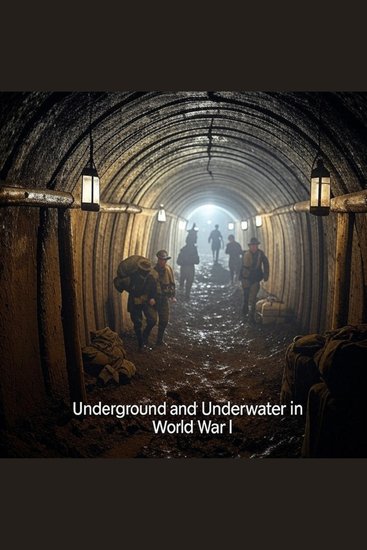
    Most books and documentaries about the war focus on the carnage of the trenches, depicting the ceaseless bombardment and sniping, and the assaults and counterattacks that took millions of lives. This was the experience of most frontline soldiers during that great conflict, but it was not the only experience. There was another war going on beneath the trenches, a war of tunnels and mines fought by men who didn’t see sunlight for days at a time and who lived in constant fear of cave-ins and enemy detection. These men, who had mostly been miners in civilian life, lived a twilight existence, working long hours in silence and near darkness while great battles raged overhead. They suffered from fatigue, stress, and the knowledge that they could be killed at any time by an unseen enemy. Despite this, they persevered, and the mines they laid under enemy trench systems turned the tide of at least one major battle.  
    	The sleek hunter-killers lurking beneath the waves, using periscopes to close in unnoticed on their prey, added a new, nerve-wracking element to naval warfare. The mere threat of submarine attack immediately altered naval tactics and strategies employed by both the Western Allies and the Central Powers, shifting them towards a more cautious approach, especially at the war’s start when the submarine threat remained untested. 	During World War I, German U-boats operated solo except on one occasion. Initially, the British and nations supplying England with food and materiel scattered vessels singly across the ocean, making them vulnerable to the lone submarines. However, widespread late war re-adoption of the convoy system tipped the odds in the surface ships' favor.
    Show book
  • Imperialism and Its Legacy - The Long-Term Effects of Empire Building on Modern Nations - cover

    Imperialism and Its Legacy - The...

    Arlo Holders

    • 0
    • 0
    • 0
    Imperialism, a term that evokes both grandeur and controversy, refers to the practice of extending a nation's power and dominion over foreign territories, often through conquest, colonization, or economic and political influence. At its core, imperialism involves the domination of one country over another, typically to exploit resources, expand markets, or spread cultural and political ideologies. While the history of imperialism stretches back to ancient civilizations, the modern form of imperialism emerged during the Age of Exploration, when European powers began to seek new trade routes and expand their influence across the globe. 
    The roots of imperialism are deeply entwined with the economic, political, and cultural motivations of the imperial powers. From an economic perspective, nations sought to secure access to valuable resources, such as gold, silver, spices, and agricultural products, which were crucial for their economic growth. The industrial revolution further fueled this desire for resources, as new technologies created an insatiable demand for raw materials and new markets to sell finished goods. Politically, imperialism was driven by the need for strategic dominance, with nations eager to expand their influence and prevent rivals from gaining power. Cultural and ideological motives, such as the belief in the superiority of one’s own civilization and the desire to “civilize” and Christianize indigenous peoples, were also significant driving forces behind imperial expansion. 
    The rise of modern imperialism coincided with the emergence of powerful European states, including Britain, France, Spain, Portugal, and later Germany and Italy, who sought to expand their empires across Africa, Asia, and the Americas.
    Show book
  • Corporal Cannon - A Female Marine in Afghanistan - cover

    Corporal Cannon - A Female...

    Savannah Cannon

    • 0
    • 0
    • 0
    One woman’s dramatic account of her stint in the U.S. Marine Corps, exploring the prejudice and mistreatment of women in combat zones. Not even old enough to drink, Corporal Savannah Cannon is a young enlisted United States Marine deployed to support Operation Enduring Freedom in Afghanistan in 2010. As a tactical data networking specialist, she is sent away from everyone she knows and attached to a Regimental Combat Team where women are not allowed to repair communications. Her experiences over the next few months shed light on the unique and difficult positions women are placed in when supporting combat roles, while offering a raw look at the painful choices women must sometimes make. Cannon finds herself in a combat zone, ostracized from family, friends, and even her fellow Marines as the men are told to avoid her. The connections she makes are born from trauma and desperation and the choices she makes will echo throughout many lives. Corporal Cannon is not the story of a heroine; it is the hard-hitting account of just one of the flawed individuals who make up the United States’ fighting forces. Mistakes in the battlefield can have dire consequences, personally and professionally. Reflecting on her time in service, the author weaves a story of past and present, and the healing that can come with admitting our mistakes and moving past them.
    Show book
  • This Is My Jail - Local Politics and the Rise of Mass Incarceration - cover

    This Is My Jail - Local Politics...

    Melanie Newport

    • 0
    • 0
    • 0
    While state and federal prisons like Attica and Alcatraz occupy a central place in the national consciousness, most incarceration in the US occurs within the walls of local jails. In This Is My Jail, Melanie D. Newport situates the late twentieth-century escalation of mass incarceration in a longer history of racialized, politically repressive jailing. Centering the political actions of people until now overlooked—jailed people, wardens, corrections officers, sheriffs, and the countless community members who battled over the functions and impact of jails—Newport shows how local, grassroots contestation shaped the rise of the carceral state. 


    As ground zero for struggles over criminal justice reform, jails in Chicago and Cook County were models for jailers and advocates across the nation who aimed to redefine jails as institutions of benevolent transformation. From a slave sale on the jail steps to new jail buildings to electronic monitoring, from therapy to job training, these efforts further criminalized jailed people and diminished their capacity to organize for their civil rights. With prisoners as famous as Al Capone, Dick Gregory, and Harold Washington, and a place in culture ranging from Upton Sinclair's The Jungle to B. B. King's Live in Cook County Jail, This Is My Jail places jails at the heart of twentieth-century urban life and politics.
    Show book