Join us on a literary world trip!
Add this book to bookshelf
Grey
Write a new comment Default profile 50px
Grey
Subscribe to read the full book or read the first pages for free!
All characters reduced
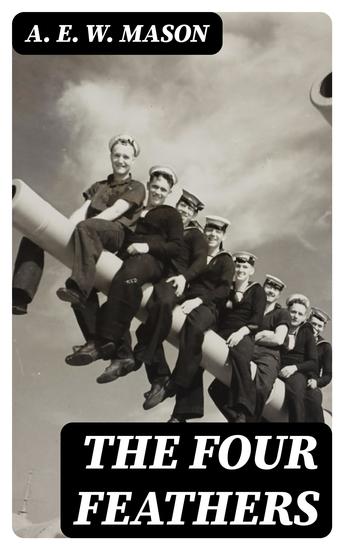
The Four Feathers - cover

The Four Feathers

A. E. W. Mason

Publisher: DigiCat

  • 0
  • 0
  • 0

Summary

A. E. W. Mason's "The Four Feathers" is a gripping tale set against the backdrop of British colonialism and military adventure in the late 19th century. Written in a vivid narrative style that blends rich descriptions with psychological depth, the novel explores themes of honor, courage, and the complexities of friendship. The story follows Harry Feversham, a young British officer who, shamed by his resignation before a military campaign in Sudan, embarks on a journey of redemption, which is symbolized by the titular four feathers—tokens of cowardice bestowed upon him by his peers. Mason's work captures the tumultuous spirit of the British Empire, revealing the personal and collective struggles of individuals caught in a web of societal expectations and personal morality. A. E. W. Mason, an English writer born in 1865, was not only a novelist but also a playwright and a prominent journalist who drew from his own experiences in the military and his travels to inform his writing. His exposure to the complexities of human emotions and the socio-political landscape of his time played a pivotal role in shaping the narrative arc of "The Four Feathers", reflecting both the anxieties and aspirations of a generation confronted with issues of duty and sacrifice. This classic novel is a must-read for those interested in historical fiction and the dynamics of the British Empire. It offers profound insights into the themes of bravery and honor, making it a timeless exploration of personal redemption that resonates with contemporary readers. Mason's narrative craftsmanship and the novel's moral complexities invite readers to reflect on their own definitions of courage and loyalty.
Available since: 09/15/2022.
Print length: 259 pages.
Other books that might interest you

  • Great Expectations - cover

    Great Expectations

    Charles Dickens

    • 0
    • 0
    • 0
    Pip— the orphaned hero of Great Expectations— is one of Charles Dickens's best-loved characters. Young Philip Pirrip— nicknamed Pip— is apprenticed to his blacksmith brother-in-law, but an anonymous benefactor changes the boy' s future. After he is lifted to what seems a higher station in life, Pip shuns his kind friends and slips into debt. But as he matures, he progresses from thoughtless selfishness to humble industry.
    Show book
  • A Midsummer Night's Dream - cover

    A Midsummer Night's Dream

    William Shakespeare

    • 0
    • 0
    • 0
    Сomedy A Midsummer's Night Dream is a wonderful piece of work written by a genius English playwright William Shakespeare. Three very amusing stories tightly connected with each other fascinate the reader with a numerous love adventures. The reason for that is a potion of a forest spirit Puck. William Shakespeare is the author of the world famous sonnets and plays Romeo and Juliet, Hamlet, Macbeth and Othello, as well as comedies Twelfth Night, A Midsummer's Night Dream, Love's Labour's Lost, The Merry Wives of Windsor, The Two Gentlemen of Verona and As You Like It. William Shakespeare is the most performed playwright, the works of the great English poet have been on top of the world theatre stages for some centuries already.
    Show book
  • Jules Vern Around The World In 80 Days - cover

    Jules Vern Around The World In...

    Jules Verne

    • 0
    • 0
    • 0
    Mysterious Phileas Fogg is a man of the most repetitious and punctual habit - with no apparent sense of adventure whatsoever - he gambles his considerable fortune that he can complete a journey around the world in just 80 days... immediately after a newspaper calculates the feat as just barely possible. With his excitable French manservant in tow, Fogg undertakes the exercise immediately, with no preparations, trusting that his traveling funds will make up for delays along the way. But unbeknownst to him, British police are desperately seeking to arrest him for the theft of a huge sum by someone who resembles him, and they will track him around the world, if necessary, to apprehend him. This is an adventure novel of the first water, with wholly unexpected perils, hair-breadth escapes, brilliant solutions to insoluble problems, and even a love story. And can this be? - That he returns to London just five minutes too late to win his wager and retain his fortune? Jules Gabriel Verne was a French novelist, poet, and playwright. His collaboration with the publisher Pierre-Jules Hetzel led to the creation of the Voyages extraordinaires, a series of bestselling adventure novels.
    Show book
  • The Odyssey - cover

    The Odyssey

    Homer

    • 0
    • 0
    • 0
    The Odyssey is an epic poem attributed to the ancient Greek poet Homer, detailing the adventurous journey of Odysseus, the king of Ithaca, as he strives to return home after the Trojan War. 
    The narrative begins in medias res, twenty years after Odysseus left for Troy and ten years after the war ended. He finds himself trapped on the island of Ogygia, held captive by the nymph Calypso, who is in love with him. Meanwhile, back in Ithaca, his wife Penelope and son Telemachus are besieged by a group of suitors who believe Odysseus to be dead and are vying for Penelope's hand in marriage.
    Show book
  • Maxim Gorky - A Short Story Collection - Nominated for the Nobel prize in literature 5 times Gorky was a truly special short story writer we implore you to see why in this collection - cover

    Maxim Gorky - A Short Story...

    Maxim Gorky

    • 0
    • 0
    • 0
    Alexei Maximovich Peshkov was born on 28th March 1868, in Nizhny Novgorod, Russia. 
     
    Better known as Maxim Gorky he was orphaned at 11 and ran away from home at 12.  At 19 he had already attempted suicide and thereafter travelled, by foot, across the Russian Empire for 5 years. 
     
    His first book ‘Essays & Stories’ in 1898 was a sensation and so began a long career as an author of short stories, novels and plays.  Gorky saw writing as a moral and political act that would help to change the unjust world around him.  He was an ardent early advocate of the emerging Marxist movement and publicly opposed the Tsarist regime leading several times to his arrest.  
     
    In 1904 he began his own theatre but the censor banned every play and Gorky was forced to abandon the project. 
     
    But Gorky was a financially successful author, editor, and playwright and gave monies to political parties as well as for civil rights and social reform.  The brutal shooting of workers, which set in motion the Revolution of 1905, pushed Gorky more decisively toward radical solutions.  
     
    In 1906 he went to the United States to raise funds for the Bolsheviks. Those experiences including a scandal over travelling with his lover and not his wife deepened his contempt for the ‘bourgeois soul.’ 
     
    Gorky now moved to Capri in Italy, both for health reasons and to escape the increasingly repressive times in Russia.  
     
    An amnesty for the 300th anniversary of the Romanov dynasty saw him return to Russia in 1914. His politics remained close to the Bolshevik cause.  But soon, after the 1918 revolution, his essays referred to Lenin as a tyrant for his senseless arrests and repression.  He was soon appealing to the outside world for food aid after the catastrophic crop failure. 
     
    In October 1921 Gorky returned to Italy, now in Fascist hands, and settled in Sorrento until 1932.  His health worsened with the onset of tuberculosis. 
     
    He wrote several successful books there but now decided to find an understanding with the communist regime. Stalin invited him home and his return was hailed as a major propaganda victory.  He was decorated with the Order of Lenin, and a province, a park, and various streets re-named in his honour. 
     
    But he had his faults too.  In 1933, Gorky co-edited a book on the White Sea-Baltic Canal and denied even a single prisoner died during its construction, but thousands had. As well, knowing that some Nazis were homosexual, a phrase was attributed to him that said ‘exterminate all homosexuals and fascism will vanish’.  Although he was himself was quoting another he was decidedly homophobic. 
     
    With the increase of Stalinist repression in 1935 Gorky was placed under unannounced house arrest. 
     
    Maxim Gorky died on the 18th June 1936 from pneumonia.  He was 68. 
     
    Stalin and Molotov were among those who carried Gorky's urn of ashes at his funeral. 
     
    01 - Maxim Gorky - A Short Story Collection - An Introduction 
    02 - Twenty-Six Men and a Girl by Maxim Gorky 
    03 - One Autumn Night by Maxim Gorky 
    04 - In The Steppe by Maxim Gorky 
    05 - Her Lover by Maxim Gorky 
    06 - Chelkash - Part 1 by Maxim Gorky 
    07 - Chelkash - Part 2 by Maxim Gorky 
    08 - Chelkash - Part 3 by Maxim Gorky
    Show book
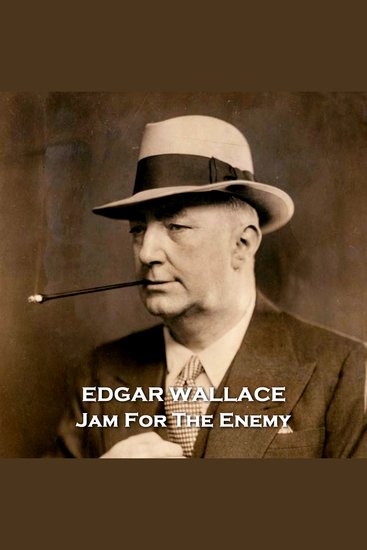
  • Jam For The Enemy - Former soldier and journalist that became a revered author and screenwriter - cover

    Jam For The Enemy - Former...

    Edgar Wallace

    • 0
    • 0
    • 0
    Richard Horatio Edgar Wallace was born on the 1st April 1875 in Greenwich, London.  Leaving school at 12 because of truancy, by the age of fifteen he had experience; selling newspapers, as a worker in a rubber factory, as a shoe shop assistant, as a milk delivery boy and as a ship’s cook.  
     
    By 1894 he was engaged but broke it off to join the Infantry being posted to South Africa. He also changed his name to Edgar Wallace which he took from Lew Wallace, the author of Ben-Hur.  
     
    In Cape Town in 1898 he met Rudyard Kipling and was inspired to begin writing. His first collection of ballads, The Mission that Failed! was enough of a success that in 1899 he paid his way out of the armed forces in order to turn to writing full time.  
     
    By 1904 he had completed his first thriller, The Four Just Men. Since nobody would publish it he resorted to setting up his own publishing company which he called Tallis Press. 
      
    In 1911 his Congolese stories were published in a collection called Sanders of the River, which became a bestseller. He also started his own racing papers, Bibury’s and R. E. Walton’s Weekly, eventually buying his own racehorses and losing thousands gambling.  A life of exceptionally high income was also mirrored with exceptionally large spending and debts.  
     
    Wallace now began to take his career as a fiction writer more seriously, signing with Hodder and Stoughton in 1921. He was marketed as the ‘King of Thrillers’ and they gave him the trademark image of a trilby, a cigarette holder and a yellow Rolls Royce. He was truly prolific, capable not only of producing a 70,000 word novel in three days but of doing three novels in a row in such a manner. It was estimated that by 1928 one in four books being read was written by Wallace, for alongside his famous thrillers he wrote variously in other genres, including science fiction, non-fiction accounts of WWI which amounted to ten volumes and screen plays. Eventually he would reach the remarkable total of 170 novels, 18 stage plays and 957 short stories. 
     
    Wallace became chairman of the Press Club which to this day holds an annual Edgar Wallace Award, rewarding ‘excellence in writing’.  
     
    Diagnosed with diabetes his health deteriorated and he soon entered a coma and died of his condition and double pneumonia on the 7th of February 1932 in North Maple Drive, Beverly Hills. He was buried near his home in England at Chalklands, Bourne End, in Buckinghamshire.
    Show book