Join us on a literary world trip!
Add this book to bookshelf
Grey
Write a new comment Default profile 50px
Grey
Subscribe to read the full book or read the first pages for free!
All characters reduced
American Naval Mission in the Adriatic - 1918-1921 - cover

American Naval Mission in the Adriatic - 1918-1921

A. C. Davidonis

Publisher: Madison & Adams Press

  • 0
  • 0
  • 0

Summary

"American Naval Mission in the Adriatic, 1918-1921" by A. C. Davidonis offers an in-depth analysis of the United States naval forces' occupation of central Dalmatia, spanning from November 1918 to September 1921. This occupation, encompassing over 100 miles of the Dalmatian coast, is notable for its duration and territorial extent. The book details various incidents and measures, such as the establishment of inter-Allied patrols and the handling of rumored Italian troop movements, showcasing the complexity of the American naval governor's role in the region. These episodes illustrate the intricate dynamics of military governance and diplomacy during this period. Overall, Davidonis' book provides a comprehensive account of this unique episode in American naval history, shedding light on the challenges and strategies employed during the American Naval Mission in the Adriatic.
Available since: 11/27/2023.
Print length: 61 pages.


Other books that might interest you

  • You are what you eat - cover

    You are what you eat

    Brittany Forrester

    • 0
    • 0
    • 0
    For decades, the medical profession has advocated for nutritional management as a treatment strategy for various illnesses, including diabetes, heart disease, high blood pressure, and excessive cholesterol. There are currently no such recommendations for brain aging and dementia.Nutrition was only recently accorded scientific-field status. Eating is a valid technique for defending oneself against brain aging and disorders such as Alzheimer's. Scientists have gradually realized the vital link between the foods we eat and our mental health. This insight has spawned a rapidly rising body of studies indicating that we may be eating our way to dementia.What has gone unreported until now is that, of all the organs in our bodies, the brain is the one most easily harmed by a poor diet. Everything in the brain, from its architecture to its ability to perform, begs for optimal nutrition. Many of us are ignorant that the only way to fuel the brain is through our food. The meals we eat are broken down into nutrients, absorbed into the bloodstream, and transported to the brain to replenish depleted stores, stimulate cellular responses, and, most critically, be incorporated into brain tissue.We are what we eat!
    Show book
  • Recognizing the Stranger - On Palestine and Narrative - cover

    Recognizing the Stranger - On...

    Isabella Hammad

    • 0
    • 0
    • 0
    Nine days before October 7, 2023, award-winning author Isabella Hammad delivered the Edward W. Said Memorial Lecture at Columbia University. The text of Hammad’s seminal speech and her afterword, written in the early weeks of 2024, together make up a searing appraisal of the war on Palestine during what seems a turning point in the narrative of human history. Profound and moving, Hammad writes from within the moment, shedding light on the Palestinian struggle for freedom. Recognizing the Stranger is a brilliant melding of literary and cultural analysis by one of Granta’s Best of Young British Novelists and a foremost writer of fiction in the world today. 
     
    “An urgent work for a devastating time … Isabella Hammad is as fine a critic as she is a novelist. It is hardly a surprise that she is one of our most astute writers when it comes to Palestine.”—Viet Thanh Nguyen 
     
    Includes bonus audio read by the author
    Show book
  • The Dhammapada - cover

    The Dhammapada

    Max Muller

    • 0
    • 0
    • 0
    Brought to you by Altrusian Grace Media and narrated by Matthew Schmitz. 
    In more than 400 verses the Buddha clearly expounds his noble path of virtue for everyman. This foundation scripture teaches the supreme doctrine of nirvana and the way to the highest possible happiness for mankind. 
    Translated by Oxford professor Dr. Max Muller, a great scholar and Orientalist with an introduction by Kevin Trainor, Associate Professor of Religion at the University of Vermont. The Dhammapada - the Path of Truth - is a beautiful anthology of proverbs and aphorisms which are considered to be as close to the Buddha's own words as we can ever reach. 
    The work outlines the Buddha's Four Noble Truths: that life is full of suffering, which all of us must accept, that the cause of suffering is desirer, that the removal of desire removes suffering; and finally that deliverance might be obtained by following the Noble Eightfold Path. 
    The Dhammapada is arranged in chapters which cover themes and topics such as Choices, Wakefulness, the World, the Awakened, Joy, Pleasure, Anger, Impurity, Justice, the Way, Desire, the Seeker and The True Master.
    Show book
  • Stalingrad - cover

    Stalingrad

    Kelly Mass

    • 0
    • 0
    • 0
    Stalingrad has changed names. It's now called Volgograd and is still one of the largest cities in Russia. But we can't ignore the fact that for a significant time in history, it was called Stalingrad, named after the tyrant and leader of the Soviet Union in the Second World War, Joseph Stalin. Let's explore the history of this city during the Second World War, and why the battles fought there were so horrendous and pivotal in history.At the time of the Battle of Stalingrad In Southern Russia, Germany and its allies combated the Soviet Union for control of Stalingrad (now Volgograd). It is just one of the bloodiest engagements in the history of warfare, with an approximated 2 million general losses. It's marked by intense close-quarters battle and direct attacks on people in air campaign. The German High Command was pushed to eliminate substantial army forces from other theaters of war after their defeat at Stalingrad.The Stalingrad battle has been represented in the movies “Stalingrad” and “Enemy at the Gates.” It has become a level in video games like the “Call of Duty” series. Its casualties were many. Its circumstances brutal and took a very long time. Let’s take a look at what took place, why it was such a heroic turning point for the Russians against Hitler’s Nazi armies, and what happened after the Germans were pushed back.
    Show book
  • Still Hopeful - Lessons from a Lifetime of Activism - cover

    Still Hopeful - Lessons from a...

    Maude Barlow

    • 0
    • 0
    • 0
    “Canada’s best-known voice of dissent.” — CBC
    		 
    “It’s time we listened to the Maude Barlows of the world.” — CNN
    		 
    In this timely book, Barlow counters the prevailing atmosphere of pessimism that surrounds us and offers lessons of hope that she has learned from a lifetime of activism. She has been a linchpin in three major movements in her life: second-wave feminism, the battle against free trade and globalization, and the global fight for water justice. From each of these she draws her lessons of hope, emphasizing that effective activism is not really about the goal, rather it is about building a movement and finding like-minded people to carry the load with you. Barlow knows firsthand how hard fighting for change can be. But she also knows that change does happen and that hope is the essential ingredient.
    Show book
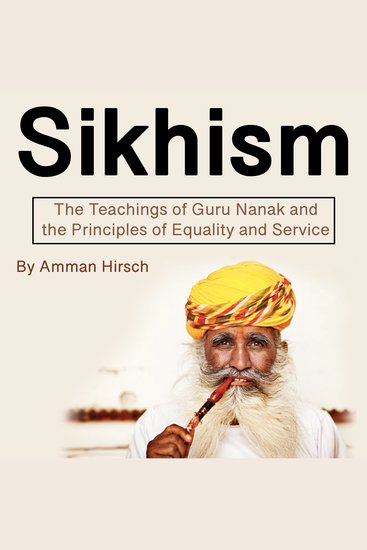
  • Sikhism - The Teachings of Guru Nanak and the Principles of Equality and Service - cover

    Sikhism - The Teachings of Guru...

    Amman Hirsch

    • 0
    • 0
    • 0
    Sikhism, one of the world's youngest major religions, has roots that stretch deep into the socio-political and spiritual fabric of South Asia. Founded in the late 15th century by Guru Nanak Dev Ji in the Punjab region, Sikhism emerged as a response to the spiritual needs and social injustices of the time. It champions the principles of equality, justice, and service, inviting individuals from all walks of life to join in a collective pursuit of truth and devotion to one God.  
    At its core, Sikhism is a monotheistic faith that emphasizes the importance of a personal relationship with the divine. The teachings of the ten Gurus, recorded in the Guru Granth Sahib, the sacred scripture of Sikhism, serve as a guiding light for millions around the world. This scripture not only contains hymns and poetry that extol the virtues of love, compassion, and humility but also reflects the rich cultural diversity of its origins, incorporating elements from various religious and philosophical traditions. 
    Sikhism's distinct identity is marked by its unique practices, such as the wearing of the Five Articles of Faith (the Five Ks), community kitchen (Langar), and the commitment to social justice and equality. The faith’s communal spirit, reflected in the Gurdwara—a place of worship and gathering—fosters a sense of belonging and collective responsibility among Sikhs.  
    As we delve deeper into the teachings, rituals, and historical development of Sikhism in this book, we will explore the faith's contributions to the global religious landscape and its impact on contemporary society. We will examine how Sikh values resonate in today’s world, addressing critical issues such as religious tolerance, community service, and social equity. 
    Show book